🎉 Stocks at Records. Retail Got Rekt Anyway.
The jobs report was chill. The S&P hit a fresh high. And somehow the hottest ETF of the year still burned most of the people in it.
GM, Spotters. This is BotSpot, brought to you by the team behind Lumiwealth. Each week we dig into the market stories worth knowing about, with context, color, and zero MBA jargon.
- 📈 S&P and Nasdaq just had their best week since April. We explain why the jobs report is the hero.
- 💾 DRAM returned 80% this year. The average investor in it lost 20%. Spot has opinions.
- 🪙 Morgan Stanley just launched the cheapest Solana and Ethereum ETFs on the market.
- 💰 Berkshire's new CEO is finally cracking open the piggy bank. $6.8 billion deal, shares buyback, net buyer of stocks.
- 🔍 Google clicks are down 58% when AI shows a summary. Brands are quietly panicking.
The ETF Returned 80%. You Lost 20%. Good Game.

The Roundhill Memory ETF (DRAM) is Wall Street's fastest-selling new fund of 2026. It returned 80% since launch. The average investor in it lost 20%.
That is not a typo. Both of those things are true at the same time. How is that possible? Timing. Almost all of the money poured in AFTER the big run, right before the price dropped 37%.
$10.4B — Net inflows into DRAM between its June peak and July low. Investors bought the dip. Hard. The fund kept falling.
Here is the setup. DRAM launched in early 2026 and immediately ripped. From April to mid-June, it was a rocket. Then it gave back 37% of that gain in about six weeks.
Most of the $24 billion sitting in the fund today came in during or after that drop. So the fund's overall return looks great on a chart. The money that is actually in it? Not so much.
"It has just been a machine, hoovering up cash from investors. The fund's overall performance has not accrued to their benefit."
— Jeff Ptak, Morningstar Managing Director
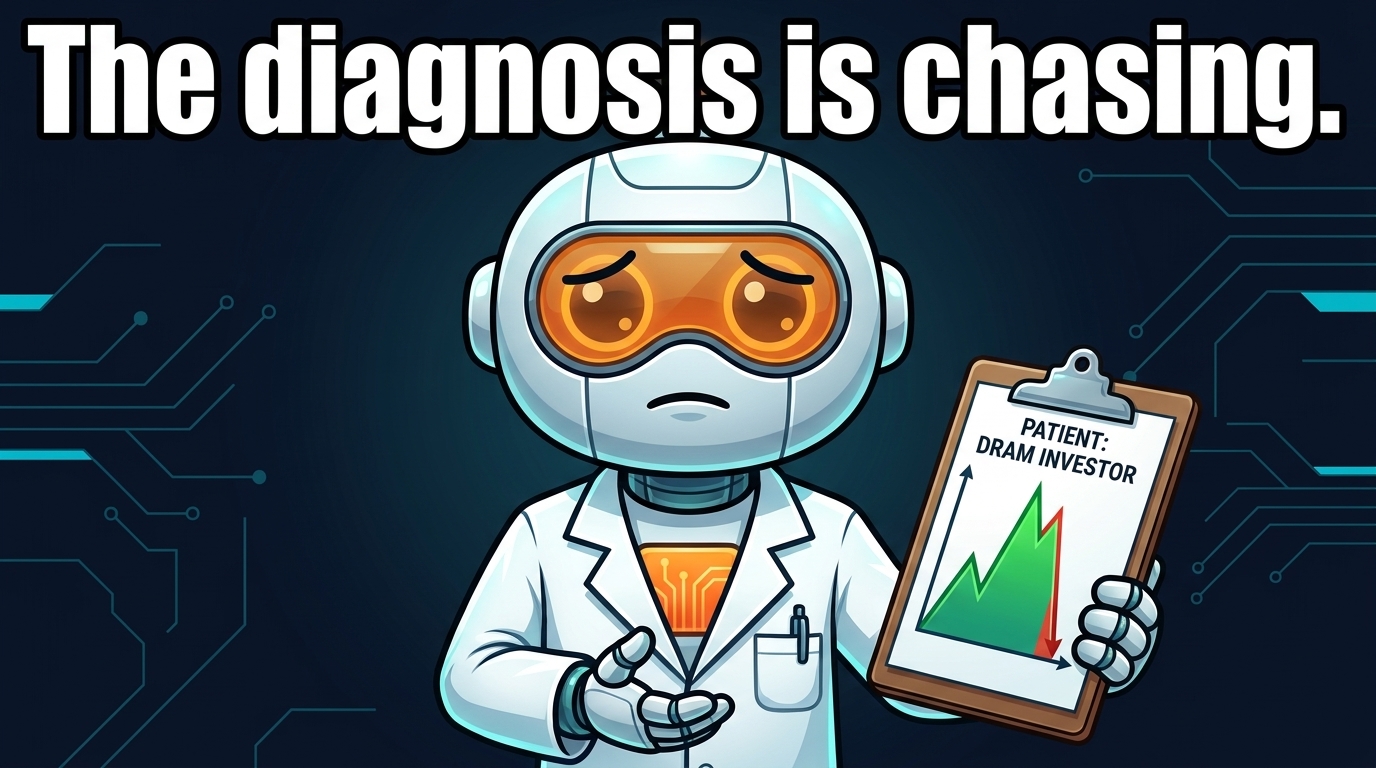 80% fund return. 20% investor loss. The math is fine. The timing was not.
Roundhill's CEO pushes back on the "chasing" story. He points out that investors kept buying even as the price fell, which is NOT what a momentum chaser does. They see memory chips as a long-term AI story.
He might be right. If DRAM recovers and rallies from here, the gap between fund returns and investor returns will narrow fast. Roundhill even launched two more thematic AI funds last week, LYTE (photonics) and NCLD (neoclouds), doubling down on the thesis.
👉 The news is the hottest ETF of 2026 is bleeding for most investors who own it. The takeaway for you is: when you buy into a fund matters just as much as what the fund returns.
- Watch dollar-weighted returns, not just total returns. Morningstar publishes both. One number tells you what the fund did. The other tells you what YOU did.
- Watch for DRAM's recovery path. If AI memory demand stays strong into Q4, the conviction buyers from July may end up looking smart.
- Watch LYTE and NCLD launch flows. If retail piles in immediately after launch again, the same timing trap could repeat.
Playing the AI Memory Chip Dip (Without Chasing It)
How to think about it
DRAM fell 37% from its June peak. Roundhill calls it a buying opportunity. Skeptics call it a falling knife. Here is a structure worth studying for anyone who wants exposure to the AI memory theme without betting the whole pot on one thematic ETF.

The thought experiment: instead of buying the whole thematic fund and hoping for a rebound, a trader might look at a defined-risk options structure on an underlying name like Micron (MU), which is a core holding of DRAM. A bull call spread limits the max loss to what you pay upfront while keeping upside if the AI memory cycle turns back up.
Asset: Micron Technology (MU) (Single-Stock Options)
If AI memory demand is a long-term secular story as Roundhill argues, MU is a direct way to study that thesis with defined downside. A bull call spread is an example of how to size that bet with a known max loss.
Mechanics
| Field | Value |
|---|---|
| INSTRUMENT | Micron Technology (MU) options |
| STRUCTURE | Bull call spread: buy a call at or near current price, sell a call 10-15% higher, same expiry (30-60 days out) |
| THESIS DRIVER | AI buildout requires memory chips. If DRAM's conviction buyers are right, MU benefits directly. |
| KEY RISK | Memory cycles are brutal. If AI capex slows or hyperscalers cut orders, MU drops hard. Max loss is the premium paid. |
| WATCH FOR | MU earnings guidance, DRAM spot price data, hyperscaler capex commentary in Q3 earnings calls |
Why it matters: The news is DRAM investors have been buying the dip with conviction despite big losses on paper. The takeaway for you is that a bull call spread is an example of how to study a high-conviction directional idea while knowing exactly how much you can lose before you put the trade on.
For educational purposes only. Not investment advice. Always do your own research.
👉 This is a structure to study, not a signal to act on. The interesting question is: how do you size a high-conviction thematic bet so a wrong call does not wreck your portfolio?
The Boring Strategy That Quietly Wins
How it works
When markets hit fresh highs and sentiment is bubbly, a covered call wheel on SPY is one of the quieter strategies worth studying. You own the index, sell covered calls above the current price, collect the premium, and repeat. If the market grinds higher you cap your upside. If it wobbles you keep the premium as a cushion.

The trade-off is real: you give up some of the upside in exchange for steady income. In a calm or mildly rising market that deal looks smart. In a screaming bull run, you will underperform a plain SPY buy-and-hold. That is the honest version of this strategy.
Strategy: Covered Call Wheel on SPY Category: INCOME / OPTIONS The covered call wheel sells short-dated call options above the current SPY price each month, collecting the option premium as income. The strategy tends to do well in flat or slowly rising markets and provides a small buffer against minor drops. The cost is that you cap your gains when the market rallies hard. It is a strategy best understood by running it across different market regimes yourself, because the results depend heavily on which months you choose to test. Browse on the BotSpot Marketplace Build it on BotSpot Educational only. Backtest the strategy yourself on BotSpot to draw your own conclusions.
👉 Don't take our word for it. Run the backtest yourself and see how this strategy holds up in the market environment we are in right now.
Spot Checks the Vibe
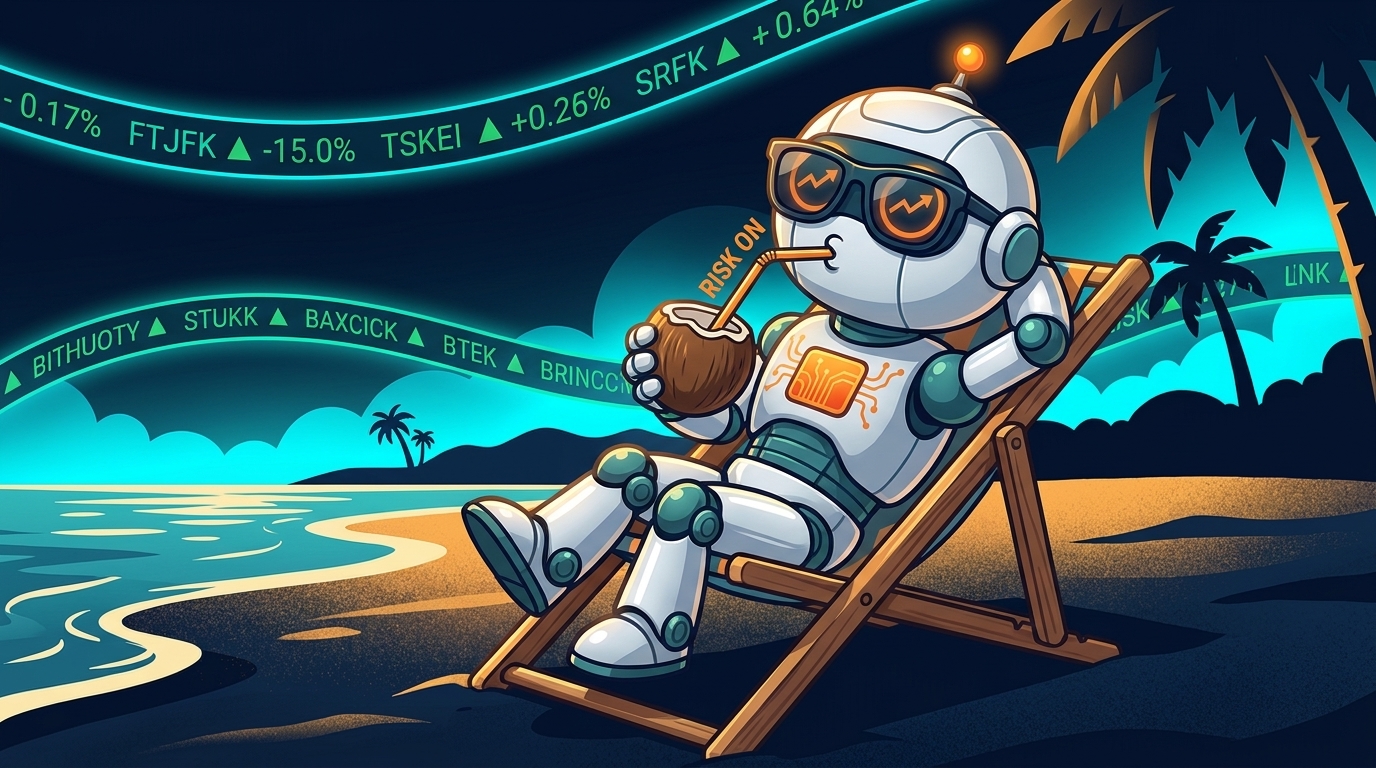 Mood: Greed (VIX 15.5)
VIX at 15.5 is the market equivalent of a chill Sunday afternoon. Stocks at records, rate-hike fears fading, and nobody is panicking. Greed is quietly in the building.
Mood: Greed (VIX 15.5)
VIX at 15.5 is the market equivalent of a chill Sunday afternoon. Stocks at records, rate-hike fears fading, and nobody is panicking. Greed is quietly in the building.
The Internet Understood the Assignment
Quick Hits Before You Go
Five things that happened this week while you were watching DRAM charts.
- S&P and Nasdaq hit fresh records. Best week since April, powered by a jobs report that was soft enough to kill rate-hike fears but not soft enough to trigger recession ones. Goldilocks said hi.
- Berkshire is finally spending. New CEO, $6.8 billion deal, stock buybacks, and net buyer of equities. The cash pile had a very busy quarter.
- Morgan Stanley undercut everyone on crypto fees. 0.14% on Solana and Ethereum ETFs. Grayscale and Bitwise are now the slightly more expensive option. Fee wars have no winners except the investor.
- Google clicks are down 58% with AI summaries. Users who see an AI answer only click a real link 8% of the time. SEO as a business model is having a very bad year.
- London is losing its listings. Major UK companies are moving to US exchanges instead. The LSE's deputy CEO is asking nicely for more capital. Wall Street did not send a sympathy card.
- Zuckerberg wrote 6,500 words about AI. It is being called a manifesto. The rest of us call it a very long Monday email.
The BotSpot Team
Issue 15 · Aug 10, 2026