🛢️ $90 Oil, a Jittery CPI, and One Very Nervous Market
Brent crude just crossed $90. Treasury yields are climbing. And Wells Fargo's sell trigger just hit its highest point in eight years. Spot is watching all three.
GM, Spotters. This is BotSpot, brought to you by the team behind Lumiwealth. Each week we walk through the stories shaping markets, with clear context and a sharp head, so you know what to watch before the week gets weird.
- 🛢️ Brent crude touched $90 as U.S.-Iran Strait of Hormuz talks hit a wall.
- 📊 Wells Fargo's sentiment sell trigger just hit its highest level since January 2018. Hedge now, it says.
- 🤖 1 in 5 Americans who sought financial advice this year asked an AI. Trust? Still a work in progress.
- 💊 Healthcare stocks are trading like an AI short in disguise. Yes, really.
- 🦙 Zuck wrote 6,500 words about AI. We read them so you don't have to.
The $90 Oil Wake-Up Call Nobody Scheduled
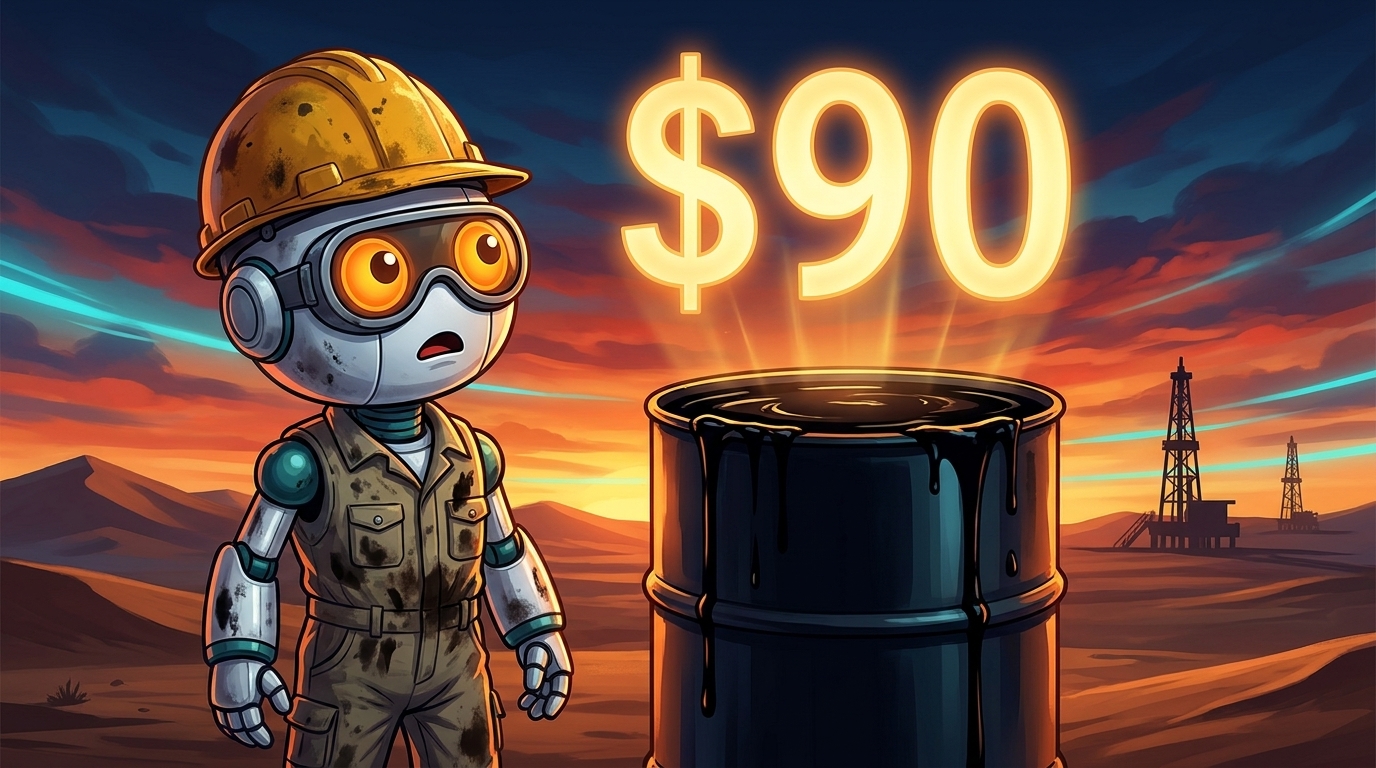
Brent crude crossed $90 a barrel this morning. Treasury yields climbed right alongside it. Stock futures? Flat, which is the market's polite way of saying it has no idea what happens next.
The culprit is a stalled U.S.-Iran negotiation over the Strait of Hormuz. About 20% of the world's oil flows through that waterway. When talks hit a wall, oil prices hit the ceiling.
$90 / barrel — Brent crude this morning. The last time oil was here, the Fed was still hiking and the word 'pivot' was just a hope.
Higher oil means higher energy costs for companies. Higher energy costs squeeze profit margins. Squeezed margins make earnings harder to beat. That chain reaction is what has traders nervous ahead of Wednesday's CPI print.
And here is where it gets spicy. Wells Fargo's sentiment indicator just hit 1.4, its highest reading since January 2018. That is the bank's internal signal that the crowd has gotten too bullish, too fast, and a pullback could be coming.
"The sell trigger hasn't been this high in eight years. The crowd is leaning very hard one way."
— Wells Fargo sentiment desk, August 2026
 Wednesday's inflation print could settle this. Or make it much worse.
Here is the uncomfortable math. Oil at $90 feeds directly into CPI. If Wednesday's inflation number comes in hot, the Fed's rate-cut timeline gets pushed further out. Yields stay high. Stocks feel the squeeze.
If CPI comes in cool despite oil, the market breathes a sigh of relief and rallies. That is the coin flip the week is riding on. Spot is calling it a genuine toss-up, and he has seen a lot of coin flips.
👉 the news is oil hit $90 and a key Wall Street sell signal just flashed its loudest warning in eight years. the takeaway for you is the CPI print on Wednesday is the most important number this week, and the answer either calms the crowd or fans the fire.
- Watch Wednesday's CPI print closely. A number above 3.2% year-over-year likely pressures stocks and keeps yields climbing.
- Watch the 10-year Treasury yield. If it breaks above its recent range on hot CPI, that is a real signal, not noise.
- Watch energy sector ETFs like XLE. Oil at $90 is good for energy companies even when it spooks the broader market.
- Watch the dollar against the yen. The dollar has been climbing, which creates its own feedback loop for U.S. exporters.

When Oil Spikes, Does XLE Follow? Thinking Through the Energy Play
Thinking through it
When crude oil spikes toward $90, energy ETFs like XLE historically get a tailwind. The logic is simple: oil companies earn more when the stuff they pump out of the ground is worth more. But the relationship is not a straight line, and that is what makes it interesting to study.
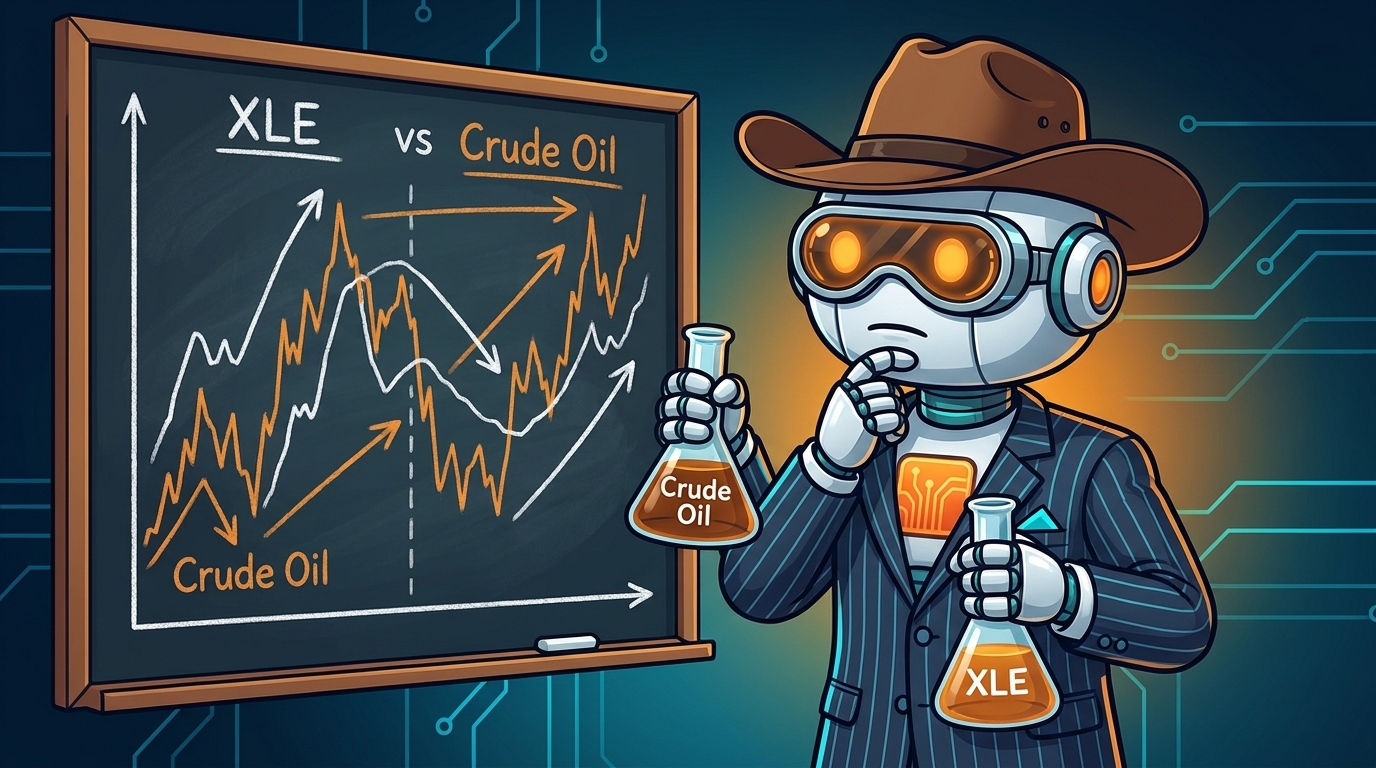
The wrinkle is that XLE holds integrated majors like ExxonMobil and Chevron, which also have refining and chemicals divisions. Those businesses can actually benefit from higher oil in some ways and get squeezed in others. So the correlation between crude and XLE is real but noisy.
Asset: XLE (Energy Select Sector SPDR ETF) (ETF / Options)
When crude oil climbs sharply toward multi-year highs, energy sector ETFs often see increased attention. A trader studying this dynamic might look at how XLE has historically moved relative to crude, and whether a defined-risk options structure could express a short-term view without taking on unlimited downside.
Mechanics
| Field | Value |
|---|---|
| INSTRUMENT | XLE ETF (or XLE options) |
| STRUCTURE | Long call spread (example: buy the ATM call, sell the call one strike above), defined max loss |
| THESIS DRIVER | Brent crude at $90 with Strait of Hormuz tensions unresolved, energy sector earnings tailwind |
| KEY RISK | Diplomatic breakthrough resolves Strait tensions, crude drops sharply, XLE gives back gains fast |
| WATCH FOR | Wednesday CPI print and any news from U.S.-Iran talks, both can flip this quickly |
Why it matters: The news is oil hit $90 on geopolitical tension and energy companies stand to benefit from higher prices. The takeaway for you is understanding how a defined-risk structure like a call spread works is a useful mental model, whether or not you ever place this specific trade.
For educational purposes only. Not investment advice. Always do your own research.
👉 the news is energy stocks and crude oil do not always move in lockstep. the takeaway for you is studying that gap is where interesting strategy ideas live, and a defined-risk structure keeps your downside knowable.
The Boring Strategy That Loves Volatile Weeks Like This One
How it works
A covered call wheel on SPY is about as exciting as watching paint dry, until you realize it quietly collects premium every week whether the market goes up, sideways, or slightly down. The strategy sells a covered call above the current price, collects the option premium, and repeats when the option expires.
The trade-off is straightforward. You cap your upside because if SPY rips through your strike price, you miss out on those gains above the strike. In exchange, the premium you collected cushions you against small drops. It is a strategy that tends to feel most comfortable in choppy or sideways markets, which is basically the week we are having right now.
Strategy: Covered Call Wheel on SPY Category: INCOME / OPTIONS The covered call wheel on SPY sells a call option above the current market price each week and collects the premium as income. If SPY stays below the strike, you keep the premium and repeat. If SPY closes above the strike, your shares get called away at the higher price, which is still a gain, and you restart the wheel. The strategy naturally generates more premium in higher-volatility weeks, which is worth understanding when markets are jittery around events like CPI prints. Browse on the BotSpot Marketplace Build it on BotSpot Educational only. Backtest the strategy yourself on BotSpot to draw your own conclusions.
👉 Don't take our word for it. Run the backtest yourself, and pay close attention to what happens to premium in weeks when VIX spikes. That is where the strategy earns its keep.
Spot's Fear and Greed Gauge
 Mood: Neutral (VIX 15.5)
VIX at 15.5 puts us squarely in Neutral territory, which is the market's equivalent of 'fine, I guess.' Not panicking, not partying. Just... waiting for CPI on Wednesday.
Mood: Neutral (VIX 15.5)
VIX at 15.5 puts us squarely in Neutral territory, which is the market's equivalent of 'fine, I guess.' Not panicking, not partying. Just... waiting for CPI on Wednesday.
Us on Wednesday Morning
Bite-Sized Cookies for the Road
- Brent crude hit $90. The Strait of Hormuz is closed to diplomacy. Apparently also to good vibes.
- Wells Fargo's sell signal is loudest since 2018. Their sentiment indicator hit 1.4 in August. The crowd leaned too far one way. Wall Street is nudging them back.
- 1 in 5 people are asking AI for money advice. Only 3% trust it a great deal. The rest are using it and crossing their fingers. Relatable, honestly.
- Healthcare stocks are now an AI short in disguise. Big healthcare names have been trading opposite to tech. If you own healthcare, you might be expressing a view you did not intend.
- Zuckerberg wrote 6,500 words about AI. He wants everyone to share the code. It also happens to be the strategy that makes the most sense for the company that is currently behind on benchmarks. Coincidence.
- Anthropic is racing to IPO this fall. Fielding tough questions from investors about China rivals and AI infrastructure costs. Nothing like going public under maximum pressure.
- Retail crypto traders are switching to AI stocks. Bitcoin had a good run. Nvidia had a better one. The mania followed the returns. It always does.
The BotSpot Team
Issue 16 · Aug 11, 2026