💰 Goldman's $2.3B Bet on Boomer Candy
Goldman just spent $2.3 billion to own the options ETF space. Retail investors are the target. The fees tell the whole story.
GM, Spotters. This is BotSpot, brought to you by the team behind Lumiwealth. Each week we walk through the market stories worth knowing, with context, color, and zero jargon.
- 🏦 Goldman drops $2.3B to own the options ETF game and calls it democratization. Sure, Goldman.
- 🤖 CoreWeave revenue up 112%. Cash burn also up 112%. The AI infrastructure bet gets wilder.
- 📋 The SEC wants companies to report earnings every 6 months. Bad quarters will magically disappear.
- 🔬 DeepMind's Hassabis pitched a global AI oversight body to labs AND the Trump White House.
- 📉 Stocks say the economy is booming. Jobs say: please hold.
Goldman Just Bought the Options ETF Machine

Goldman Sachs just wrote a $2.3 billion check to buy NEOS Investments, an options ETF shop with 19 active income funds and $30 billion in assets. That is not a typo. Two point three billion dollars for ETFs built around covered calls and income strategies.
Goldman is calling it democratization of sophisticated products. The analysts covering the deal are calling it something shorter: boomer candy. Both are correct.
$41B — What derivative income ETFs have pulled in so far in 2026 alone. Goldman wants the machine that prints that number.
Here is the simple version of what happened. More than 50 million Americans have retired. They want income. They do not want to sell shares every month to get it.
Options-based ETFs deliver income automatically, so retirees love them. Goldman noticed. Goldman acted.
"Index strategies is a contest smaller issuers will rarely win, so many went into the options space following investor demand."
— Zachary Evens, Morningstar analyst
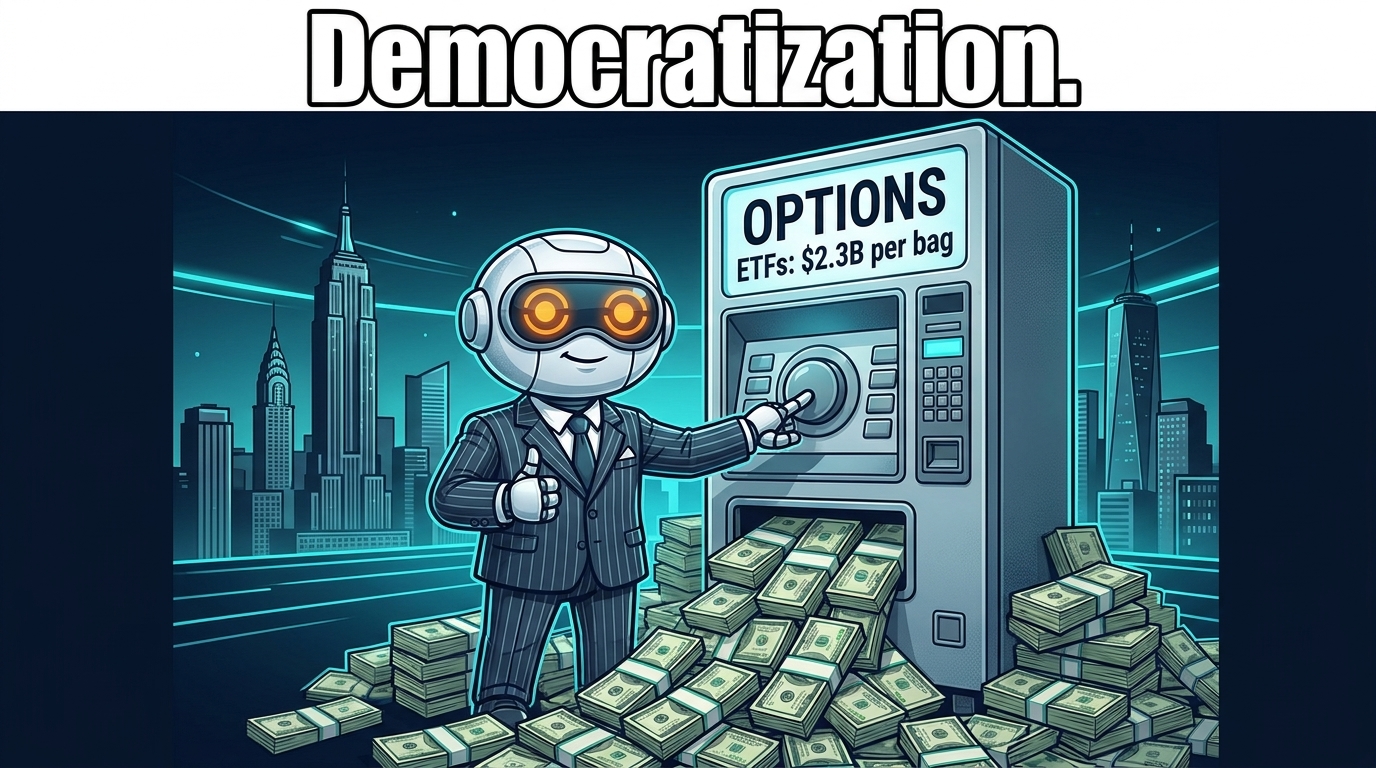 Goldman says this is for you. The fees say otherwise.
This is Goldman's second big options ETF deal in a few months. They bought Innovator ETFs earlier this year too. After the NEOS deal closes, Goldman will sit on top of more than 220 options ETFs.
That is not a collection. That is a monopoly attempt.

👉 The news is Goldman just spent $2.3B to dominate the options ETF space. The takeaway for you is that options income products are going mainstream, and knowing how they actually work (and where they cost you) is now a basic skill for any retail trader.
- Watch expense ratios on NEOS funds post-acquisition: Goldman may reprice them now that it controls distribution.
- Watch whether Goldman bundles these into its wealth management model portfolios: that would push $30B to $100B fast.
- Watch competitor responses: BlackRock and Vanguard have both eyed the covered call ETF space, and Goldman just raised the stakes.
Explore options ETFs on BotSpot
The Covered Call ETF Question
How to think about it
Goldman just paid $2.3 billion because it believes covered call ETFs are the next big thing in retail portfolios. The question worth studying: what does a covered call actually do to your returns, and when does it help versus hurt?
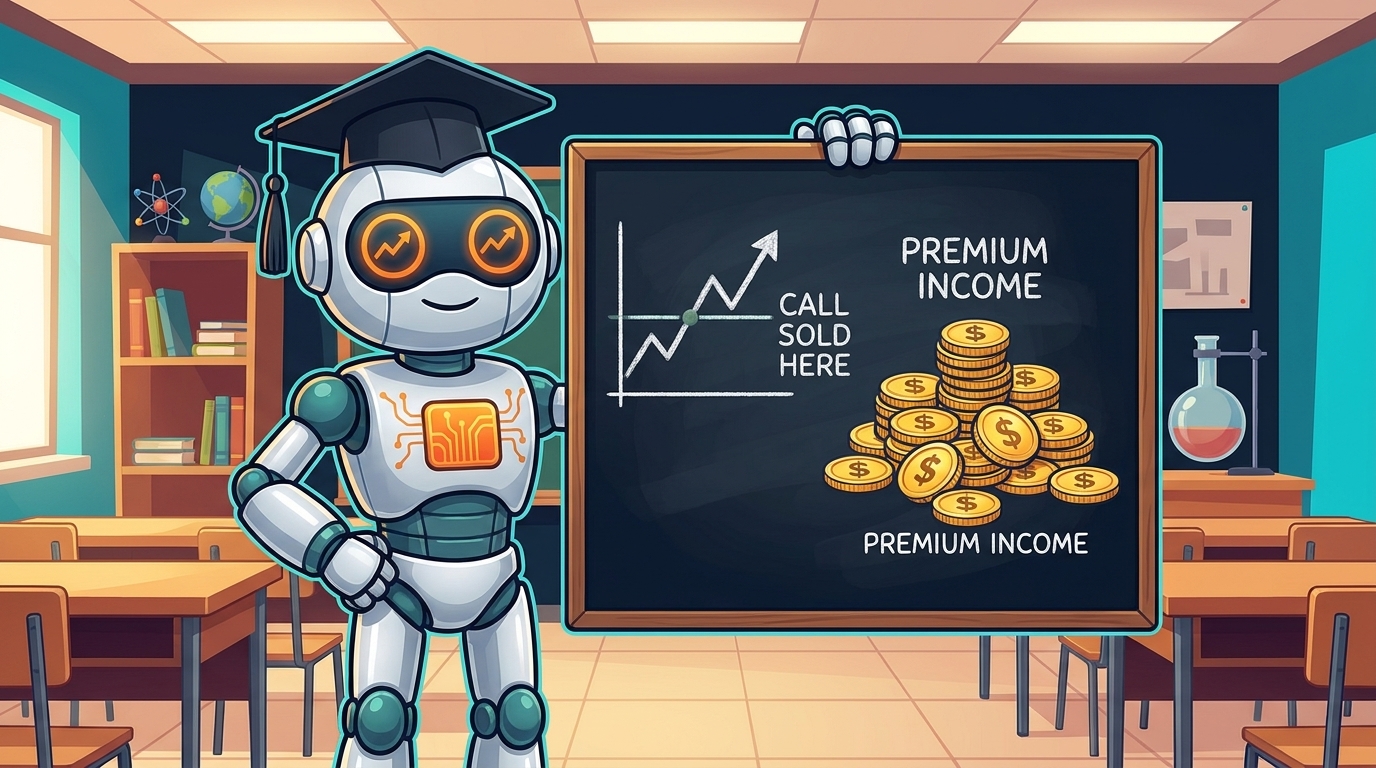
A covered call strategy owns the stock (or ETF) and sells someone else the right to buy it above a certain price. You collect a fee (the premium) for that. If the stock stays flat or drops a little, you keep the premium and come out ahead. If the stock rockets 30%, you miss the upside above your ceiling.
Asset: XYLD (Global X S&P 500 Covered Call ETF) vs SPY (Options ETF / Income)
This is a thought experiment: what does an investor give up, and what do they gain, by swapping a portion of plain SPY exposure for a covered call ETF like XYLD in a rising-rate, sideways-market environment? The income is real. The cap on gains is also real.
Mechanics
| Field | Value |
|---|---|
| INSTRUMENT | XYLD (covered call ETF on S&P 500) vs SPY (plain index ETF) |
| STRUCTURE | XYLD sells at-the-money covered calls monthly on the S&P 500, collecting premium and distributing it as income |
| THESIS DRIVER | In flat or slowly rising markets, the premium income can exceed what plain buy-and-hold delivers. In fast rallies, SPY wins by a lot. |
| KEY RISK | If the S&P 500 rips 20% in a year, XYLD captures only a fraction of that gain. You traded upside for income. |
| WATCH FOR | VIX level at the time of call writing: higher VIX means fatter premiums, which makes covered call ETFs more attractive relative to plain index exposure |
Why it matters: The news is Goldman just bet $2.3B that options income ETFs are the future of retail portfolios. The takeaway for you is that understanding the covered call structure, specifically what you gain in income and what you give up in upside, is now a foundational concept for any investor evaluating these products.
For educational purposes only. Not investment advice. Always do your own research.
👉 Covered call ETFs are not free money. They are an income-for-upside trade. Understanding which environment rewards that trade is the whole skill.
The Boring Income Machine (That Goldman Just Paid $2.3B For)
How it works
The Covered Call Wheel is one of the oldest retail-friendly income strategies in options trading. You sell a cash-secured put on a stock or ETF you want to own. If the stock falls and you get assigned, you own it. Then you sell covered calls against that position every month to collect premium.
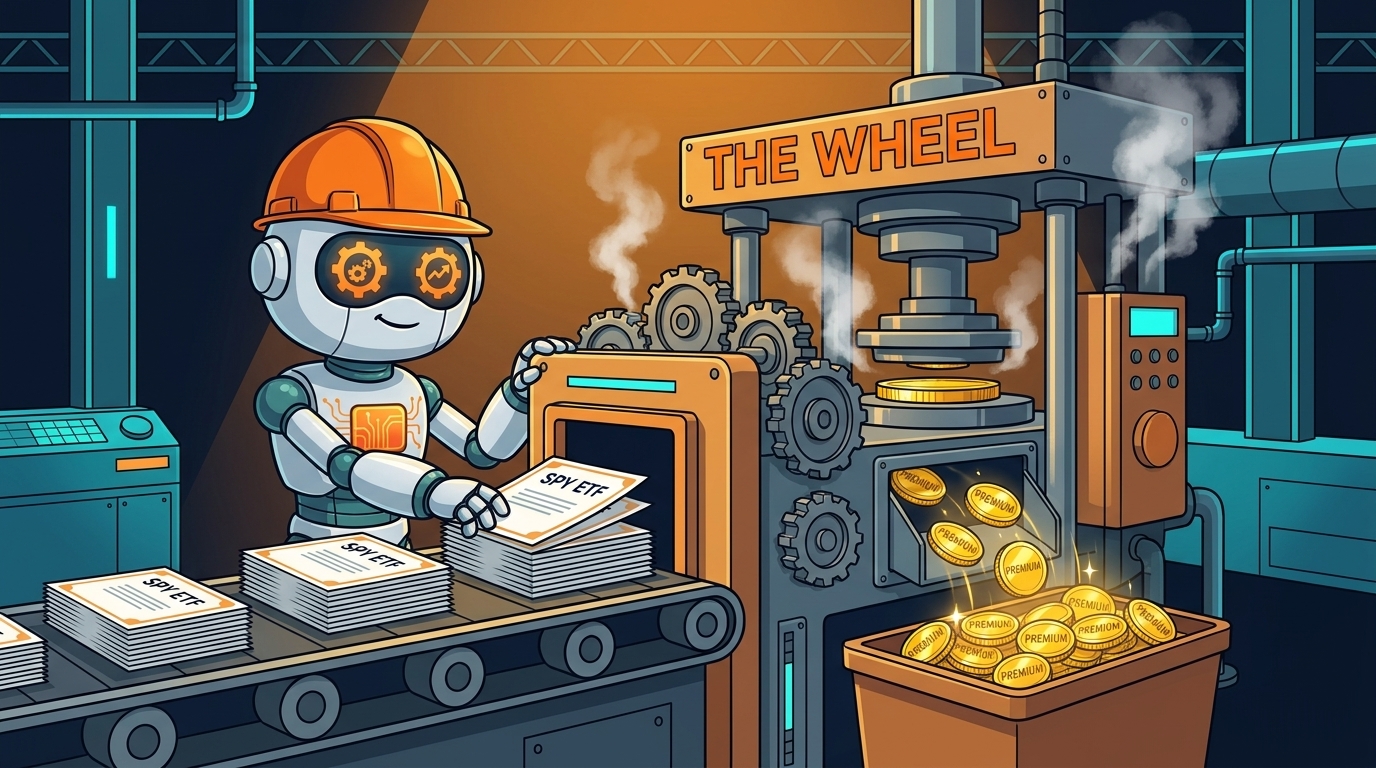
The strategy works best when the underlying stock moves sideways or drifts slowly. It struggles when the stock gaps up fast, because you miss the big move. It also hurts when the stock drops hard, because you own it through the fall.
Strategy: Covered Call Wheel on SPY Category: INCOME / OPTIONS The Covered Call Wheel on SPY sells a monthly cash-secured put at a strike slightly below the current price, then sells covered calls once assigned. It generates consistent premium income in sideways and moderately declining markets. The natural trade-off is that in strong bull markets the strategy caps out, and in sharp sell-offs the premium collected provides only partial cushion against the drop. Browse on the BotSpot Marketplace Build it on BotSpot Educational only. Backtest the strategy yourself on BotSpot to draw your own conclusions.
👉 Don't take our word for it. Run the backtest yourself and see exactly when the wheel spins smoothly and when it gets wobbly.
Spot's Gut Check
 Mood: Greed (VIX 14.6)
VIX at 14.6 means markets are comfortable but not delirious. Goldman is spending billions. CoreWeave is up 20%. Nobody is hiding under their desk yet.
Mood: Greed (VIX 14.6)
VIX at 14.6 means markets are comfortable but not delirious. Goldman is spending billions. CoreWeave is up 20%. Nobody is hiding under their desk yet.
Goldman Explains Democratization
Five Things Before You Go
- CoreWeave revenue up 112%. Cash burn also up 112%. The AI infrastructure bet is basically a race to see which number wins.
- Goldman now runs 220+ options ETFs. That is not a lineup. That is a weather system.
- The SEC wants semi-annual earnings reports. Bad quarters would get buried in good half-years at twice the rate of good quarters. Transparency fans are not pleased.
- DeepMind's Hassabis pitched an AI oversight body. He talked to other AI labs and Treasury Secretary Bessent before a major internal shake-up at Alphabet. Normal Tuesday.
- Stocks say the economy is booming. The jobs market says: interesting theory, let us know how that works out.
- Dollar bounced back Wednesday. Morning losses reversed by afternoon. The dollar doing its classic just kidding move ahead of CPI.
The BotSpot Team
Issue 16 · Aug 13, 2026