🌍 Europe's Bond Market Just Snapped a 15-Year Record
German Bund yields hit highs not seen since 2011. TLT is at levels not seen since 2004. Something is moving in the world's safest assets, and it is not moving quietly.
GM, Spotters. This is BotSpot, brought to you by the team behind Lumiwealth. Each week we dig into the market stories worth knowing, with the kind of context a sharp trader would actually want at their desk.
- 🇩🇪 German Bund yields just hit a 15-year high. Europe's bond market is flashing.
- 📉 TLT is at its lowest price since 2004. Yes, 2004.
- 🛢️ Oil and Treasury yields are rising together. Mideast tensions are back on the menu.
- 📦 Leveraged ETF issuers are filing copies of copies now. The ETF spaghetti cannon is loaded.
- 🇳🇴 Norway's $2.3T sovereign fund just posted a record profit. Then the CEO warned of nuclear apocalypse.
The World's Safest Assets Are Doing Something Very Unsafe

German government bonds are the financial world's version of a boring neighbor who never causes drama. This week, that neighbor flipped a car.
The German 10-year Bund yield hit a 15-year high in opening trade Monday, pulling eurozone bond yields up across the board. That is not a small thing. The last time Bund yields were this high, smartphones were a novelty and Instagram did not exist.
22-Year Low — Where TLT (the most popular Treasury bond ETF) is trading right now. Not since 2004 has it been this cheap. George W. Bush was president.
The story has two legs. First, eurozone bond yields are climbing because energy prices are rising again and traders are nervous ahead of the Fed's meeting minutes dropping Wednesday. Second, over in the US, TLT just hit its lowest price since 2004, dragged down as Treasury yields move higher alongside oil.
When oil goes up, inflation fears go up. When inflation fears go up, bond yields go up. When bond yields go up, bond prices go down. That chain reaction is playing out in real time across two continents right now.
"The world's two safest bond markets are selling off at the same time. That is either a buying opportunity or a warning shot. Nobody agrees which."
— Spot, staring at two red charts simultaneously
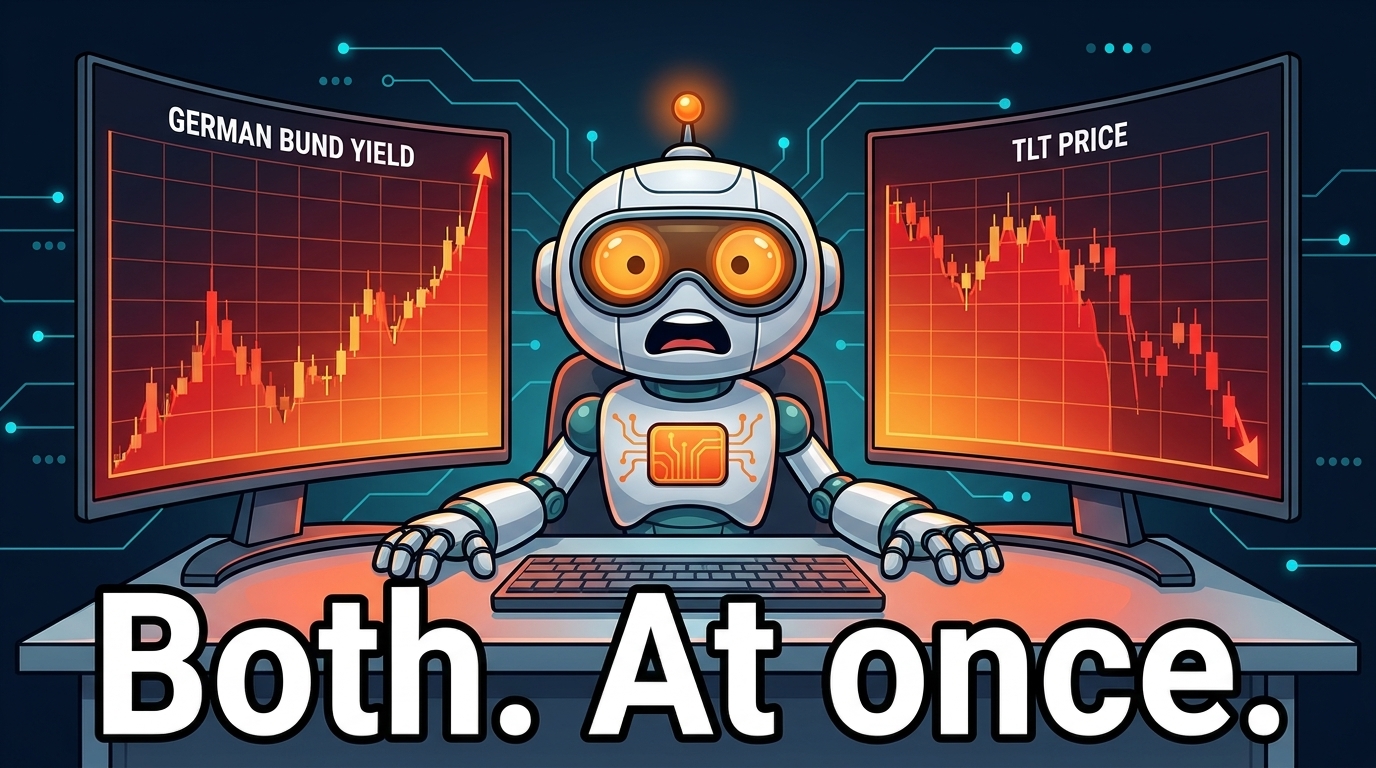 German yields up. TLT down. The 'safe assets' memo got lost.
Here is the part that makes this week feel different from normal noise. Bund yields moving this high, this fast, pulls global capital toward European bonds. That pressure flows back into US rates. The two markets are connected whether you are watching them or not.
The euro is also struggling. It fell against the dollar Monday, and currency analysts say it could keep sliding with higher energy prices eating into Europe's trade picture. A weaker euro, higher yields, and an oil spike is a rough combination for any market importing energy.
👉 The news is that German and US bonds are both selling off hard at the same moment. The takeaway for you is that bond price moves are no longer quiet background noise: they are the main event this week.
- Watch the Fed minutes Wednesday: Any hawkish surprise could push TLT lower still, toward territory not charted since 2002.
- Watch oil: Every dollar higher on crude is another vote for 'inflation is not done,' which is more pressure on bonds.
- Watch the euro vs. dollar: A weaker euro into a rising-yield environment tells you something about where global money thinks safety is right now.
- Watch TLT volume: If retail and institutional buyers start stepping in at these prices, that is a signal the selloff may be pricing in too much fear.
- Watch NY Fed manufacturing: It hit 20.6 in August, a 4-year high. A strong economy gives the Fed less reason to cut, which is more pressure on yields.

What If the Bond Selloff Is Overdone?
Thinking through it
TLT at a 22-year low is a number that makes a certain kind of trader stop scrolling. When a widely held asset falls to multi-decade lows, it usually means one of two things: the world changed permanently, or the market got too scared. Figuring out which one is the whole game.

A thought experiment: what does it look like structurally if a trader believes long Treasury yields are overextended and due to pull back? This is an example of how someone might think through that idea using options on TLT, not a recommendation to do anything.
Asset: TLT (iShares 20+ Year Treasury Bond ETF) (OPTIONS / FIXED INCOME ETF)
TLT is at a 22-year price low, driven by rising oil and global bond yield pressure. If you believe the selloff is overdone and yields will stabilize or fall after the Fed minutes Wednesday, a long call spread on TLT is a way to study that thesis with defined risk.
Mechanics
| Field | Value |
|---|---|
| INSTRUMENT | TLT options (long call spread) |
| STRUCTURE | Buy a slightly out-of-the-money call, sell a higher call at the same expiry to reduce premium cost |
| THESIS DRIVER | Bond yields peak or fall back after Fed minutes; TLT price recovers from 22-year lows |
| KEY RISK | Oil keeps rising, inflation fears persist, yields stay elevated or go higher, TLT drops further |
| WATCH FOR | Fed minutes Wednesday and any surprise hawkish language; oil price direction; euro stability |
Why it matters: The news is TLT is trading at levels not seen since 2004. The takeaway for you is that this is an interesting moment to study how options structures can define risk on a big macro bet, without unlimited downside if the bond selloff continues.
For educational purposes only. Not investment advice. Always do your own research.
👉 The idea is not 'buy bonds.' The idea is: understand what a defined-risk structure looks like when you have a macro view, so you are ready to think through it clearly when the moment comes.
The Boring Strategy That Loves a Bond Panic
How it works
TLT mean reversion is one of the oldest mechanical strategies in the bond playbook. The idea is simple: when a long-duration bond ETF gets pushed to an extreme low relative to its recent average price, a rules-based system starts watching for the bounce. No guessing required, just math and patience.
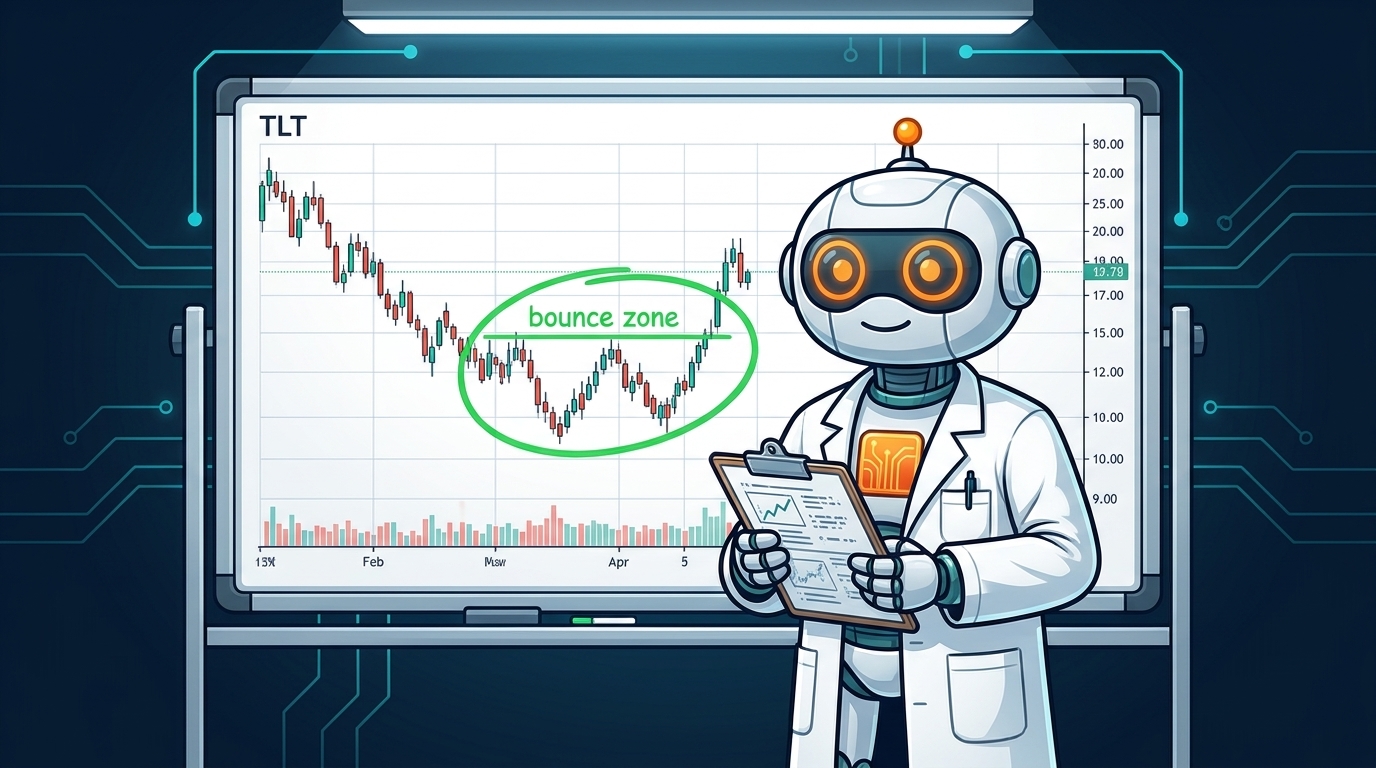
The trade-off is real: mean reversion strategies can get caught when a trend is genuinely changing rather than temporarily overextended. Bond yields rising for structural reasons (persistent inflation, fiscal concerns) will punish a system that keeps buying the dip. That is why studying the historical behavior of the strategy across different rate environments matters before you ever put real money near it.
Strategy: TLT Mean Reversion (RSI Trigger) Category: MEAN-REVERSION / TREASURIES This strategy watches TLT's Relative Strength Index (RSI) and enters a long position when the ETF becomes statistically oversold, then exits when it reverts to a more neutral reading. The idea is that sharp Treasury selloffs often overshoot, creating a window for recovery. The key tension is distinguishing a real trend change from a temporary panic, which is exactly why backtesting it across different rate cycles, not just bull markets, gives you the most useful picture. Browse on the BotSpot Marketplace Backtest it on BotSpot Educational only. Backtest the strategy yourself on BotSpot to draw your own conclusions.
👉 Don't take our word for it. Run the backtest yourself, especially across 2022, when bond mean reversion absolutely did not work. That year is the stress test.
Spot's Fear and Greed Gauge
 Mood: Neutral (VIX 15.9)
VIX at 15.9 is the market equivalent of a shrug emoji. Not scared enough to run, not confident enough to sprint. Wednesday's Fed minutes could change that sentence fast.
Mood: Neutral (VIX 15.9)
VIX at 15.9 is the market equivalent of a shrug emoji. Not scared enough to run, not confident enough to sprint. Wednesday's Fed minutes could change that sentence fast.
Norway Called. They Made A Record Profit. Also, Doom.
Five Things Spot Noticed While You Were Busy
- Bund yields hit a 15-year high. The world's most boring bond market just sent a very loud memo.
- TLT is at its lowest price since 2004. George W. Bush was in year one of his second term. Perspective is free.
- NY manufacturing hit a 4-year high. Strong economy, higher yields, lower bond prices. The math is uncomfortable but consistent.
- Leveraged ETFs are now cloning other leveraged ETFs. It is a 2x inverse copy of a 2x fund that cloned a theme. We have reached spaghetti cannon levels.
- CLO ETF JAAA just crossed $30 billion. Collateralized loan obligations, now in your brokerage account. 2020 really was the beginning.
- Norway's $2.3 trillion fund warned of total collapse. Record profits in the morning, werewolf warnings in the afternoon. Classic Tuesday.
- The WCEO women-CEO ETF is up 21% this year. Beat the S&P 500. Only has $11 million in assets. Irony is doing a lot of heavy lifting here.
The BotSpot Team
Issue 17 · Aug 18, 2026