🏹 Bond Vigilantes Just Took the Fed's Megaphone
30-year Treasury yields hit a 19-year high. The bond market is raising borrowing costs all by itself. No Fed meeting required.
GM, Spotters. This is BotSpot, brought to you by the team behind Lumiwealth. Each week we unpack the market stories worth knowing about, with context, color, and a clear head.
- 🏹 30-year Treasury yields just hit a 19-year high, and the Fed has nothing to do with it
- 🤖 Spot is watching TLT like a hawk. Mean reversion or new normal? We dig in.
- 🥇 Gold slipped while everyone waited for Fed minutes. The minutes delivered drama.
- 📉 Japan's 10-year yield hit a 30-year high too. This is not just a US problem.
- 🍪 Bite-sized cookies at the bottom, including the AI bond competition nobody saw coming.
The Bond Market Fired the Fed

The Fed thought it ran interest rates. The bond market just sent a memo: think again.
This week the 30-year US Treasury yield hit its highest level in 19 years. Not because the Fed hiked. Because bond investors decided they wanted more money to lend to the government, and they took it.
19-Year High — Where the 30-year Treasury yield just landed. The last time it was this high, the iPhone did not exist yet.
Here is the short version of what happened. The Fed controls short-term borrowing costs. But long-term rates, the ones that set mortgage rates, corporate loan rates, and the "discount rate" behind every stock valuation, are set by the free market.
Bond investors looked at the US national debt, the war in Iran pushing oil prices higher, and still-sticky inflation, and said: we want a bigger paycheck to take on this risk. So they sold bonds. When bond prices fall, yields rise. Simple as pasta night math.
"Investors are losing patience with fiscal profligacy."
— Jonas Goltermann, Chief Markets Economist at Capital Economics
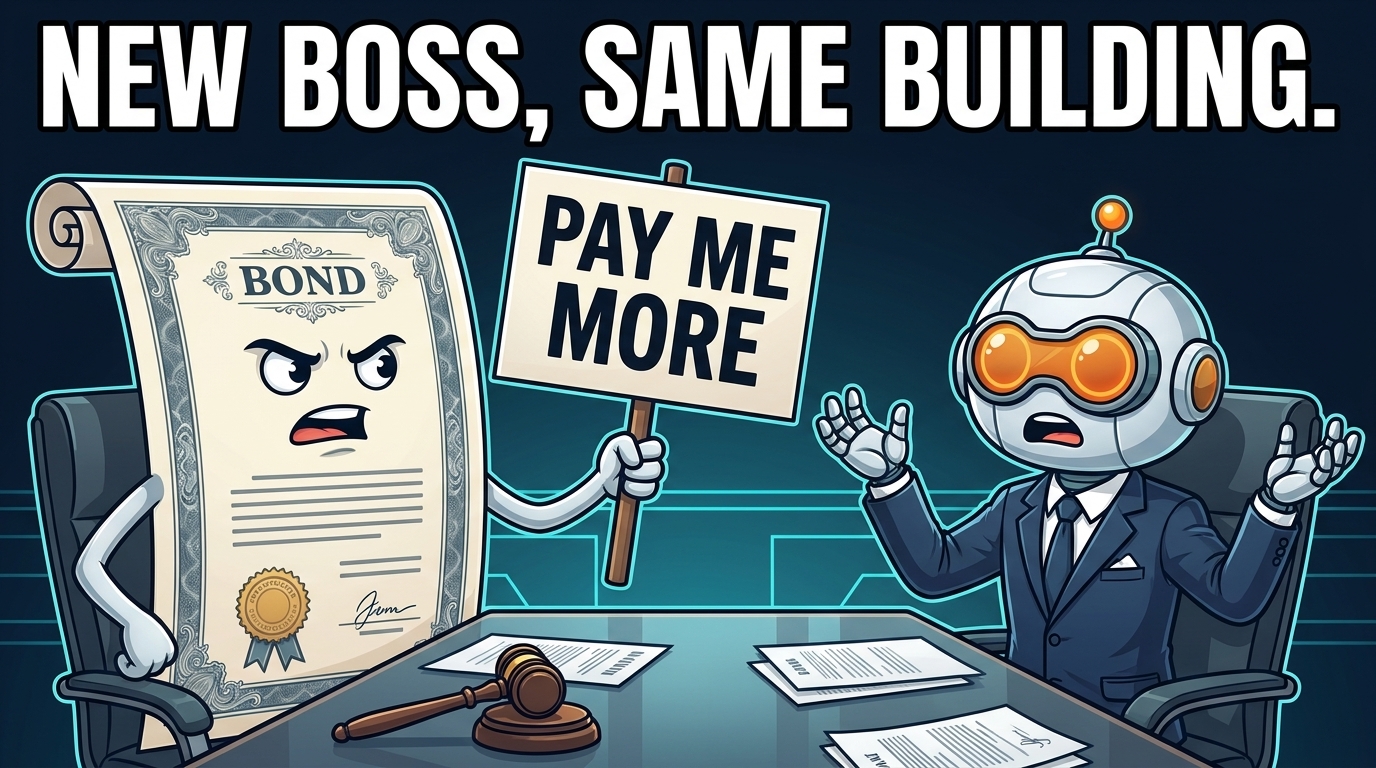 The bond market does not wait for permission. It just raises the price.
There is also a new wildcard in the mix. Tech giants like Alphabet and Meta are issuing billions in bonds to fund chips and data centers. That means Treasuries now have to compete with juicy corporate bonds from companies everyone actually likes. The government is losing the popularity contest.
Meanwhile, Japanese investors who used to quietly buy US Treasuries can now find attractive yields at home, since Japan's 10-year yield just hit a 30-year high of its own. The US lost one of its most reliable customers. This is a global repricing of risk, not a Tuesday blip.

There is one more twist. New Fed Chair Kevin Warsh is actively moving away from "forward guidance," the practice of telegraphing what the Fed will do next. Reports suggest the Fed may even scrap its famous dot plot chart. Less guidance from the Fed means bond investors have to guess more. And when people guess more, they demand more pay for the risk.
👉 The news is bond vigilantes are raising long-term borrowing costs without waiting for the Fed. The takeaway for you is that rising long-term yields affect mortgage rates, stock valuations, and the attractiveness of bonds vs. equities, all at once.
- Watch the 30-year Treasury yield: if it keeps climbing past this 19-year high, mortgage rates and corporate borrowing costs follow.
- Watch TLT (the 20+ year Treasury ETF): it moves opposite to yields and is the bond market's most-watched ticker for retail traders.
- Watch the Fed minutes release: any hint of renewed guidance could temporarily calm the vigilantes.
- Watch AI hyperscaler bond issuance: every new Meta or Alphabet bond offering is one more competitor stealing demand from Treasuries.
- Watch the dollar: when US yields rise but the dollar falls anyway, that is a signal the world is questioning US fiscal credibility, not just hunting for yield.
Explore bond yield impacts on BotSpot
The TLT Dip That Has Everyone Talking
Thinking through it
When yields spike like this, the price of long-term Treasury bond ETFs like TLT falls hard. That is just how bonds work: price and yield move in opposite directions, like a seesaw. TLT is now down significantly from its highs, and some traders are starting to ask whether the rubber band has stretched too far.

The interesting structure here is a covered call approach on TLT, where you hold the ETF and sell short-dated call options against it. This generates income from option premiums while you wait to see if yields stabilize. It is a way to get paid while you wait, rather than simply hoping for a price bounce.
Asset: TLT (iShares 20+ Year Treasury Bond ETF) (Fixed Income ETF / Options)
With TLT near multi-year lows, a covered call structure lets you study how income-generation on a depressed asset works. It is a thought experiment in getting paid to wait, not a call on when yields peak.
Mechanics
| Field | Value |
|---|---|
| INSTRUMENT | TLT (20+ Year Treasury Bond ETF) |
| STRUCTURE | Long shares + short near-term call option (covered call) |
| THESIS DRIVER | TLT near 19-year yield highs; elevated options premiums from rate uncertainty |
| KEY RISK | Yields continue rising, TLT falls further, premium does not offset the drop |
| WATCH FOR | Fed minutes language, 30-year yield ceiling, and any pivot signals from Warsh |
Why it matters: The news is TLT is getting hammered as yields hit 19-year highs. The takeaway for you is that high implied volatility in bonds right now makes this an interesting structure to study, because elevated uncertainty inflates the options premiums a covered call seller collects.
For educational purposes only. Not investment advice. Always do your own research.
👉 The idea here is not to catch the exact yield peak. It is to understand how a covered call structure turns waiting time into income, and what the trade-offs look like when the underlying is a rate-sensitive ETF.
The Boring Strategy That Loves Chaos
How it works
TLT mean reversion is one of the oldest playbooks in the bond trader's toolbox. The idea is simple: when long-term Treasury prices get hammered far below their moving average, they tend to snap back over time. You identify when TLT is trading well below its 50-day or 200-day average, and you study what historically happens next.
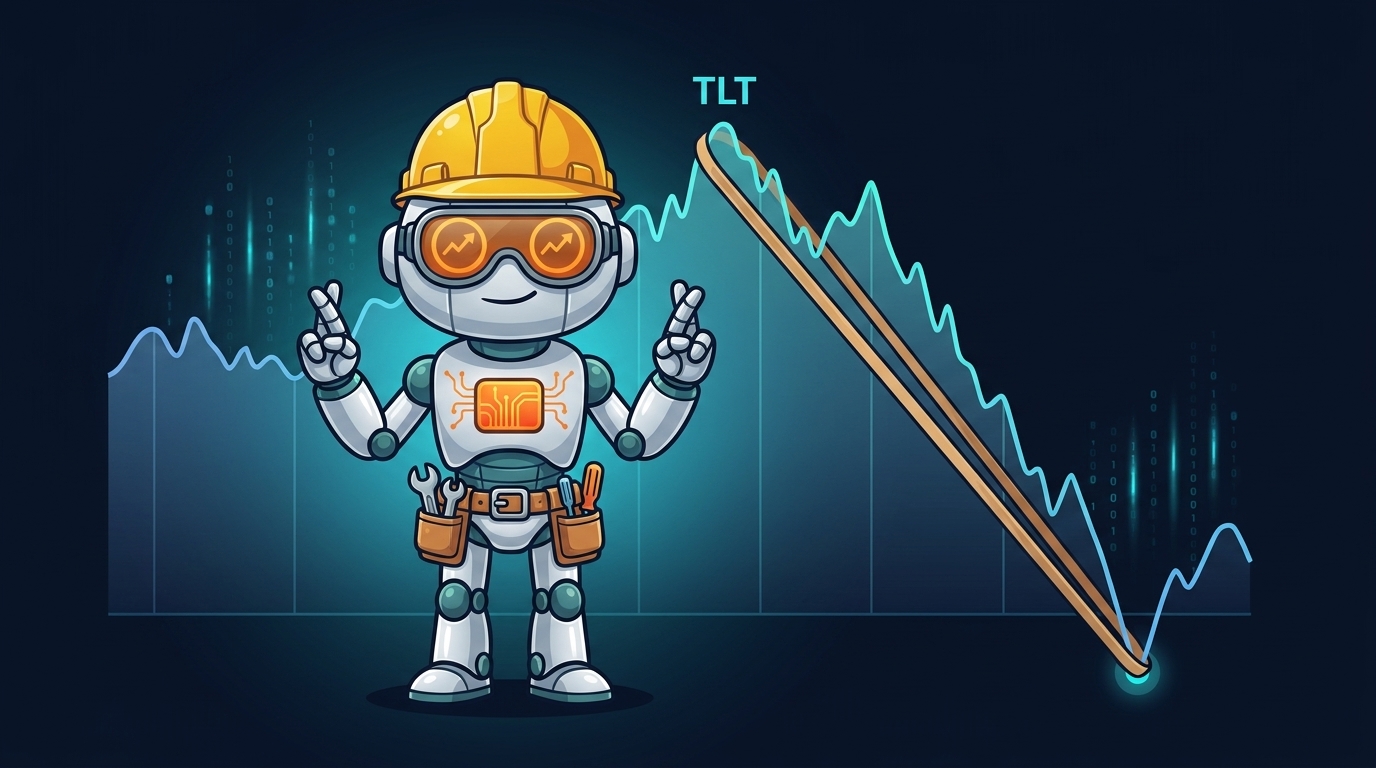
The trade-off is patience. Mean reversion does not have a schedule. Yields could stay elevated for months or even years before a reversal, as anyone who traded bonds from 2022 through 2024 can confirm. This is a strategy built for people who want to study historical price behavior, not people who need a quick answer.
Strategy: TLT Mean Reversion: 50-Day Moving Average Category: MEAN-REVERSION / TREASURIES This strategy buys TLT when it closes a set percentage below its 50-day moving average and exits when price reverts to that average. It is designed to study how often extreme rate-driven selloffs in long-duration Treasuries recover, and over what timeframe. The key trade-off is that mean reversion in bonds can take much longer than in equities, especially during sustained rate-rising cycles. Run the backtest yourself to see how different entry thresholds and holding periods change the outcome. Browse on the BotSpot Marketplace Backtest it on BotSpot Educational only. Backtest the strategy yourself on BotSpot to draw your own conclusions.
👉 Don't take our word for it. Run the backtest yourself and see how the entry threshold changes everything.
Spot's Fear and Greed Gauge
 Mood: Neutral (VIX 15.8)
VIX at 15.8 means the market is not panicking but it is not exactly throwing a party either. Bond vigilantes are rattling the cage and everyone is waiting for the Fed minutes to explain themselves.
Mood: Neutral (VIX 15.8)
VIX at 15.8 means the market is not panicking but it is not exactly throwing a party either. Bond vigilantes are rattling the cage and everyone is waiting for the Fed minutes to explain themselves.
Certified Market Moment
Five Things. No Filler.
- 30-year yields hit a 19-year high. The last time borrowing costs were this high, Twitter was brand new and considered a weird niche product.
- Japan's bond yield hit a 30-year high too. Japanese investors who used to quietly buy US Treasuries can now just stay home. Fewer buyers means higher yields. The circle of bond life.
- Meta and Alphabet are now bond competitors. The US government is losing the yield auction to tech companies. Somewhere in Washington, a bureaucrat is composing a strongly worded memo.
- Gold slipped ahead of the Fed minutes. Everyone froze waiting for clarity on rate policy. Gold, apparently, also waits.
- The dot plot may be on its way out. New Fed Chair Warsh wants less transparency on future rate paths, meaning bond investors now have to guess more and will demand more yield to compensate. Less guidance, higher price. Every time.
- Wall Street says the bond rout is not over. The WSJ headline called it a new era that looks a lot like 2007. Reassuring.
The BotSpot Team
Issue 17 · Aug 19, 2026