📜 Bessent Got Schooled. Warsh Is Up Next.
The bond market ate Treasury's buyback plan for breakfast. Now every investor is watching Jackson Hole like it's the series finale.
GM, Spotters. This is BotSpot, brought to you by the team behind Lumiwealth. Each week we unpack the market stories worth knowing about, with clear context and a take your financial advisor would never say out loud.
- 🏔️ Jackson Hole is this week. Warsh speaks. Markets are holding their breath.
- 📉 Bessent tried to calm bond yields. The bond market said 'cute'.
- 🏷️ Your mutual fund might secretly become an ETF soon. Fees just dropped 9%.
- 🤖 Alibaba's AI spending is getting side-eyes from investors around the globe.
- 🇺🇸 Stablecoins could quietly become the bond market's biggest new buyer. Wild.
Bessent vs. The Bond Market: A Story in Two Acts
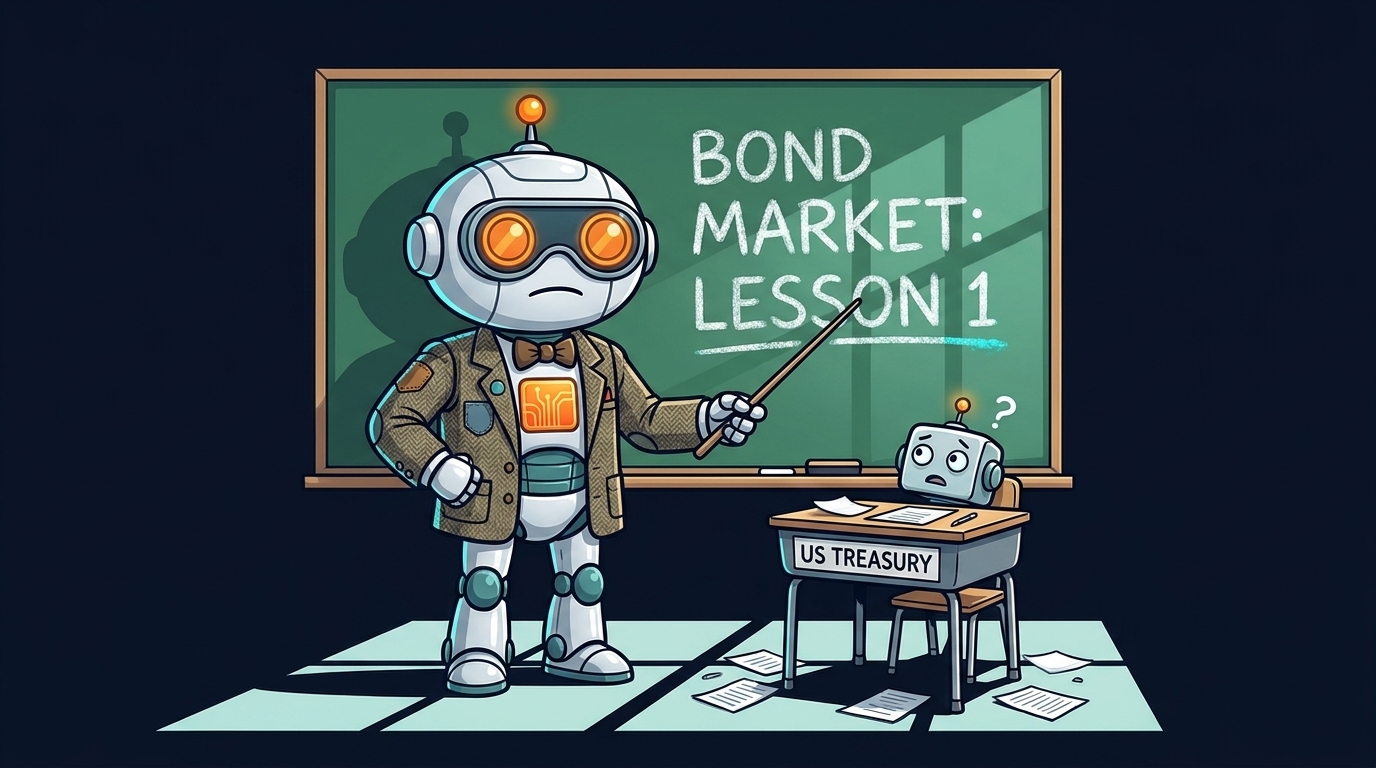
Last week, the US Treasury tried to calm rising bond yields with a buyback announcement. The bond market read the memo, nodded politely, and then did whatever it wanted anyway.
Treasury Secretary Scott Bessent rolled out a plan to buy back older bonds, essentially trying to soak up some of the selling pressure hammering longer-term yields. It worked. Briefly.
~4.9% — Where longer-dated Treasury yields pushed back toward after the buyback bounce faded. That is the number keeping CFOs and mortgage desks up at night.
Think of it like this. The Treasury put a garden hose on a house fire, got a cheer from the neighbors, then watched the fire keep going. The underlying pressure, too much debt issuance and not enough buyers, did not go away because of one announcement.
Yields move opposite to bond prices. When yields rise, it means fewer people want to hold the bonds, so the price drops and the interest rate climbs. Rising yields make everything from car loans to corporate borrowing more expensive.
"The bond market is not impressed by press releases. It is impressed by supply and demand."
— Spot, watching the 10-year from a folding chair
 Bessent came prepared. The bond market had a different syllabus.
Now all eyes shift to Jackson Hole, Wyoming, where Fed Chair Kevin Warsh is scheduled to speak this week. Jackson Hole is basically the Oscars for central bankers, except the acceptance speeches move markets instead of Twitter.
Investors want to know one thing: is the Fed thinking about raising rates again to fight inflation, or are they done? Warsh has not tipped his hand. PCE inflation data drops the same week, adding a second plotline to an already crowded episode.
👉 The news is the Treasury tried to cap yields and the bond market shrugged it off. The takeaway for you is Jackson Hole and PCE data this week are the two events most likely to move your SPY position before Friday.
- Watch Warsh's exact words on 'restrictive' vs. 'neutral' rate language. One word shift changes the whole vibe.
- Watch the 10-year Treasury yield. If it pushes above recent highs after the speech, bond selling is not done.
- Watch PCE on Friday. If it comes in hot, the case for another hike gets louder fast.
- Watch tech stocks, which are most sensitive to rising long-term rates because their value lives far in the future.
Playing Defense While Warsh Loads the Teleprompter
Thinking through it
When a Fed chair is about to speak at Jackson Hole and bond yields are already wobbly, the week can move fast in either direction. A sharp trader might think about structures that make money from a big move, without having to guess which direction the move goes.

One structure that comes up in these situations is a long straddle on a market ETF. You buy both a call and a put at the same strike price, expiring after the event. If the market rips or crashes, one side profits. If it does absolutely nothing, you lose what you paid for both options. The risk is clear: a calm week is the enemy.
Asset: SPY (S&P 500 ETF) (Options / ETF)
With Warsh's Jackson Hole speech and PCE data both landing this week, price swings in either direction look more likely than a quiet market. A long straddle on SPY is an example of a structure built for a big move without picking a side.
Mechanics
| Field | Value |
|---|---|
| INSTRUMENT | SPY options |
| STRUCTURE | Long straddle: buy a call AND a put at the same strike, same expiration |
| THESIS DRIVER | Jackson Hole speech plus PCE data in the same week raises odds of a large price move |
| KEY RISK | If SPY barely moves, both options lose value (time decay works against you) |
| WATCH FOR | Implied volatility going into the speech. If options are already pricey, the straddle costs more to enter |
Why it matters: The news is two major market-moving events land in the same week. The takeaway for you is understanding how a straddle works is useful any time an event could swing prices hard but the direction is genuinely unclear.
For educational purposes only. Not investment advice. Always do your own research.
👉 The idea is not a prediction. It is an example of how options let you express a view about uncertainty rather than direction. Worth understanding either way.
The Boring Strategy That Loves Chaos Weeks
How it works
A TLT mean-reversion strategy bets that long-term Treasury bond prices tend to snap back after sharp moves. When yields spike hard in a short window, the price of TLT (the 20-year Treasury ETF) drops fast. The strategy looks for those oversold moments and takes a position expecting a partial recovery.

The catch is that mean reversion does not always mean fast reversion. If yields keep climbing because of a structural shift (like the market deciding rates need to stay high), the snap-back can take months or just not happen. The strategy works best in noisy, event-driven sell-offs, not slow grinds higher.
Strategy: TLT Mean Reversion (Rate Spike Edition) Category: MEAN-REVERSION / BONDS This strategy buys TLT when it drops sharply over a short window, expecting a bounce back toward recent average prices. It is designed for noisy, event-driven sell-offs in long-term Treasuries. The main trade-off is that it struggles when yields are in a sustained uptrend, because 'mean' keeps moving higher. Running your own backtest across different rate environments is the best way to see where it holds up and where it does not. Browse on the BotSpot Marketplace Backtest it on BotSpot Educational only. Backtest the strategy yourself on BotSpot to draw your own conclusions.
👉 Don't take our word for it. With Bessent's bond drama fresh and Jackson Hole incoming, this is a good week to run the backtest yourself and see how TLT behaves after fast yield spikes.
How's Spot Feeling This Week?
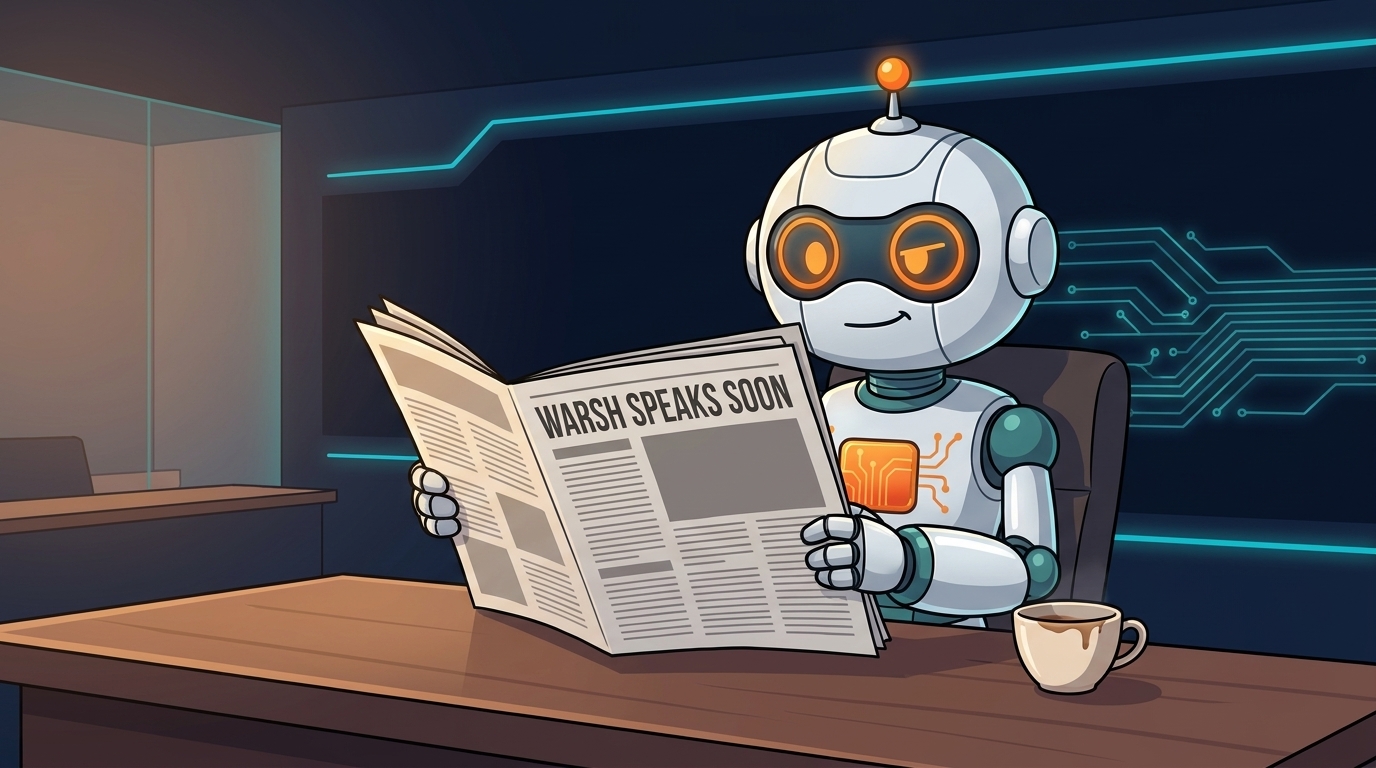 Mood: Neutral (VIX 15.9)
VIX at 15.9 puts us squarely in Neutral. Markets are not panicking yet, but with Jackson Hole and PCE both this week, Spot is keeping one eye on the exit.
Mood: Neutral (VIX 15.9)
VIX at 15.9 puts us squarely in Neutral. Markets are not panicking yet, but with Jackson Hole and PCE both this week, Spot is keeping one eye on the exit.
This One Goes Out to Scott Bessent
Quick Hits Before You Close the Tab
- Warsh speaks at Jackson Hole this week. Every word will be parsed like a ransom note. Bring snacks.
- Bessent's bond buyback bought about three hours of calm. The yield on the 10-year has the attention span of a golden retriever near a squirrel.
- Your mutual fund might secretly become an ETF. Dimensional is merging eight ETFs into share classes of mutual funds, dropping fees 9%. Nobody asked, everyone benefits.
- Stablecoins could become Treasury's new best friend. Trump's crypto push and Bessent's T-bill needs may actually be the same story wearing different hats.
- Alibaba dropped on AI spending fears. Investors are starting to ask when 'invest in AI' turns into 'show us the revenue'. Perfectly reasonable question.
- Rare books are being fed to AI models. Sellers are calling it 'the guillotine'. The irony of destroying history to build the future is not lost on Spot.
- Nasdaq futures slipped on US-Canada trade noise. The trade war has sequels now. This one involves maple syrup and semiconductors, which is a sentence we never expected to write.
The BotSpot Team
Issue 17 · Aug 24, 2026