🏔️ All Eyes on Jackson Hole (And the Guy Behind the Curtain)
Kevin Warsh makes his first speech as Fed Chair while Treasury Secretary Bessent quietly rewrites the rules of who actually runs monetary policy.
GM, Spotters. This is BotSpot, brought to you by the team behind Lumiwealth. Each week we dig through the market noise and bring you the stories worth knowing, with plain English, a few laughs, and zero MBA jargon.
- 🎙️ Warsh takes the Jackson Hole stage for the first time as Fed Chair. Bond markets are not being chill about it.
- 🏦 Treasury Secretary Bessent is quietly buying back long-dated debt. That is normally the Fed's job. Awkward.
- 💼 Salesforce just said the SaaSpocalypse is nonsense and its stock jumped 20% to prove the point.
- 📋 Jobless claims came in at 203,000, ticking down again. The labor market is still the stubborn one at the dinner table.
- 🌍 German Bund yields hit a 15-year high. Europe's bond market is sending its own message this week.
One Stage. Two Bosses. Zero Clarity.
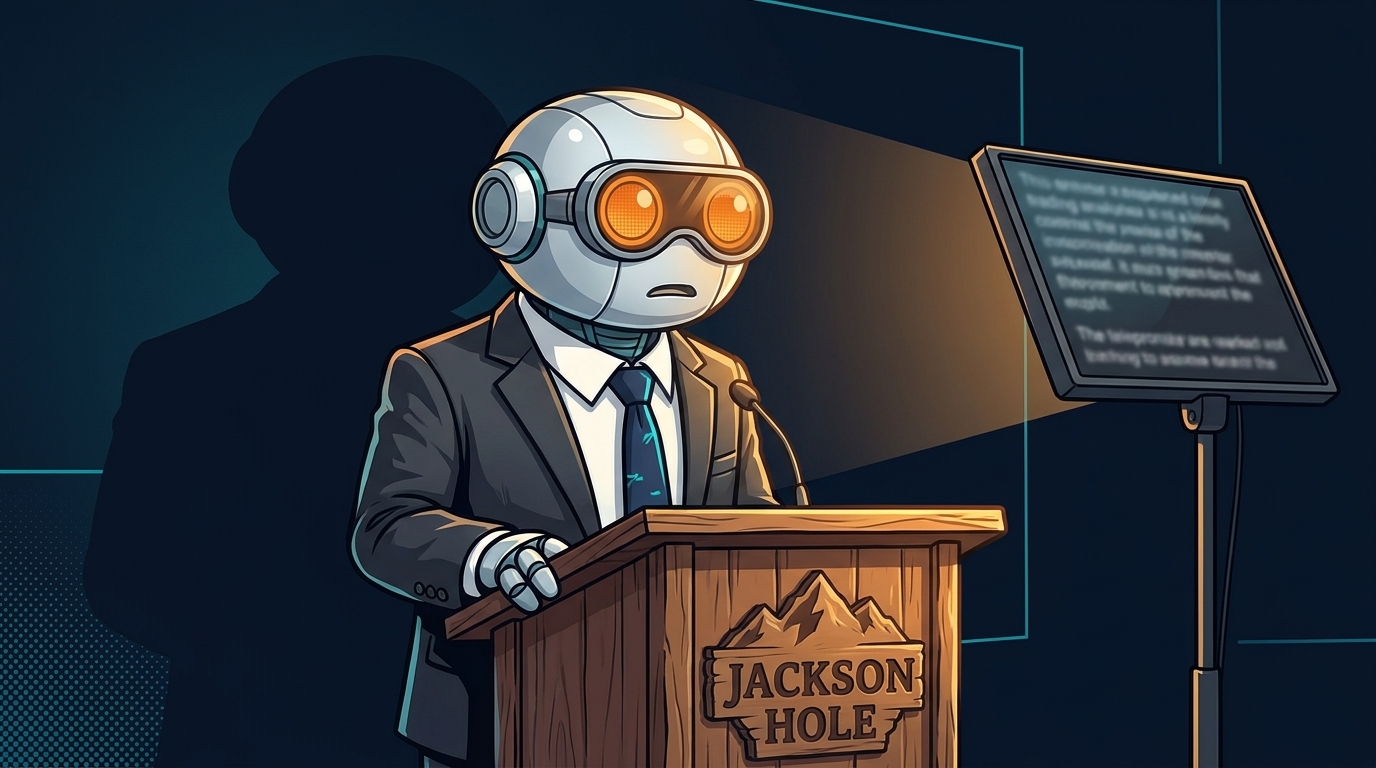
Kevin Warsh walked up to the Jackson Hole microphone today for the first time as Fed Chair. The bond market did not wait for pleasantries.
Treasury yields rose ahead of the speech. German Bund yields hit a 15-year high. Stock futures wobbled. Even Brent crude climbed 2%.
15-Year High — Where German Bund yields just landed. Not just a U.S. story, this bond move is global.
Here is the part that makes this Jackson Hole different from every other one: Warsh is not the only power in the room. Treasury Secretary Scott Bessent has been busy.
Bessent recently announced plans to buy back long-dated U.S. debt. That is a tool that has historically belonged to the Fed, not the Treasury. Economists are raising their eyebrows so hard they pulled something.
"The Fed Chair gives a speech. The Treasury Secretary rewrites the script."
— This week, in a nutshell
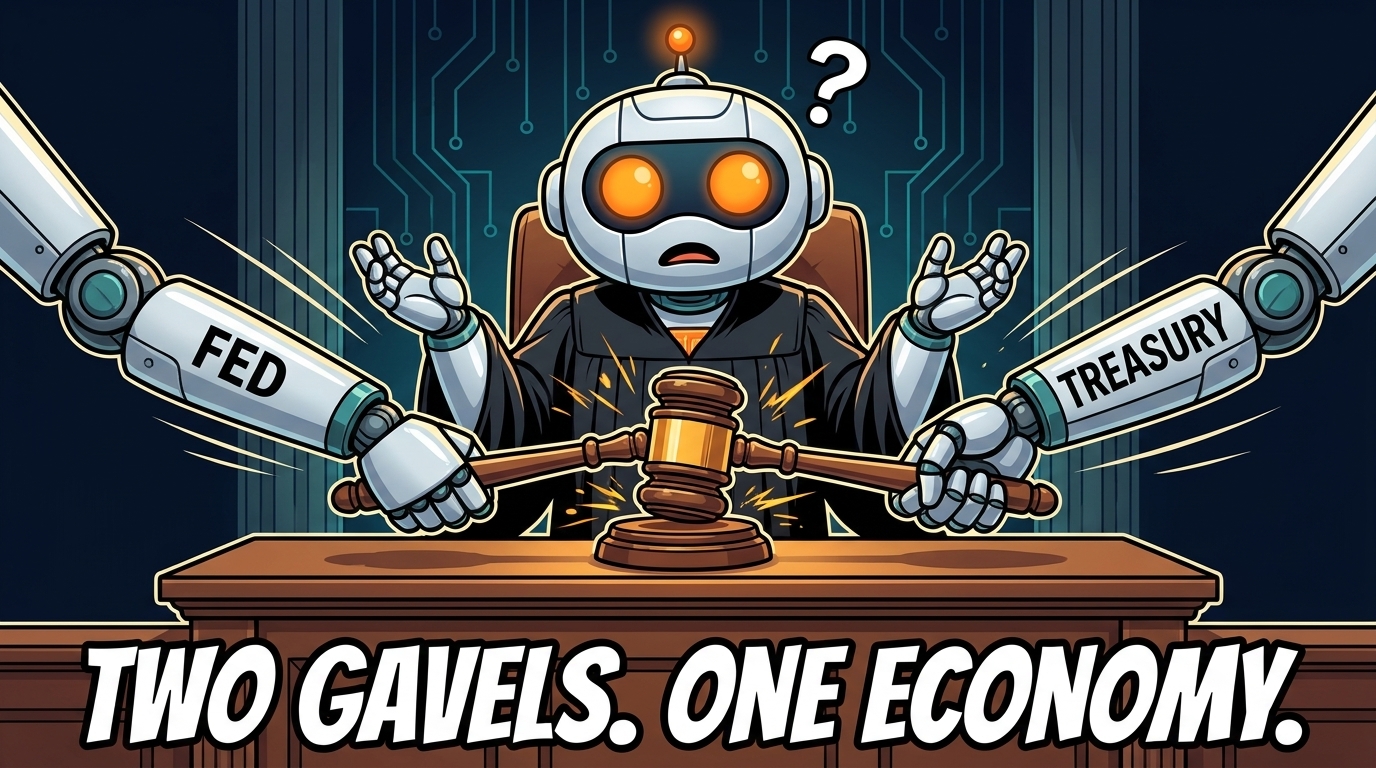 Bessent is blurring lines that have held for decades. Warsh just inherited that problem.
The Fed and the Treasury are supposed to have separate lanes. The Fed handles rates and money supply. The Treasury handles the government's bills and borrowing. It is a system built on purpose, to keep politics away from interest rate decisions.
When the Treasury starts managing the long end of the yield curve, those lanes blur. Investors watching today's Warsh speech are not just asking what he thinks about rates. They are asking whether he still controls the answer.

👉 The news is Warsh is speaking at Jackson Hole while Bessent quietly moves into the Fed's lane. The takeaway for you is that the usual playbook for reading rate signals just got a second author.
- Watch what Warsh says about the timeline for rate cuts, any hint of urgency sends yields sharply lower.
- Watch whether he addresses Bessent's debt buyback plan directly, silence on that topic is its own signal.
- Watch the 10-year Treasury yield reaction in the first 30 minutes after the speech. That is the market's grade.
- Watch European bonds: if Bund yields keep climbing, that puts pressure on global borrowing costs no matter what Warsh says.
Playing the Post-Jackson Hole Rate Surprise
Thinking through it
Every year, Jackson Hole produces a moment. Sometimes the Fed Chair says something surprising and rates move fast. Sometimes the speech is a snooze and nothing happens. Either way, volatility around Fed speeches tends to spike right before and then collapse right after.
A trader thinking about this week might look at the TLT (the 20-plus-year Treasury bond ETF) as a way to study how rate expectations move around Fed events. TLT goes up when people expect cuts, and goes down when they expect holds or hikes.
Asset: TLT (iShares 20+ Year Treasury Bond ETF) (Fixed Income ETF / Options)
A thought experiment: if Warsh signals rate cuts are coming sooner than expected, long-dated Treasury bonds could rally sharply. If he signals rates stay higher for longer, TLT could drop. Either way, an options structure that bets on a big move in either direction (rather than picking a side) is an interesting framework to study around Fed speech events.
Mechanics
| Field | Value |
|---|---|
| INSTRUMENT | TLT (20+ Year Treasury Bond ETF) |
| STRUCTURE | Long straddle or strangle (options on TLT) |
| THESIS DRIVER | Fed speech volatility: big move expected, direction unknown |
| KEY RISK | If the speech is a non-event, price barely moves and the options lose value (time decay) |
| WATCH FOR | Implied volatility crush after the speech, which is when options get cheaper fast |
Why it matters: The news is the market is pricing in uncertainty around Warsh's first major speech. The takeaway for you is understanding how options can be used to study volatility events, not just direction, is a useful framework when a Fed speech is the main event.
For educational purposes only. Not investment advice. Always do your own research.
👉 This is a framework for studying how options behave around known volatility events. Not a recommendation to trade, just a structure worth understanding before the next Fed moment lands.
The Boring Strategy That Loves Fed Days
How it works
The TLT Mean Reversion strategy watches for moments when long-dated Treasury bonds get unusually far from their average price, then bets that they will snap back. Think of it like a rubber band: the further it stretches, the harder it wants to return to center.
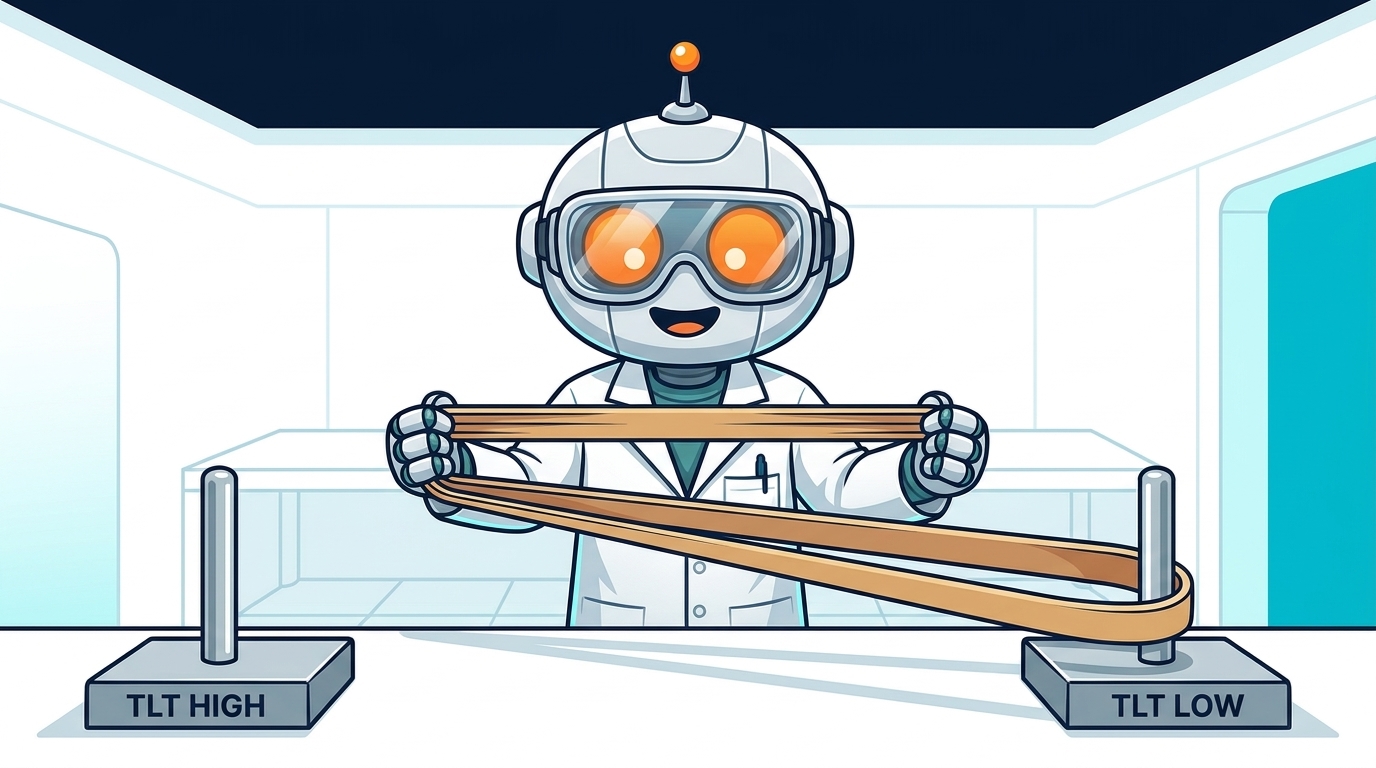
The strategy is purely mechanical. When TLT drops a certain amount below its moving average, the system buys. When it recovers back to the average, it sells. No feelings, no Fed-speech watching, no checking Twitter at 10am.
Strategy: TLT Mean Reversion (20-Day Moving Average) Category: MEAN-REVERSION / TREASURIES This strategy buys TLT when it falls significantly below its 20-day moving average and exits when it recovers. The natural trade-off is that it can feel slow in trending markets, where bonds keep falling and the entry signals keep appearing before the reversal comes. It works best in choppy, range-bound rate environments rather than sustained one-direction moves. Worth studying in the current context where Fed uncertainty creates regular price swings in long-dated bonds. Browse on the BotSpot Marketplace Backtest it on BotSpot Educational only. Backtest the strategy yourself on BotSpot to draw your own conclusions.
👉 Don't take our word for it. Run the backtest yourself and see how the strategy held up during the last few Fed-speech cycles.
Spot's Feelings Report
 Mood: Greed (VIX 14.5)
VIX at 14.5 means the market is comfortable but not euphoric. Investors are not hiding under their desks, but they are definitely not throwing chips in the air either. Jackson Hole nerves are keeping things just a little bit tense.
Mood: Greed (VIX 14.5)
VIX at 14.5 means the market is comfortable but not euphoric. Investors are not hiding under their desks, but they are definitely not throwing chips in the air either. Jackson Hole nerves are keeping things just a little bit tense.
Every Investor Right Now
Bite-Sized Cookies for the Road
- Warsh hits Jackson Hole. First speech as Fed Chair. The bond market RSVP'd with higher yields before he even said hello.
- Bessent is redecorating the Fed's house. Buying back long-dated debt is a monetary tool. Treasury just picked it up off the Fed's shelf and walked out.
- Bund yields at a 15-year high. Germany's bonds are stressed about energy prices and a whole lot more. Europe is in its own rate drama this week.
- Salesforce said SaaSpocalypse is nonsense. Stock jumped 20%. The whole software sector exhaled. Marc Benioff said it loudly on an earnings call and the market believed him.
- Jobless claims: 203,000. Down again. The labor market keeps refusing to crack, which keeps the Fed's rate-cut math complicated.
- The global economy is surprisingly fine. Trade wars, bond stress, Iran conflict: somehow GDP is holding up because AI capex keeps the lights on. For now.
- Trump family crypto bank got Abu Dhabi backing. The headline writes itself. We just work here.
The BotSpot Team
Issue 18 · Aug 28, 2026