📉 Bonds Hit a 22-Year Low (Yes, Really)
TLT just traded at prices not seen since Janet Jackson's wardrobe malfunction. Here is what happened, why it keeps happening, and what it means for you.
GM, Spotters. This is BotSpot, brought to you by the team behind Lumiwealth. Each week we dig into the market stories worth knowing about, with context, color, and zero filler.
- 📉 TLT hit its lowest price since 2004. We break down why nobody can seem to time this thing right.
- 🚀 SpaceX lockup expires tomorrow. A flood of new shares is about to land in your ETFs whether you asked for it or not.
- 🏭 Caterpillar is up 48% this year because AI data centers need bulldozers. It sounds absurd. It is real.
- 📊 Fidelity crossed $8 trillion in assets, fueled by a retail trading boom that is 31% bigger than last year.
- 🍿 Paramount vs. WBD merger is stuck in legal hell. There is a $7 billion termination fee on the clock.
The Bond Fund That Forgot How to Come Back
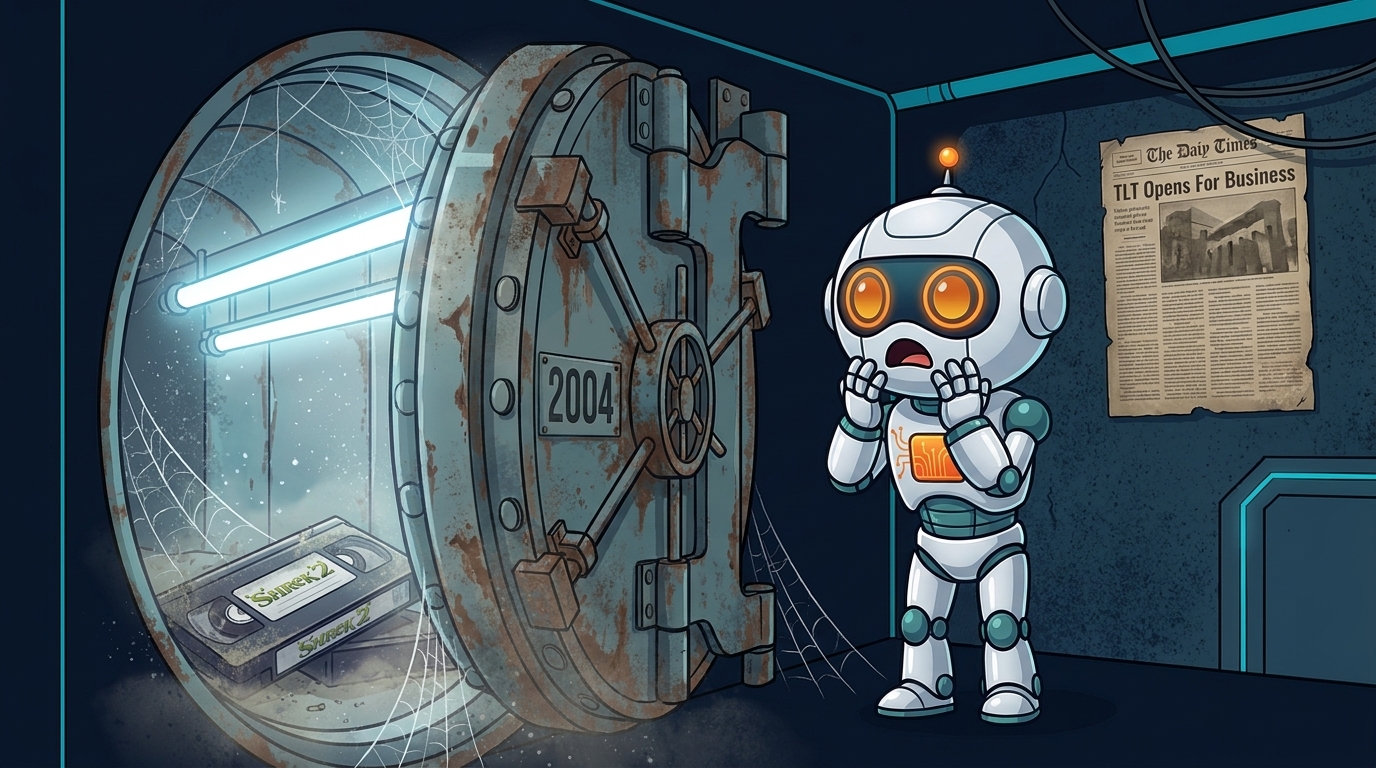
TLT, BlackRock's giant long-term Treasury bond ETF, just fell below $82 per share. The last time it was this cheap? Shrek 2 was in theaters and Facebook had just launched. Welcome back to 2004.
Rising yields on long-term bonds push their prices down. It is a basic seesaw. What is not basic is that TLT has been sitting on the wrong end of that seesaw for four straight years.
50%+ — How far TLT has fallen from its 2020 high of $171.11. That is not a dip. That is a crater.
Two things are driving yields higher right now. First, AI companies need enormous amounts of money to build data centers, which pulls capital away from bonds. Second, the war in Iran is pushing inflation expectations up, which makes long-term bonds look riskier to own.
Fixed income strategist Jason England at Simplify Asset Management put it plainly: investors are avoiding the long end of the bond market entirely. Short-term T-bills are winning on almost every time horizon you can measure.
"Standing at the tail end of a seesaw. If someone jumps on it, you get a giant move up. Except everyone usually gets it wrong."
— ETF analyst Athanasios Psarofagis, Bloomberg Intelligence, on traders trying to time TLT
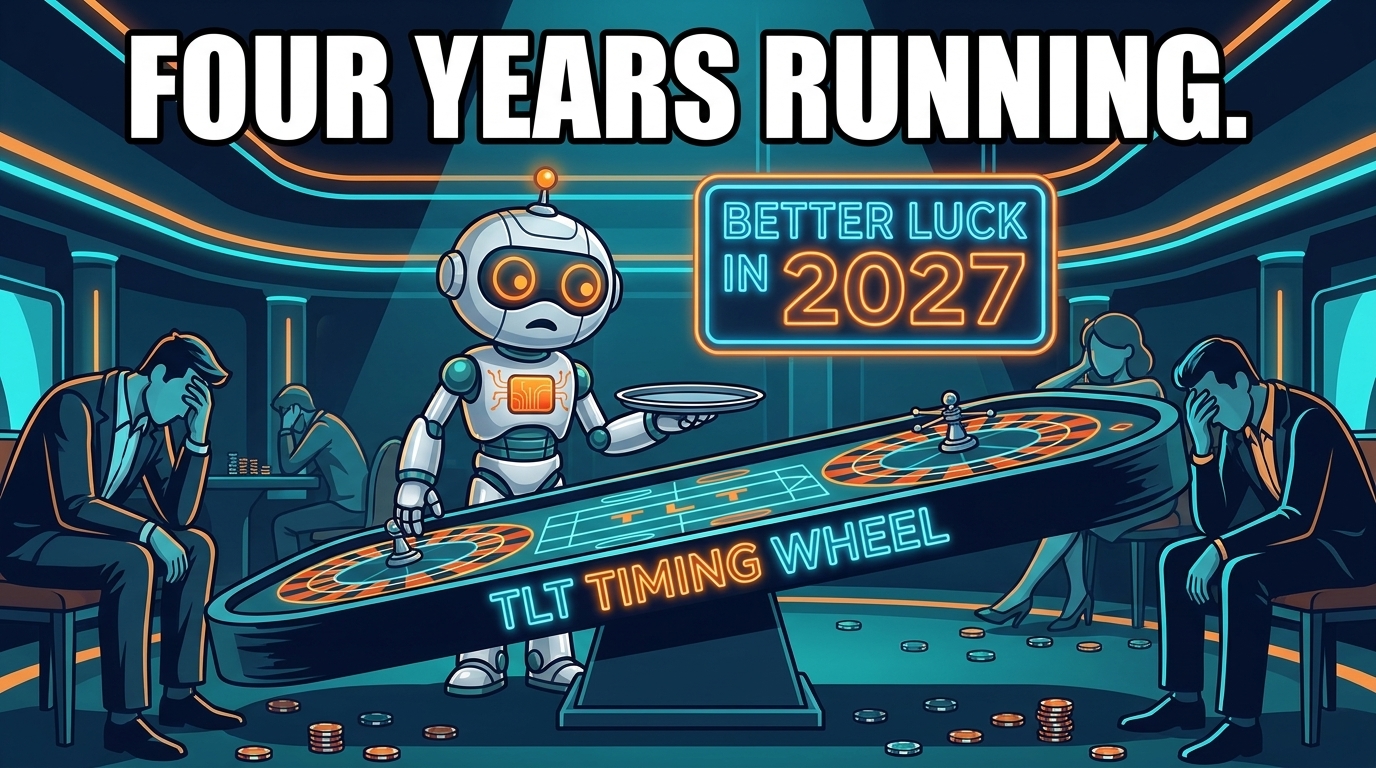 The trade that has not worked since 2022. Still has $41 billion in it.
Here is the wild part. TLT's assets have fallen from a peak of $64.5 billion to $41.6 billion. That is a big drop. But $41.6 billion is still a massive amount of money sitting in a fund that, by one analyst's reckoning, has been broken for four years.
The appeal is the dream of the catch: if the Fed ever does cut rates dramatically, long-term bond prices could explode upward. It is the kind of trade that feels obvious on paper and punishing in practice.
👉 The news is TLT just hit a 22-year low with no floor in sight. The takeaway for you is that short-term T-bills (like BIL) have outperformed TLT on every time horizon that matters right now, and understanding why is worth your time before you touch duration.
- Watch the Fed rate path: any serious pivot toward cuts changes the TLT math instantly.
- Watch BIL vs. TLT spread: short-term T-bills are still winning on 2, 3, and 5-year horizons.
- Watch inflation expectations: the Iran war premium is the wild card that most bond models are not pricing cleanly.
- Watch TLT's asset flows: if money starts coming back in, that is a signal that big money sees a bottom forming.
Explore duration risk on BotSpot
The Short-End Trade Everyone Is Actually Running
Thinking through it
When the long end of the bond market is in free fall and the short end is outperforming on every time horizon, a natural question comes up. What does a portfolio look like if you want bond-like safety without bond-like pain? That is the thought experiment here.
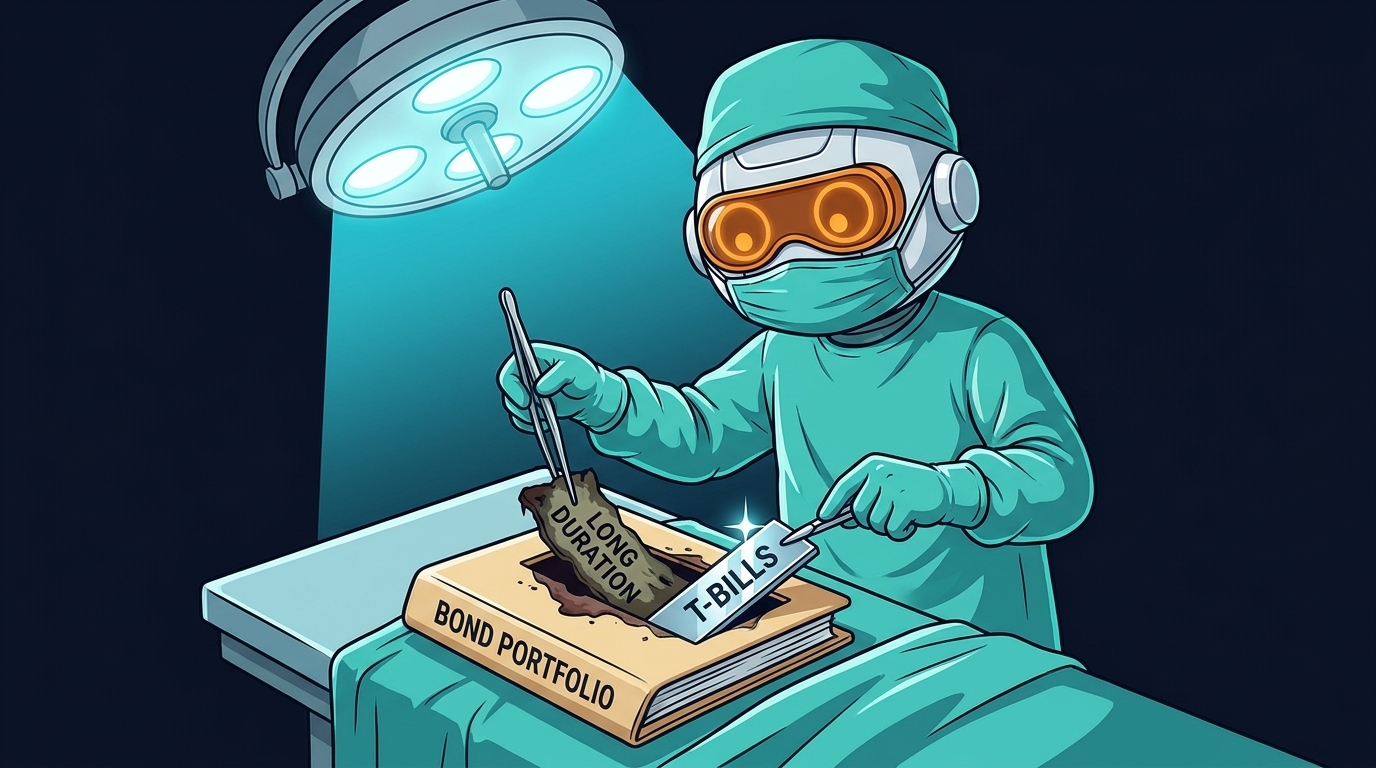
The idea is not to avoid bonds entirely. It is to ask whether owning the short end (1-3 month T-bills) instead of the long end (20+ year Treasuries) changes your risk profile in a rising-yield world. Spot says this one is worth studying before the next Fed meeting.
Asset: BIL vs. TLT (Short vs. Long Duration Treasuries) (Fixed Income ETFs)
In a world where AI capital demand and elevated inflation expectations keep long-term yields rising, short-duration T-bill exposure may offer more stability than long-duration bond funds. The thought experiment is whether swapping or reducing TLT exposure in favor of BIL changes your portfolio's behavior during continued yield pressure.
Mechanics
| Field | Value |
|---|---|
| INSTRUMENT | BIL (1-3 Month T-Bill ETF) vs. TLT (20+ Year Treasury ETF) |
| STRUCTURE | ETF pair comparison, not a short position. Looking at relative performance and risk profile. |
| THESIS DRIVER | Long-term yields still rising due to AI capital demand and Iran war inflation premium. |
| KEY RISK | A sudden Fed pivot or rate cut signal would reverse TLT's decline sharply and quickly. |
| WATCH FOR | Any Fed language about cutting rates, changes in 10-year yield direction, or resolution in the Iran situation. |
Why it matters: The news is TLT has underperformed BIL on every time horizon for four years running. The takeaway for you is that understanding how duration (how long until a bond matures) affects price swings in your fixed income exposure is one of the most useful things a retail investor can learn right now.
For educational purposes only. Not investment advice. Always do your own research.
👉 This is not a call to sell TLT. It is an invitation to understand what you own and why duration is the single biggest factor in bond ETF price swings.
The Boring Strategy That Bonds Keep Breaking
How it works
The classic 60/40 portfolio (60% stocks, 40% bonds) was built on a simple idea: when stocks fall, bonds rise, and the two balance each other out. For decades, that worked beautifully. Then 2022 happened, and both fell at the same time. The strategy concept worth studying this week is what a modified 60/40 looks like when you swap long-duration bonds for short-duration T-bills.

The trade-off is straightforward. Short-duration T-bills give up the potential upside of a rate-cut rally in long bonds. In exchange, they absorb far less damage when yields keep climbing. Whether that trade-off makes sense depends entirely on your view of where rates go next.
Strategy: Modified 60/40: SPY + BIL (Short-Duration Bond Swap) Category: DEFENSIVE / INCOME The classic 60/40 portfolio swaps its long-duration bond allocation for short-term T-bills, removing the heavy price sensitivity to rising long-term yields. The strategy aims to preserve the income and stability role of fixed income without taking on the duration risk that has punished TLT holders. The natural trade-off is that you give up the explosive upside of long bonds if and when the Fed pivots to cuts. Build it and backtest it yourself to see how it would have behaved across the last several years of rising yields. Browse on the BotSpot Marketplace Build it on BotSpot Educational only. Backtest the strategy yourself on BotSpot to draw your own conclusions.
👉 Don't take our word for it. Run the backtest yourself and see how the bond swap changes the picture during rising-yield periods.
Spot Checks the Vibe
 Mood: Neutral (VIX 16.0)
VIX at 16 means the market is not panicking, but it is not exactly sipping lemonade either. Bonds are bleeding, AI stocks are twitchy, and the Strait of Hormuz is still a news story. Call it cautious calm.
Mood: Neutral (VIX 16.0)
VIX at 16 means the market is not panicking, but it is not exactly sipping lemonade either. Bonds are bleeding, AI stocks are twitchy, and the Strait of Hormuz is still a news story. Call it cautious calm.
The TLT Trader Experience
The Rest of the Week, Crumbled
Five stories you should know about, delivered fast, with no unnecessary syllables.
- SpaceX lockup expires tomorrow. More than 12% of shares become available for sale, up from under 5%. Your Nasdaq ETF is about to get a little more Elon in it.
- SpaceX revenue nearly doubled year over year. $7.8 billion in Q2, driven by Starlink adding a million subscribers. The stock still dipped after hours. Classic.
- Caterpillar is up 48% this year. AI data centers need bulldozers. Caterpillar has a $72 billion backlog stretching to 2030. The shovels are booked.
- Fidelity nearly hit $8 trillion in assets. Retail investors logged 5.7 million daily trades in Q2, up 31% from last year. The meme-stock energy never fully left.
- Paramount owes WBD $650M per quarter. That is the ticking fee for every three months the merger stays unclosed past September. The clock is literally in the contract.
- U.S. factory activity beat expectations in July. ISM PMI came in at 55.6 vs. 54.0 expected. Manufacturing is quietly having a moment while everyone watches bonds fall.
- The dollar rose on rate-hike bets. Markets are now pricing in a Fed rate increase this year. Bonds said yikes. The dollar said thank you.
The BotSpot Team
Issue 15 · Aug 6, 2026