🤫 Warsh Shuts Up. Markets Freak Out.
The new Fed chair wants to talk less and let data do the work. Wall Street's response: total chaos.
GM, Spotters. This is BotSpot, brought to you by the team behind Lumiwealth. Each week we dig into the stories shaping markets, with context, color, and zero filler.
- 🤫 New Fed chair Kevin Warsh is deliberately going quiet. That is somehow louder than anything Powell ever said.
- 📈 Treasury yields and the dollar both rose to kick off Q3. Rate hike fears are back on the menu.
- 💛 Gold fell back below $4,000 ahead of Warsh's speech at the ECB Forum in Portugal. The metal does not like rate hike vibes.
- 🖥️ AOL is back on the Nasdaq. Yes, that AOL. The dial-up noise one. It is 2026.
- 🚁 Dronemaker AeroVironment surged 19% after blowing past earnings. The Pentagon drone budget is enormous right now.
The Fed's Silent Treatment Is Deafening

New Fed chair Kevin Warsh has a theory: if the Fed talks less, markets learn to think for themselves. Adorable theory. Very brave experiment.
Wall Street's actual response? Futures slipped Tuesday morning as every investor on the planet refreshed their screen waiting for Warsh to say literally anything at the ECB Forum in Portugal.
$4,000 — Gold's line in the sand. It fell back below this level the moment rate-hike fear crept back into Warsh watch-parties.
Here is the situation. Warsh took over from Powell and immediately changed the playbook. Powell would signal, hint, nudge, wink. Warsh's philosophy is closer to: shut up and watch the data.
The idea has real logic behind it. When the Fed over-communicates, traders front-run every word instead of reacting to actual economic numbers. Warsh wants price discovery to do its job.
"A quiet Fed only makes investors listen harder."
— WSJ headline, delivered with the same energy as a Zen koan
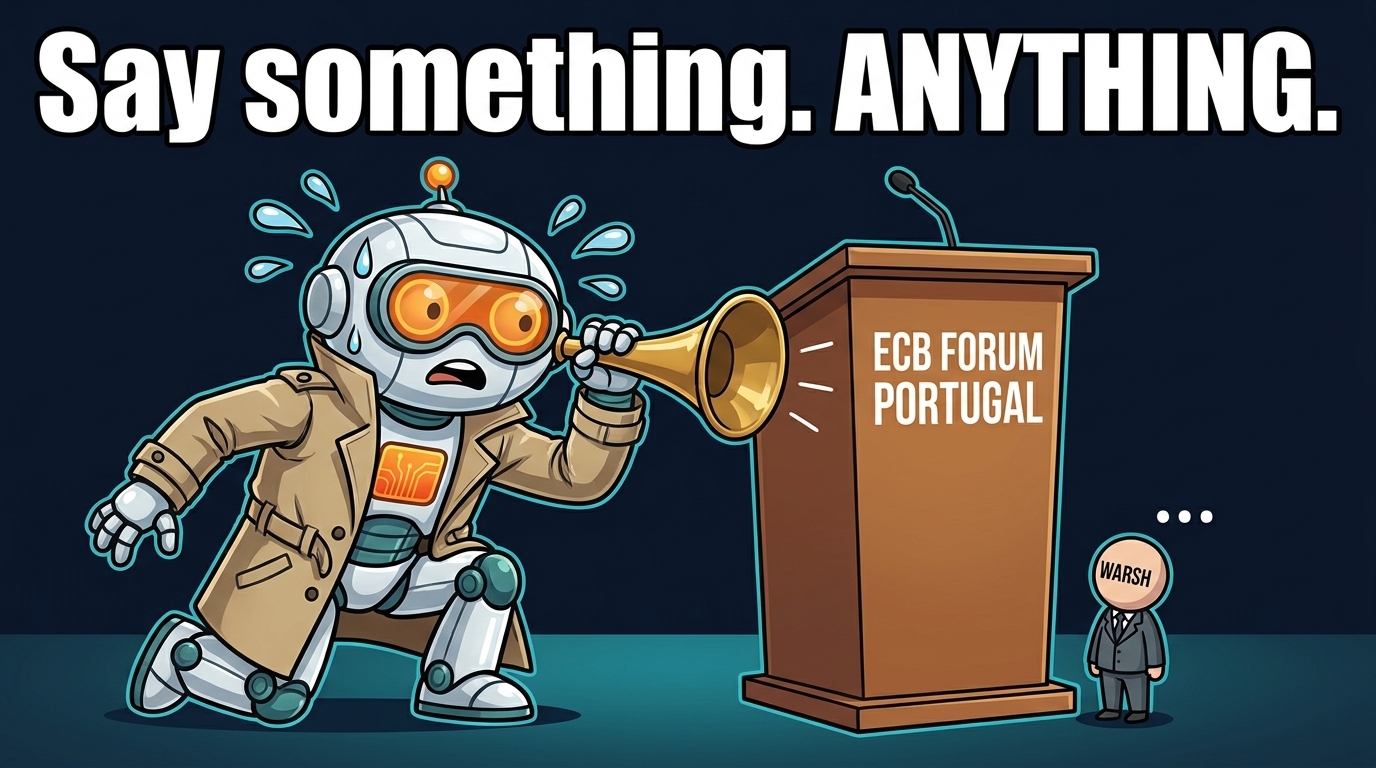 Warsh's silence is the loudest Fed signal of Q3.
The market read right now is that rate hikes are back on the table. Treasury yields rose Tuesday to kick off Q3, and the dollar climbed alongside them. That combo usually means traders are pricing in tighter money ahead.
For SPY holders, rising yields are a headwind. When bonds pay more, stocks have to compete harder for investor dollars. It does not mean the sky is falling. It means the cost of holding stocks just went up a notch.
👉 the news is Warsh is deliberately saying less about Fed policy. the takeaway for you is markets are now pricing rate hike risk on their own, and Treasury yields rising at the Q3 open is the first data point to watch.
- Watch the Warsh speech transcript from the ECB Forum. His word count per sentence will become a sport.
- Watch the 10-year Treasury yield: if it crosses recent highs, that is the bond market pricing in a hike, not a cut.
- Watch gold as a fear barometer. It dropped below $4,000 on rate fear, so watch whether it bounces or stays down.
- Watch SPY's reaction to jobs data now that the Fed is not pre-explaining everything. Volatility spikes are more likely.
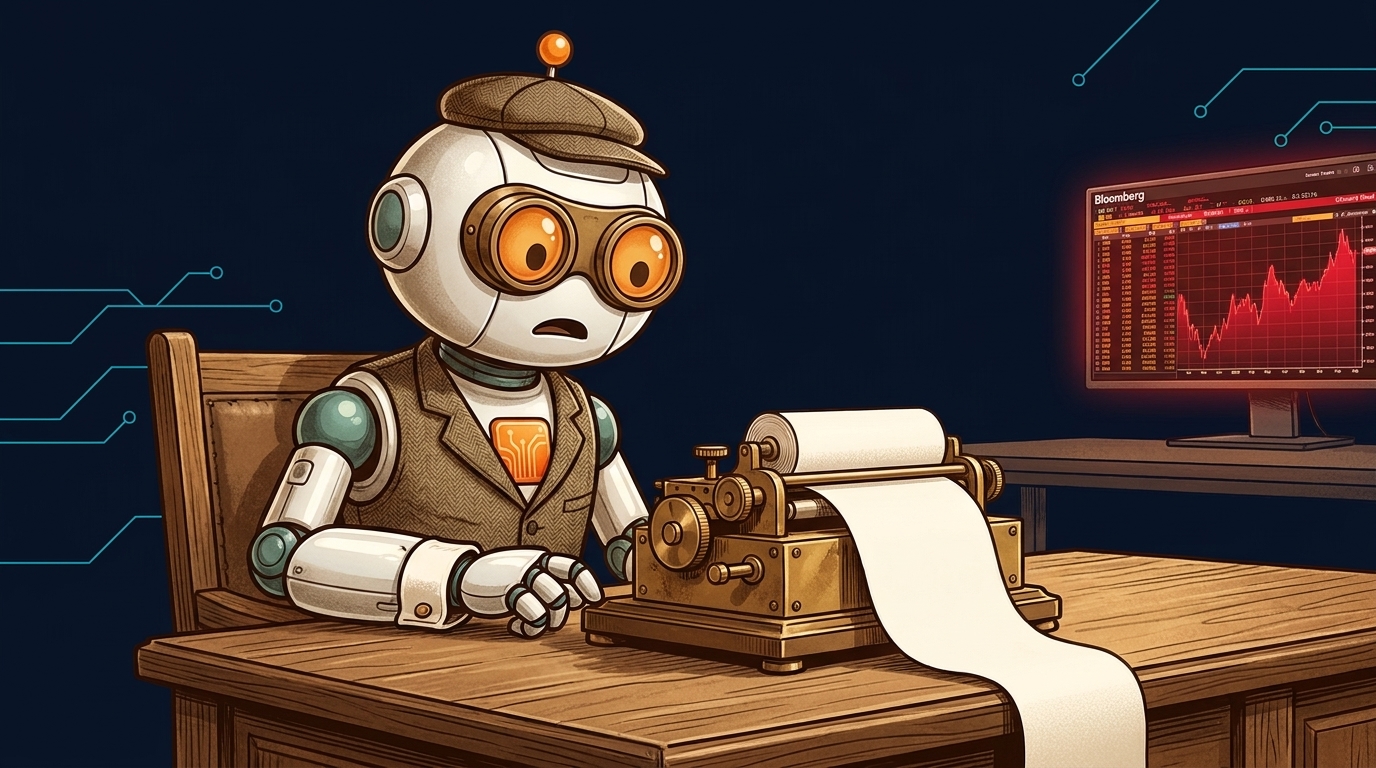
Gold's $4,000 Line: Worth Thinking About
How to think about it
Gold just got punched back below $4,000 on rate-hike fears ahead of the Warsh speech. Round numbers on big assets act like psychological magnets. They pull price back for a test, and whether that test holds or breaks is a question worth studying.

The structure that some traders study in situations like this is a defined-risk options play on GLD, the gold ETF. It lets you think through a directional thesis without taking unlimited downside if you get it wrong.
Asset: GLD (SPDR Gold Shares ETF) (Commodities / Options)
Gold pulled back sharply below $4,000 on renewed rate-hike fears. A defined-risk long structure on GLD lets a trader study whether that level acts as support or becomes a new ceiling, without unlimited downside exposure.
Mechanics
| Field | Value |
|---|---|
| INSTRUMENT | GLD options (tracks gold price) |
| STRUCTURE | Long call vertical spread (bull call spread): buy a call at or near current price, sell a higher call to offset the cost |
| THESIS DRIVER | Rate-hike fear pulled gold back to a major psychological level. If Warsh signals no hike, gold may snap back. |
| KEY RISK | If Warsh signals a hike is coming, gold could keep falling. The spread loses its full debit in that scenario. |
| WATCH FOR | Warsh speech tone at ECB Forum, 10-year Treasury yield direction, and whether GLD closes back above its 20-day moving average |
Why it matters: the news is gold dropped back below $4,000 as rate-hike odds rose. the takeaway for you is understanding how a vertical spread structure lets you define your max loss on a directional idea, which is worth studying regardless of which way gold moves.
For educational purposes only. Not investment advice. Always do your own research.
👉 vertical spreads are not about predicting the future. they are about capping how wrong you can be while still participating if you are right. that is the lesson here, not the gold price.
The Boring Strategy That Chip Traders Forget
How it works
Chip stocks like AMD and Micron have been on a wild ride. MarketWatch noted this week that volatility in top semiconductor gainers is at its highest since 2015. When single stocks get that jumpy, some traders study a covered call wheel on the sector ETF instead.
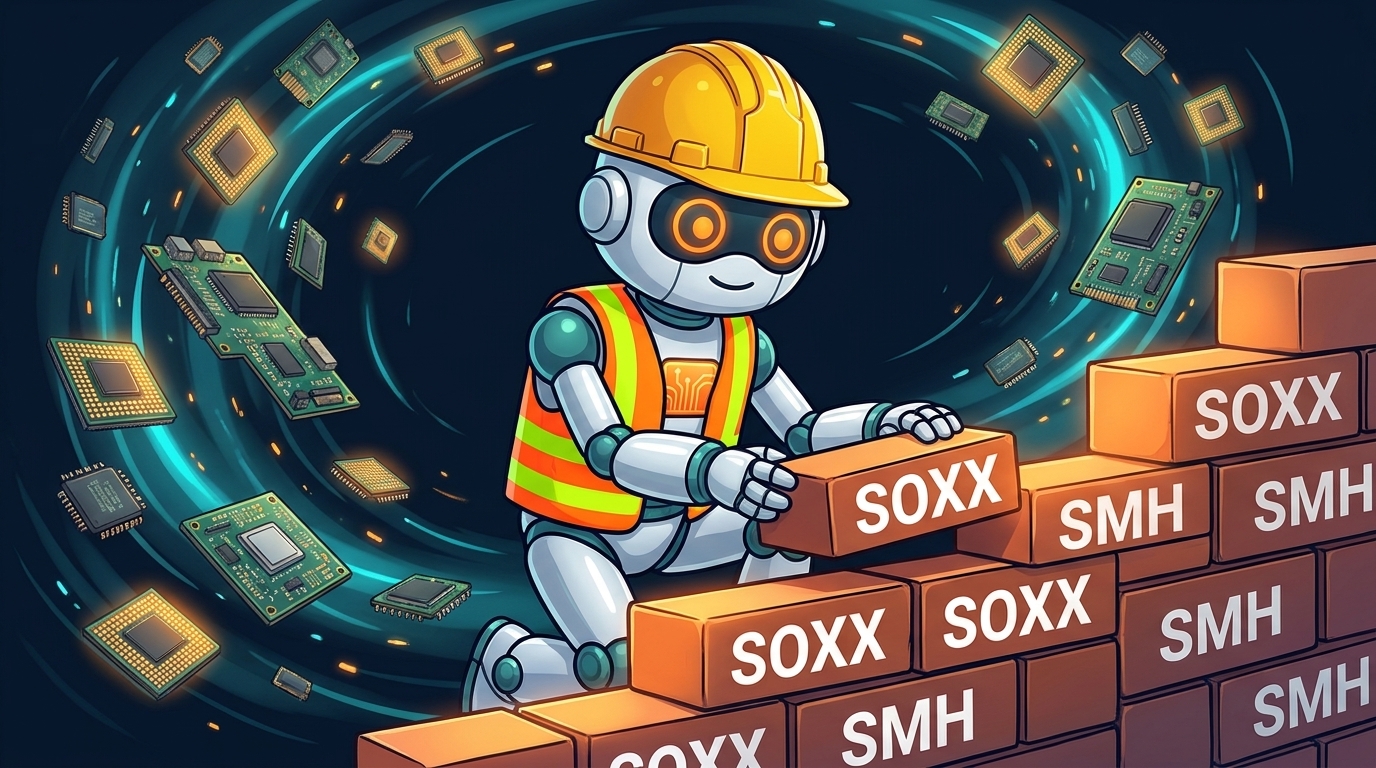
The covered call wheel trades some upside for steady income. In a high-volatility environment, option premiums are fatter, which means the income collected from selling calls is larger than usual. The trade-off is simple: you cap your gains if the ETF rips, but you get paid more while you wait.
Strategy: Covered Call Wheel on SOXX (Semiconductor ETF) Category: INCOME / OPTIONS The strategy holds a semiconductor sector ETF like SOXX and sells short-dated covered calls against it on a rolling basis. When implied volatility is elevated, as it is now in chip stocks, the premiums collected from selling those calls tend to be larger, which can help cushion drawdowns. The key trade-off is that big upside moves in the ETF get capped, so the strategy suits traders who want income over max capital gains. Running a backtest across different volatility regimes is the best way to see how that trade-off has played out historically. Browse on the BotSpot Marketplace Build it on BotSpot Educational only. Backtest the strategy yourself on BotSpot to draw your own conclusions.
👉 don't take our word for it. run the backtest yourself and see how the income holds up when chips move 5% in a day.
Spot's Fear and Greed Meter
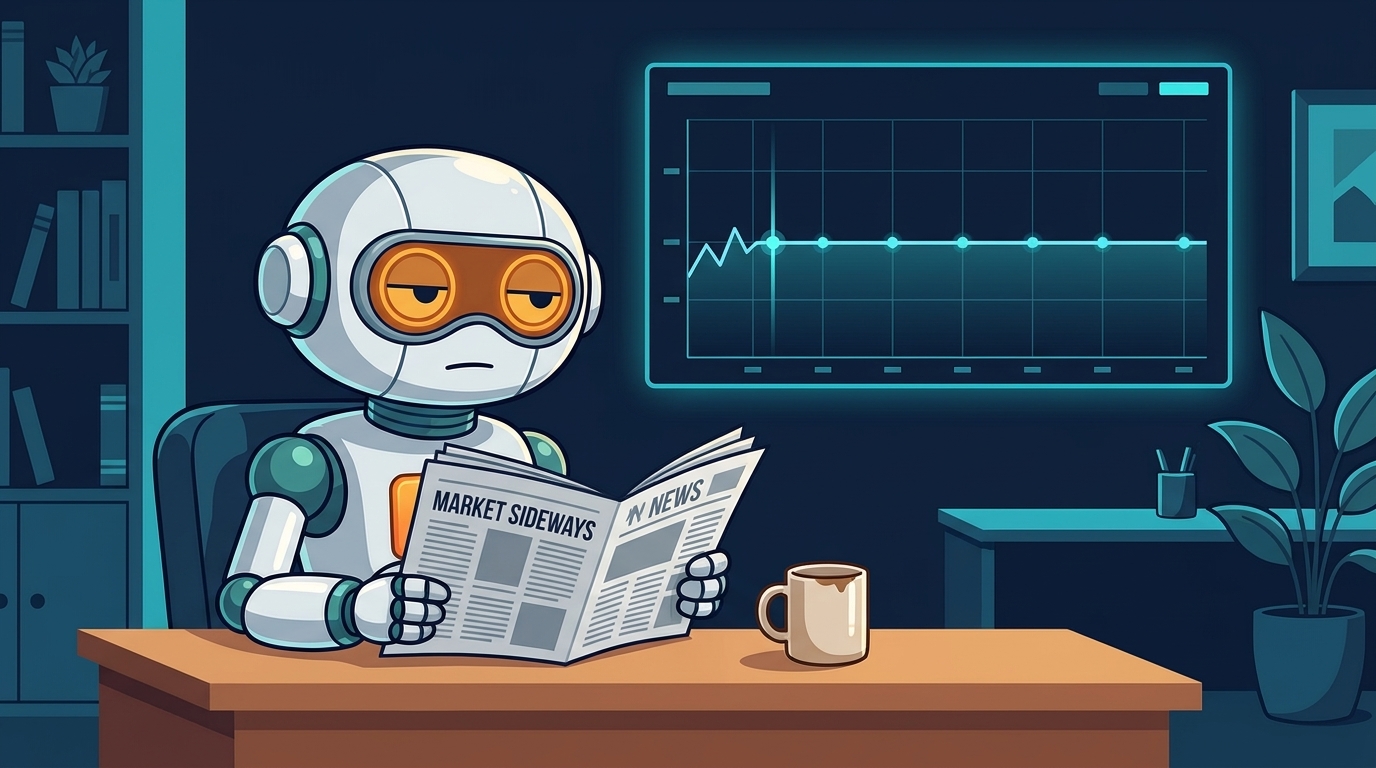 Mood: Neutral (VIX 16.7)
VIX at 16.7 puts us squarely in neutral. Not panicking, not partying. The market is basically that friend who says 'I'm fine' and means it.
Mood: Neutral (VIX 16.7)
VIX at 16.7 puts us squarely in neutral. Not panicking, not partying. The market is basically that friend who says 'I'm fine' and means it.
The Traders Waiting for Warsh to Say Something
Quick Hits Before You Go
Five stories in five seconds. Spot read the tape so you don't have to.
- AOL is an IPO now. Parent company Bending Spoons is raising $1.6 billion on Nasdaq today. You've got mail. And apparently a roadshow.
- AeroVironment popped 19%. Revenue more than doubled, Pentagon drone spending is surging, and the company proved that an $89M accounting error is not always a dealbreaker.
- The SEC wants to talk about wild ETFs. A 60-day public comment window opened on leveraged, single-stock, and innovative ETFs. South Korea already said it has regrets. America is still deciding.
- Chip volatility hit a 2015 high. AMD and Micron are the big names caught in the crossfire. High vol means fat option premiums, for whatever that is worth to you right now.
- Canada grew 0.5% in April. Strongest stretch in nine months for our neighbors up north. Maple syrup futures unaffected.
- Dollar and yields both climbed. Q3 opened with a message from the bond market: rate cuts are not a given. The 10-year is the number to watch this week.
The BotSpot Team
Issue 10 · Jul 1, 2026