🪙 Wall Street Wants to Tokenize Everything
JPMorgan, BlackRock, and Goldman just signed up for a trial that could change how stocks and bonds move. Here is what that actually means for you.
GM, Spotters. This is BotSpot, brought to you by the team behind Lumiwealth. Each week we walk through the market stories worth knowing, with plain-English context and a clear head so you can think like a quant even if you mostly hold SPY.
- 🪙 JPMorgan, BlackRock, and Goldman are testing tokenized stocks and Treasurys. Yes, really.
- 🤖 AI chip stocks cratered hard enough to halt trading in South Korea. Spot noticed.
- 🚀 SpaceX shares fell below their IPO price for the first time. The landing did not stick.
- 📉 CPI came in below forecast. PPI echoed it. Yields ticked up anyway. Classic.
- 🧠 OpenAI's ex-CTO dropped her first AI model. The race just got a third lane.
Your Stocks on the Blockchain? Wall Street Says Yes.

Three of the biggest names in finance just agreed to put your stocks and bonds on a blockchain. Not as a crypto stunt. As actual plumbing.
DTCC (the behind-the-scenes processor that clears almost every US stock trade) is running a trial with JPMorgan, BlackRock, and Goldman Sachs to convert real assets into digital tokens. The goal is to make trading faster, cheaper, and runnable around the clock.
$100T+ — The rough size of global stock and bond markets. Tokenizing even a sliver of that changes how settlement, lending, and collateral all work.
Right now, when you buy a stock, the actual settlement (confirming you own it) takes two business days. It is called T+2. Tokenization could shrink that to seconds, or even allow instant 24/7 trading like crypto already does.
The catch is that DTCC's trial is still just a trial. Real regulatory approval, legal frameworks, and custody rules have to catch up. Wall Street moves fast; Washington moves like a DMV line in August.
"T+2 settlement is so 2005. Wall Street just filed the paperwork to upgrade."
— Spot, reading the DTCC press release so you don't have to
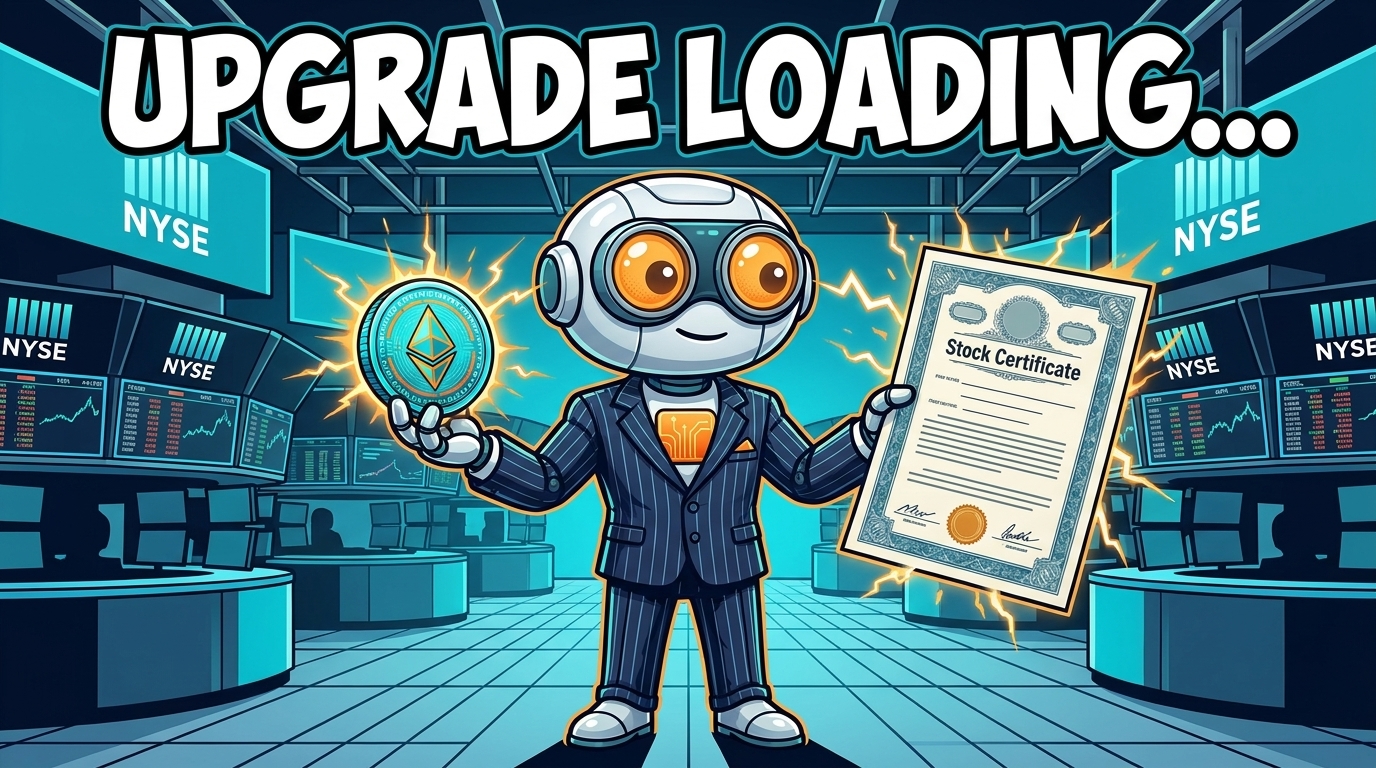 Two-day settlement had a good run. A very long, very slow run.

For regular investors holding SPY or a brokerage account, nothing changes tomorrow. Your ETF still works exactly the same.
But longer term, this is the foundation for a world where you could trade a tokenized Treasury at 11pm on a Sunday, use it as collateral for a loan at midnight, and see the settlement confirm before breakfast. That is not science fiction anymore. It is a DTCC press release.
👉 The news is JPMorgan, BlackRock, and Goldman are trialing tokenized stocks and bonds. The takeaway for you is that T+2 settlement days may be numbered, and the plumbing underneath your brokerage account is quietly getting a remodel.
- Watch for the DTCC trial results: if this works, expect a regulatory push to expand it.
- Watch how crypto-native firms react: Coinbase and others already offer tokenized assets, and this trial is Wall Street catching up.
- Watch interest from bond ETF issuers: instant settlement changes how ETF arbitrage and creation/redemption work, which could tighten spreads.
- Watch for custody rule updates from the SEC: those rules determine whether your broker can hold tokenized assets the same way they hold regular shares.
The AI Wobble Play: Chip Stocks Did WHAT?
Thinking through it
South Korean exchange briefly halted trading on SK Hynix and Samsung after they cratered on AI demand concerns. US memory chip names dropped in sympathy. When a whole sector sells off in one move, it is worth asking: is this a panic or a turning point?
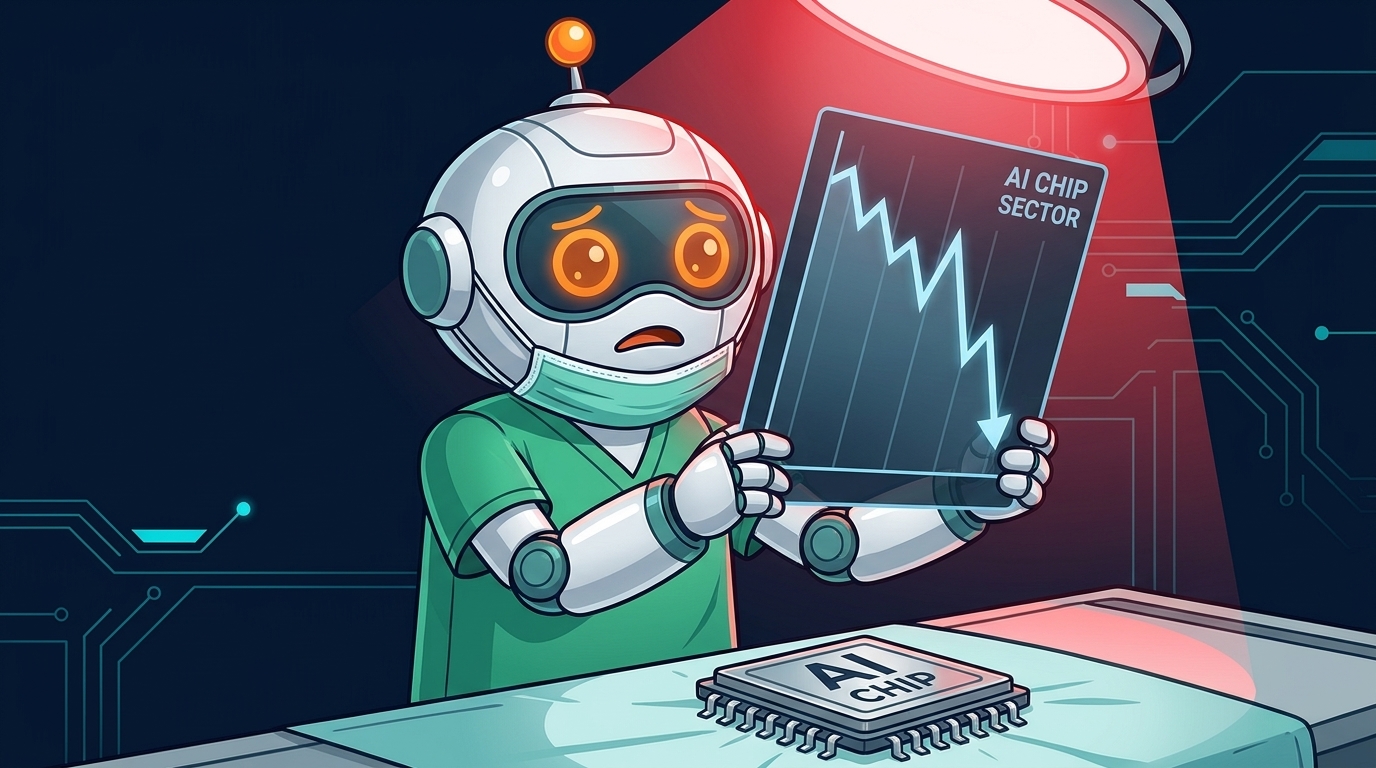
The structure a sharp trader might study here is a defined-risk options approach on a chip sector ETF like SOXX: using a put spread to express a bearish view while capping the cost. This is an example of how a two-leg trade works in a volatile sector, not a recommendation to trade it.
Asset: SOXX (iShares Semiconductor ETF) (Options / ETF)
AI chip names sold off hard this week on demand concerns, and the move rippled from Seoul to New York. A put spread on SOXX is an example of how traders think about expressing a short-term bearish view with defined, limited cost.
Mechanics
| Field | Value |
|---|---|
| INSTRUMENT | SOXX put spread (example: buy a put, sell a lower-strike put, same expiry) |
| STRUCTURE | Defined-risk bearish position. Max loss is the premium paid. Max gain is the spread width minus premium. |
| THESIS DRIVER | AI demand concerns triggered exchange halts in South Korea; US chip names followed. If the selloff continues, the spread gains. |
| KEY RISK | AI narrative recovers fast. Any positive demand signal (Nvidia earnings, hyperscaler capex) could reverse the move quickly. |
| WATCH FOR | Nvidia's next earnings call, hyperscaler capex announcements, and any Korea Exchange trading halt updates. |
Why it matters: The news is that AI chip stocks dropped sharply enough to halt trading overseas and drag US futures lower. The takeaway for you is that understanding how a defined-risk put spread works on a sector ETF is useful education for any week when a whole sector moves violently in one direction.
For educational purposes only. Not investment advice. Always do your own research.
👉 The news is chip stocks had a violent week. The takeaway is that when a whole sector sells off in one move, defined-risk structures are worth studying as a way to think about the trade-off between cost and potential gain.
The Boring Strategy That Loves Sector Chaos
How it works
Sector rotation is the idea that money moves between sectors in a predictable cycle: when AI chips wobble, money often rotates into defensives like utilities or healthcare. The strategy tries to follow that money by owning the sector ETF that is gaining momentum and exiting the one losing it.
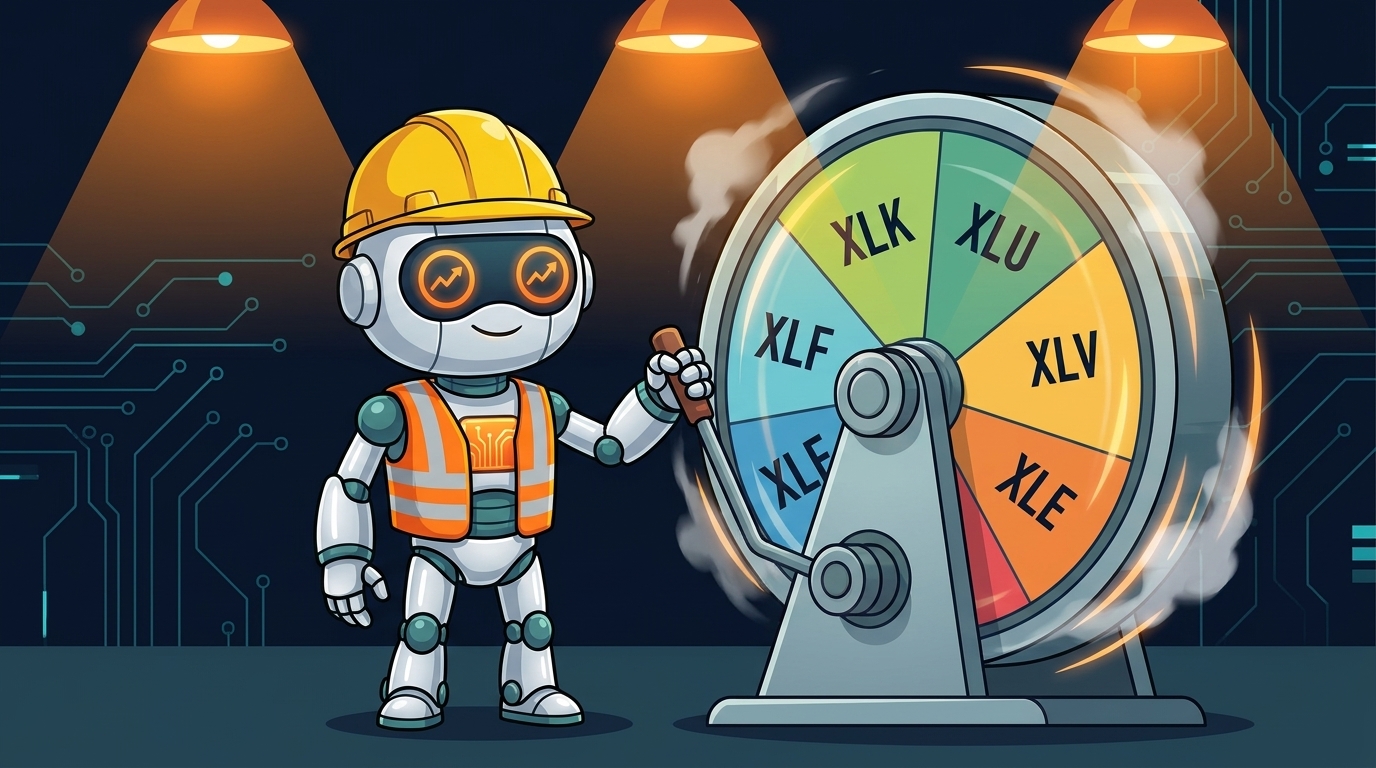
The trade-off is timing. Sector rotation can lag real moves by days or weeks, and a false signal (like a one-day AI panic that reverses fast) can put you in the wrong seat at the wrong time. The strategy works best as a monthly or quarterly rebalance, not a daily trade.
Strategy: Sector Rotation: ETF Momentum (Monthly Rebalance) Category: MOMENTUM / SECTOR ETFs This strategy ranks major sector ETFs by recent price momentum and rotates into the top performers each month, exiting the laggards. The appeal is simple: follow strength, avoid weakness. The natural trade-off is that momentum strategies can whipsaw during fast reversals and tend to underperform in choppy, sideways markets where no clear leader emerges. Browse on the BotSpot Marketplace Build it on BotSpot Educational only. Backtest the strategy yourself on BotSpot to draw your own conclusions.
👉 Don't take our word for it. Run the backtest yourself and see how this strategy behaved the last time chip stocks had a rough month.
Spot's Gut Check
 Mood: Neutral (VIX 16.0)
VIX at 16.0 means the market is not panicking, but it is not exactly doing a victory lap either. Chip stocks wobbled, yields ticked up, and yet here we are: neutral. The market has a remarkable ability to shrug.
Mood: Neutral (VIX 16.0)
VIX at 16.0 means the market is not panicking, but it is not exactly doing a victory lap either. Chip stocks wobbled, yields ticked up, and yet here we are: neutral. The market has a remarkable ability to shrug.
This Week in Financial Chaos, Illustrated
Bite-Sized Cookies for the Road
- SpaceX went below its IPO price. The rocket landed. The stock did not.
- South Korea halted chip trading mid-session. SK Hynix and Samsung cratered fast enough to trigger a pause button. US futures took one look and also sat down.
- CPI and PPI both came in below forecast. Inflation is cooling. Yields went up anyway. The bond market has strong opinions and no obligation to explain them.
- Mira Murati dropped her first AI model. OpenAI's former CTO just entered the arena with Thinking Machines Lab. The frontier is now a three-way race. Nobody got a memo.
- Nvidia is building an AI factory in Japan. Physical AI is the new buzzword. Jensen Huang is collecting countries like stamps.
- The dollar fell two days in a row. Not a panic. More of a polite, orderly retreat. Dollar bears nodded approvingly.
- AT&T and Verizon want to end the family plan. They are coming for your mom's line. One less reason to stay on the family plan. One more reason to have a difficult conversation at dinner.
The BotSpot Team
Issue 12 · Jul 16, 2026