🤯 TSMC's $100B Bet Torched the Chip Trade
Record earnings, record capex, record selloff. Welcome to the AI paradox.
GM, Spotters. This is BotSpot, brought to you by the team behind Lumiwealth. Every week we break down the market stories worth knowing, strip out the noise, and hand you a clear take you can actually use.
- 💸 TSMC posted record profits and Wall Street punished it anyway. We explain why.
- 🛒 Retail sales looked soft. The real number underneath was actually solid.
- 📉 Treasury yields are falling fast. Spot is watching what that means for your SPY.
- 💼 Jobless claims dropped to 208K. The labor market refuses to crack.
- 📋 The SEC got 200,000 complaints about scrapping quarterly earnings. A record. Truly.
TSMC Made Record Money. Wall Street Sold Anyway.
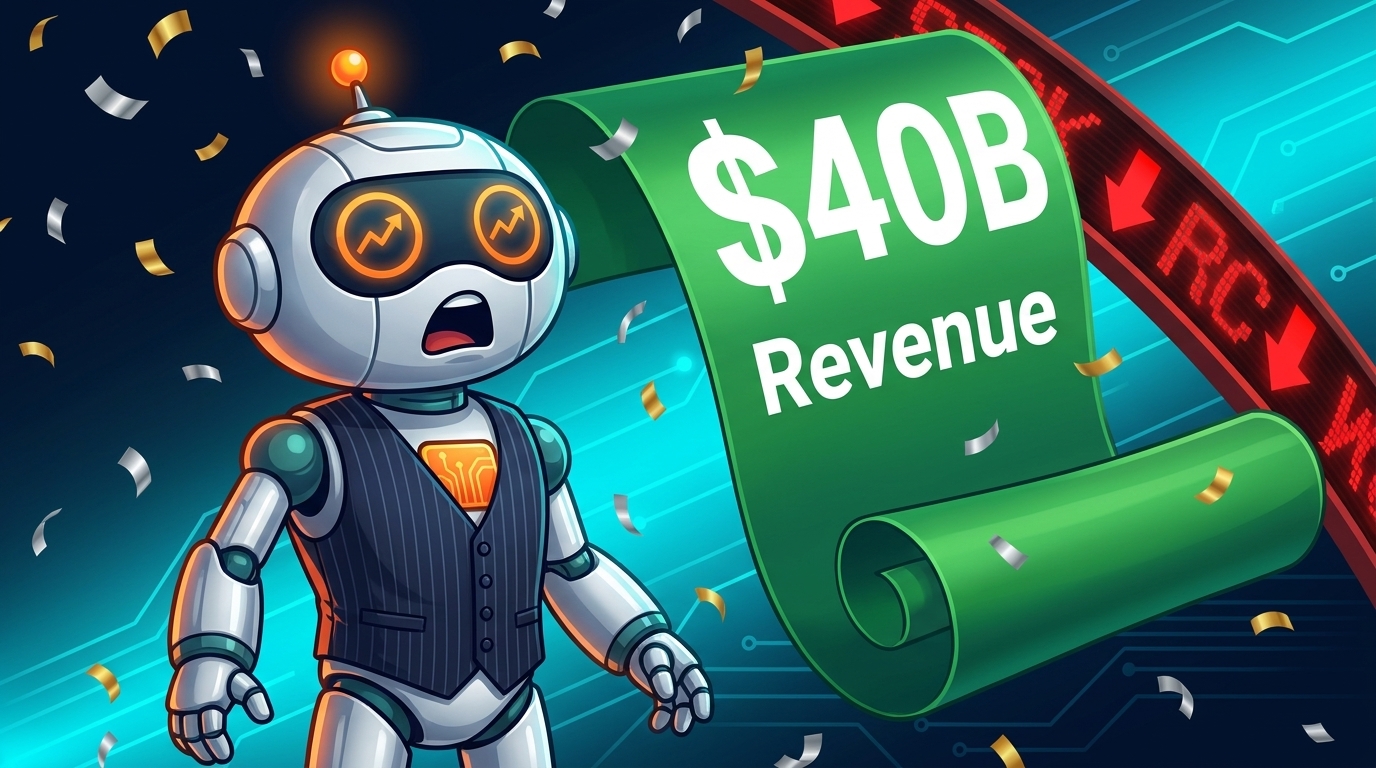
TSMC posted $40 billion in revenue, $22 billion in profit, and guided higher for the rest of the year. Then its stock dropped 2%.
The culprit was a single line in the earnings call: TSMC is pledging another $100 billion into its Arizona chip fab. Wall Street heard that and reached for the sell button.
$265B — TSMC's total committed US investment, now the single largest foreign direct investment in American history. The AI buildout is not slowing down.
CFO Wendell Huang said capex in the next three years will be 'significantly higher' than the past three. That is a lot of silicon confidence.
Wall Street's counter-argument: what if the AI industry is hallucinating its own demand projections? That fear hit the whole sector like a bowling ball.
"Our conviction in the AI megatrend is very strong."
— TSMC CFO Wendell Huang, speaking directly into the sell-off
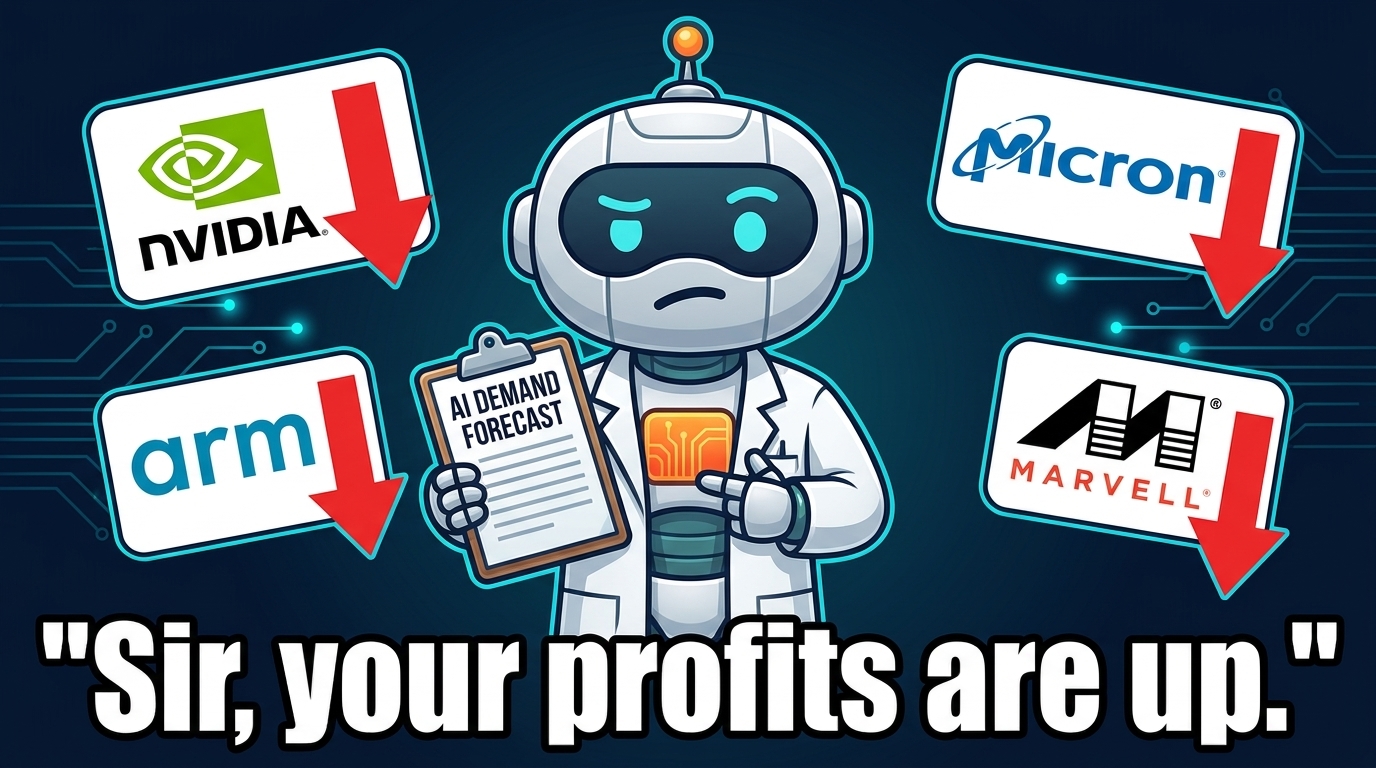 Nvidia down 2.4%. Arm down 5.4%. Marvell down 8.7%. SK Hynix down 13%. One earnings call did all that.
The Philadelphia Semiconductor Index fell 4.2% on Thursday, more than eight times the S&P 500's 0.5% drop that same day. Chips now make up nearly 20% of the S&P 500 by weight, up from just 5% in 2022.
Goldman Sachs noted that hedge funds' net exposure to AI and chip stocks is now at its lowest point this year. Someone big is rotating out.
Where is that money going? Goldman suggested the Magnificent Seven and hyperscaler stocks, which have been flat for most of 2026. The AI food chain keeps eating itself.
👉 The news is TSMC's record earnings triggered a chip-sector selloff over AI capex fears. The takeaway for you is that the chips sector is now so big inside SPY (nearly 1 in 5 dollars) that its mood swings move your whole portfolio.
- Watch the Philadelphia Semiconductor Index (SOX): it moves before SPY does when chip sentiment shifts.
- Watch where hedge fund rotation lands: if Goldman is right, Mag 7 names could get a bid even as chips cool.
- Watch TSMC's Arizona fab timeline: delays or cost overruns would reignite the AI-overspend narrative.
- Watch jobless claims next week: at 208K they are still low, which keeps the 'soft landing' story alive alongside the tech drama.
Explore chip rotation on BotSpot
Selling Chips, Buying Boring: The Sector Rotation Thought Experiment
How to think about it
When hedge funds rotate out of a sector that has gone from 5% to 20% of the S&P in four years, the exit can be fast and ugly. The interesting question is not whether to panic, but whether the rotation destination (Mag 7 hyperscalers) makes the math work differently.

This week's idea is a pairs-style thought experiment: studying what happens when you reduce broad semiconductor exposure (via something like SOXX) and increase exposure to hyperscaler names (via QQQ or a targeted basket). Not a call to act. A structure worth understanding.
Asset: SOXX vs. QQQ (ETF / SECTOR ROTATION)
When capex fear drives chip-sector outflows and that money hunts for a home in large-cap tech, the relative performance between semiconductor ETFs and broader Nasdaq ETFs can diverge sharply. Understanding this spread is useful context for anyone already holding QQQ or SPY.
Mechanics
| Field | Value |
|---|---|
| INSTRUMENT | SOXX (iShares Semiconductor ETF) vs. QQQ (Nasdaq 100 ETF) |
| STRUCTURE | Pairs spread observation: watch the SOXX/QQQ price ratio for compression or expansion |
| THESIS DRIVER | Hedge fund AI-capex rotation: Goldman notes chip net exposure at YTD lows as of this week |
| KEY RISK | If AI demand data surprises to the upside, chips snap back hard and fast |
| WATCH FOR | TSMC Arizona fab news, Nvidia earnings guidance, any Fed signal on rate path |
Why it matters: The news is chips just fell 4% in a single session despite record TSMC earnings. The takeaway for you is that the sector's 20% weight inside SPY means a sustained chip rotation would drag your index funds even if the broader economy stays healthy.
For educational purposes only. Not investment advice. Always do your own research.
👉 You do not need to trade a pairs spread to benefit from understanding one. Knowing how chips move relative to the broader Nasdaq tells you a lot about your SPY exposure on weeks like this one.
The Covered Call Wheel: Boring by Design
How it works
The covered call wheel is one of the oldest income strategies in retail options. You sell a cash-secured put on a stock or ETF you would be happy to own. If you get assigned, you own the shares. Then you sell a covered call against those shares. Repeat until you have collected enough premium to make a dentist jealous.
The trade-off is simple: you give up big upside gains in exchange for steady premium income. In a choppy, sideways market (hi, 2026), that deal can feel very smart. In a ripping bull run, you will stare at your capped gains and feel less smart.
Strategy: Covered Call Wheel on QQQ Category: INCOME / OPTIONS The covered call wheel on QQQ involves repeatedly selling short-dated puts and calls to collect premium on Nasdaq 100 exposure. The strategy tends to do well in flat or mildly volatile markets because premium is fatter when prices swing around without going anywhere. The key variable to study is where you set your strike prices relative to current price, and how that choice affects how often you get assigned. In weeks like this one, when QQQ drops on chip fear but fundamentals stay solid, the wheel structure gives you a reason to welcome the dip rather than panic through it. Browse on the BotSpot Marketplace Build it on BotSpot Educational only. Backtest the strategy yourself on BotSpot to draw your own conclusions.
👉 Don't take our word for it. Run the backtest yourself on BotSpot and see how the wheel behaved during the chip selloff weeks of the past few years.
Spot Checks the Vibe
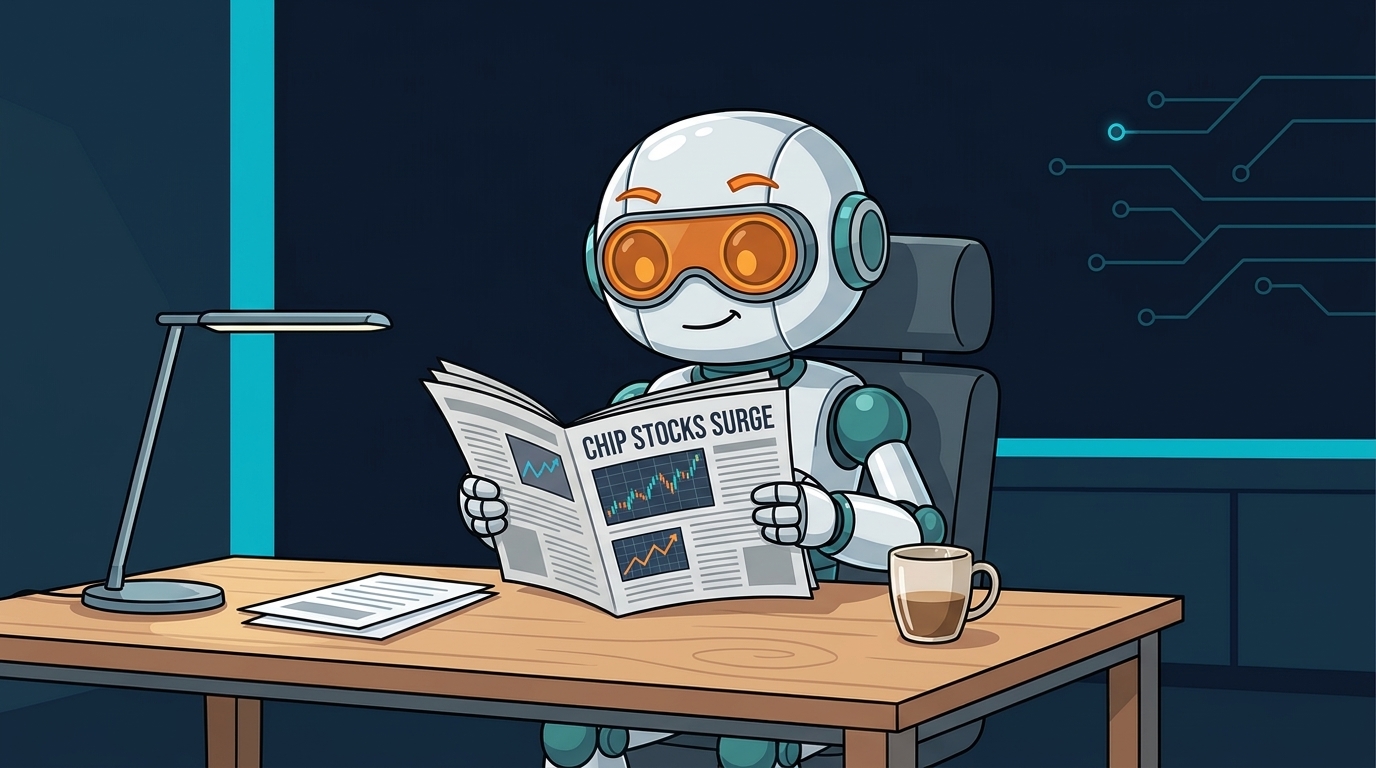 Mood: Neutral (VIX 18.1)
VIX at 18.1 means the market is officially in 'fine, I guess' territory. Not scared enough to hide, not confident enough to party. Spot is sitting at his desk, reading the news, maintaining eye contact.
Mood: Neutral (VIX 18.1)
VIX at 18.1 means the market is officially in 'fine, I guess' territory. Not scared enough to hide, not confident enough to party. Spot is sitting at his desk, reading the news, maintaining eye contact.
Wall Street Summed Up in One Image
Five Things Before You Go
- TSMC's Arizona bet is now $265B total. Largest foreign direct investment in US history, announced calmly on an earnings call like it was a lunch order.
- Retail sales only fell because gas got cheap. Strip out the gas station drop and sales were up 0.7% in June. Consumers are grumbling and spending. Classic move.
- Jobless claims hit 208K. Eight thousand fewer than the week before. The labor market keeps refusing to cooperate with the doom narrative.
- Treasury yields are falling faster now. Oil stabilized, inflation cooled in June, and bond buyers showed up. The 'rates stay high forever' crowd is getting quieter.
- The SEC got 200,000 complaint letters. All about the plan to scrap mandatory quarterly earnings. A record for public comments. Apparently people like knowing what companies earn. Wild.
- IBM fell 25% in one session. A boardroom debate became a historic plunge. The full story is behind the WSJ paywall, which feels appropriate.
- Social Security COLA could hit 3.8% in 2027. Energy prices bounced back in July and the third-quarter inflation window is open. Good news if you are retired, annoying news if you buy gas.
The BotSpot Team
Issue 12 · Jul 17, 2026