🥊 A 'Good Family Fight' at the Fed
Warsh dodged every rate question, called July's meeting a family brawl, and markets had no idea what to do with that.
GM, Spotters. This is BotSpot, brought to you by the team behind Lumiwealth. Each week we break down the stories shaping markets and hand you the context a sharp trader actually needs.
- 🥊 Warsh called the July Fed meeting a 'good family fight.' Hike or hold? Nobody knows.
- 📅 The SEC wants to let companies report earnings twice a year. Wall Street is not thrilled.
- 💼 OpenAI may hand the U.S. government a 5% stake. Unusual strategy for keeping regulators friendly.
- 🛢️ Brent crude is trading below its pre-war level. The Hormuz reopening is doing real work.
- 🏦 Michelle Bowman spoke at a private Bank of America dinner. Elizabeth Warren is asking the watchdog why.
The Fed Called It a 'Good Family Fight'
Kevin Warsh stood at a podium in Portugal, answered zero questions about interest rates, and somehow moved markets anyway.
The new Fed chair called the July FOMC meeting a "good family fight." That is a direct quote. From the actual chair of the Federal Reserve. About whether to hike interest rates.
Hike by year-end — What CME FedWatch now prices as the most likely outcome. Three months ago, two cuts were the consensus. Whiplash is an understatement.
Coming into 2026, futures markets were pricing in roughly two rate cuts. Now the same tool shows a hike is the likeliest move by December. That is a full 180. In six months.
The driver is energy prices. The Middle East conflict sent oil up hard, and that energy surge fed straight into inflation readings. Warsh himself noted energy costs have come down "quite substantially" recently, which is the closest thing to a hint he gave all week.
""We've been an independent central bank for a very long time. We're going to be an independent central bank at this moment.""
— Kevin Warsh, politely telling Trump to mind his own business
 Warsh at the ECB Forum, basically.
The jobs data is the other piece. ADP's private payroll report showed June hiring came in weaker than economists expected. The BLS jobs report dropped this morning, and a soft number could push the hike timeline back. A hot number could lock it in.
Meanwhile, Spot is watching the Bowman subplot. Fed Governor Michelle Bowman spoke at a closed-door Bank of America client dinner, and Senator Elizabeth Warren is asking the Fed's inspector general to review whether that broke protocol. Nothing illegal yet. Just messy.
👉 The news is Warsh gave markets nothing concrete on rates while signals point toward a hike. The takeaway for you is: the July FOMC meeting is genuinely uncertain, and rate-sensitive positions (long TLT, short-vol plays) deserve a fresh look at the risk they carry right now.
- Watch the jobs report number: weak jobs = hike delayed, hot jobs = hike locked. This is the single biggest near-term data point.
- Watch energy prices: Warsh flagged them specifically. If crude keeps falling, inflation softens and the calculus shifts fast.
- Watch Warsh's exact words at the July 29-30 FOMC meeting. He called it a 'family fight,' which means the vote may not be clean.
- Watch the Bowman situation: a Fed regulator talking at a bank client dinner is the kind of story that gets louder, not quieter.
Analyze the rate-hike scenario
When the Fed Fights Itself, Volatility Gets Interesting
How to think about it
When the Fed chair calls an upcoming meeting a "good family fight," that is not a confident central bank. That is a central bank that could go in multiple directions. And genuine uncertainty about the direction of rates is the kind of environment where thinking about volatility structure gets educational fast.
One structure traders study in uncertain Fed periods is a straddle on SPY: buying both a call and a put at the same strike, so you profit if the market moves sharply in either direction. The idea is you are not predicting which way rates go. You are predicting that the resolution will move prices.
Asset: SPY (S&P 500 ETF) (OPTIONS / ETF)
With the Fed openly divided and the July 29-30 meeting outcome genuinely uncertain, a long straddle on SPY is an interesting structure to study. The thesis is not directional: it is that a decisive Fed move (or a surprise split vote) could produce a larger price swing than current implied volatility prices in.
Mechanics
| Field | Value |
|---|---|
| INSTRUMENT | SPY options (at-the-money) |
| STRUCTURE | Long call + long put, same strike, same expiry (study Aug or Sep expiry) |
| THESIS DRIVER | Warsh's 'family fight' language signals internal Fed disagreement; outcome uncertainty is high |
| KEY RISK | If the Fed meets and does nothing surprising, implied vol collapses and both legs lose value (theta decay) |
| WATCH FOR | Jobs report direction, CPI before July 29, Warsh's next public comments |
Why it matters: The news is the Fed chair publicly flagged internal disagreement about the July rate decision. The takeaway for you is that understanding how options price uncertainty (implied volatility) and what happens to that price after an event resolves is a core concept worth studying before the July meeting.
For educational purposes only. Not investment advice. Always do your own research.
👉 A straddle is not a magic trick. It costs money to hold and loses value every day the market sits still. But understanding WHY traders reach for it around binary events like FOMC meetings is a genuinely useful piece of options education.
The Boring Strategy That Rate Chaos Actually Likes
How it works
When rates are uncertain and nobody knows which direction the Fed moves next, short-duration Treasury bond ETFs become genuinely interesting to study. The idea is simple: instead of holding long-dated bonds (which get hammered when rates rise), you hold very short-dated Treasuries that mature so fast they barely care about rate changes.
The trade-off is real: short-duration Treasuries won't make you rich. They yield less than long-duration bonds in most environments. But in a "family fight" Fed cycle where hike-or-hold is genuinely unclear, the stability of short duration is the whole point.
Strategy: Short-Duration Treasury Rotation (SHY / BIL) Category: DEFENSIVE / RATE-SENSITIVE This strategy rotates into short-duration Treasury ETFs (like SHY or BIL) when the yield curve is flat or inverted and the Fed's direction is unclear. It reduces interest rate risk by holding bonds that mature quickly, so a surprise hike does far less damage than it would to a long-duration position. The trade-off is that in a falling-rate environment, you leave yield on the table compared to longer-dated bonds. It is a defensive posture, not a return-maximizing one. Browse on the BotSpot Marketplace Build it on BotSpot Educational only. Backtest the strategy yourself on BotSpot to draw your own conclusions.
👉 Don't take our word for it. Run the backtest yourself on BotSpot and see what the short-duration rotation actually does in rising-rate environments versus falling-rate ones. The numbers tell the story better than we can.
Spot's Gut Check
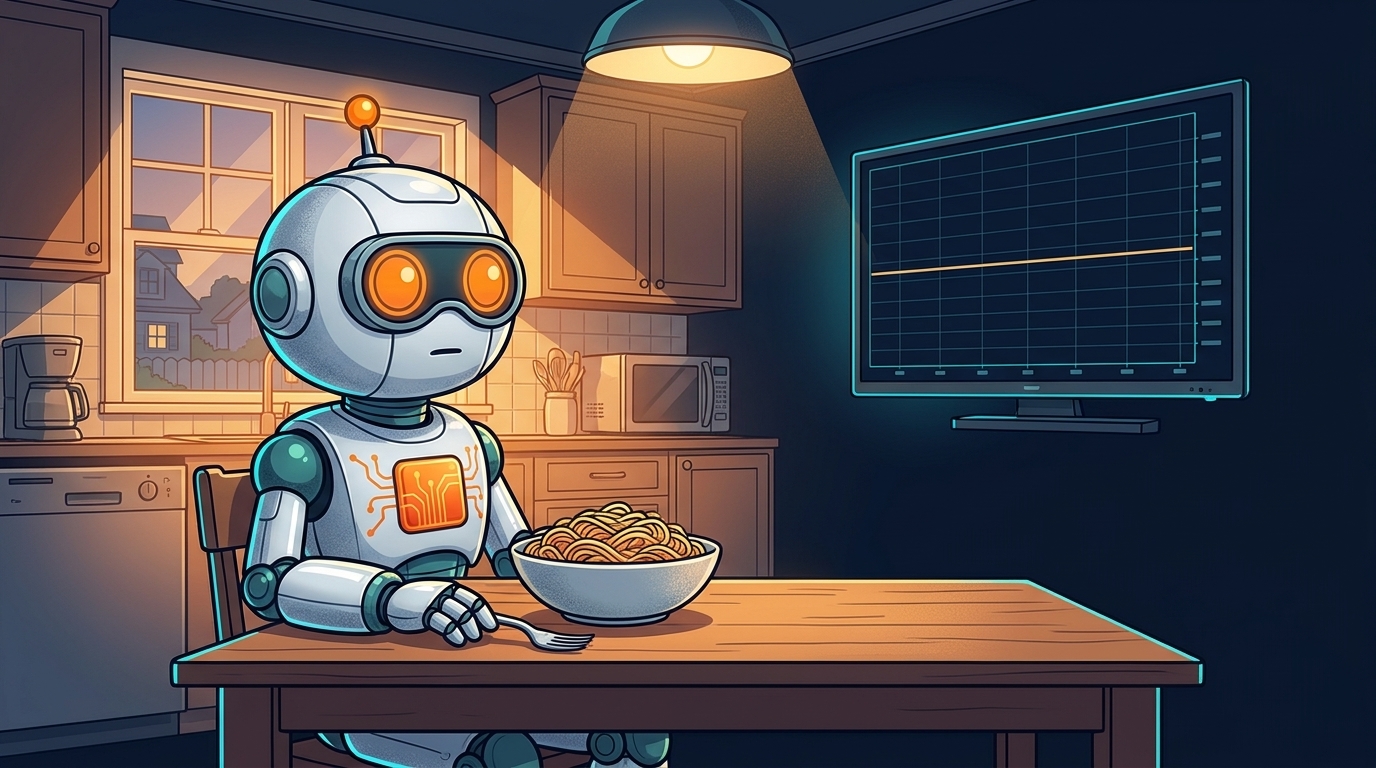 Mood: Neutral (VIX 16.7)
VIX at 16.7 is that awkward middle zone: not panicking, not euphoric. The market is basically shrugging while it waits for the jobs report and the Fed to make up their minds. Spot calls this the 'pasta night' market. Nobody's fighting, nobody's happy.
Mood: Neutral (VIX 16.7)
VIX at 16.7 is that awkward middle zone: not panicking, not euphoric. The market is basically shrugging while it waits for the jobs report and the Fed to make up their minds. Spot calls this the 'pasta night' market. Nobody's fighting, nobody's happy.
Said Without Irony
Five Things Before You Log Off
- Warsh called July a 'good family fight.' The Fed chair has mastered the art of saying everything and nothing at the same time. Powell who?
- CME FedWatch flipped from cuts to hikes. Futures went from pricing two cuts to pricing one hike. In six months. That is not a pivot, that is a U-turn with a trailer attached.
- The SEC wants semiannual earnings reports. 37,000 public comments and counting. Most companies would still file quarterly anyway because Wall Street demands it. Classic 'optional' rule.
- OpenAI may give the government a 5% stake. Nothing says 'please don't regulate us' like handing the regulators a seat at the cap table.
- Brent crude fell below its pre-war level. Hormuz reopening is doing what months of diplomacy couldn't. Aluminum down 18% on the month too. Supply chains, healing.
- Michelle Bowman spoke at a BofA client dinner. Senator Warren flagged it. The Fed watchdog is now looking. This subplot is only getting louder.
- Bank stocks rallied. Chips pulled back. The S&P ended the day down 0.2%. A tale of two sectors, and neither was thrilling.
The BotSpot Team
Issue 10 · Jul 2, 2026