🌍 The Middle East Just Moved Your Bonds
Treasury yields climbed, oil spiked, and suddenly the Fed's next move is back on the table. Here is what actually happened.
GM, Spotters. This is BotSpot, brought to you by the team behind Lumiwealth. Each week we walk through the market stories worth knowing, with context, color, and a clear head.
- 📈 Treasury yields rose this week as Middle East hostilities pushed oil prices higher and rattled the rate outlook.
- 🤖 A new robotics ETF just launched under the ticker RTOO. Yes, like R2-D2. The AI hardware trade has officially entered the Star Wars name phase.
- 🏛️ The Fed's June projections are aging like milk. Spot is watching whether the next FOMC meeting rewrites the script.
- ⚖️ The Fed has been busy handing out enforcement actions to community banks. Heritage State, Small Business Bank, Bank of Eufaula: the regulators are not on vacation.
- 🪙 Stablecoin issuers may soon need customer ID programs. The Fed wants comment. Crypto is growing up, whether it wants to or not.
The Middle East Just Moved Your Bonds

On Monday morning, oil prices jumped and Treasury yields followed. Geopolitical flare-ups in the Middle East were the match. Markets did what markets do when geopolitics gets loud: they repriced everything in about 40 minutes.
The WSJ noted yields rose while the dollar stayed surprisingly stable. That combination is unusual. It is the market saying: higher rates ahead, but the U.S. is still the safest house on the block.
Yields up. Oil up. Dollar: shrug. — The three-asset trifecta that rewrites the Fed's next meeting agenda. All in one Monday morning.
Here is the part that stings. The June FOMC projections assumed a relatively calm macro environment. They are now roughly as useful as a weather forecast from last month.
When oil spikes, inflation expectations rise. When inflation expectations rise, the Fed gets nervous. When the Fed gets nervous, rate cuts get pushed back. That is the entire chain in three sentences.
"Geopolitics does not ask permission before moving your portfolio."
— Spot, every single time
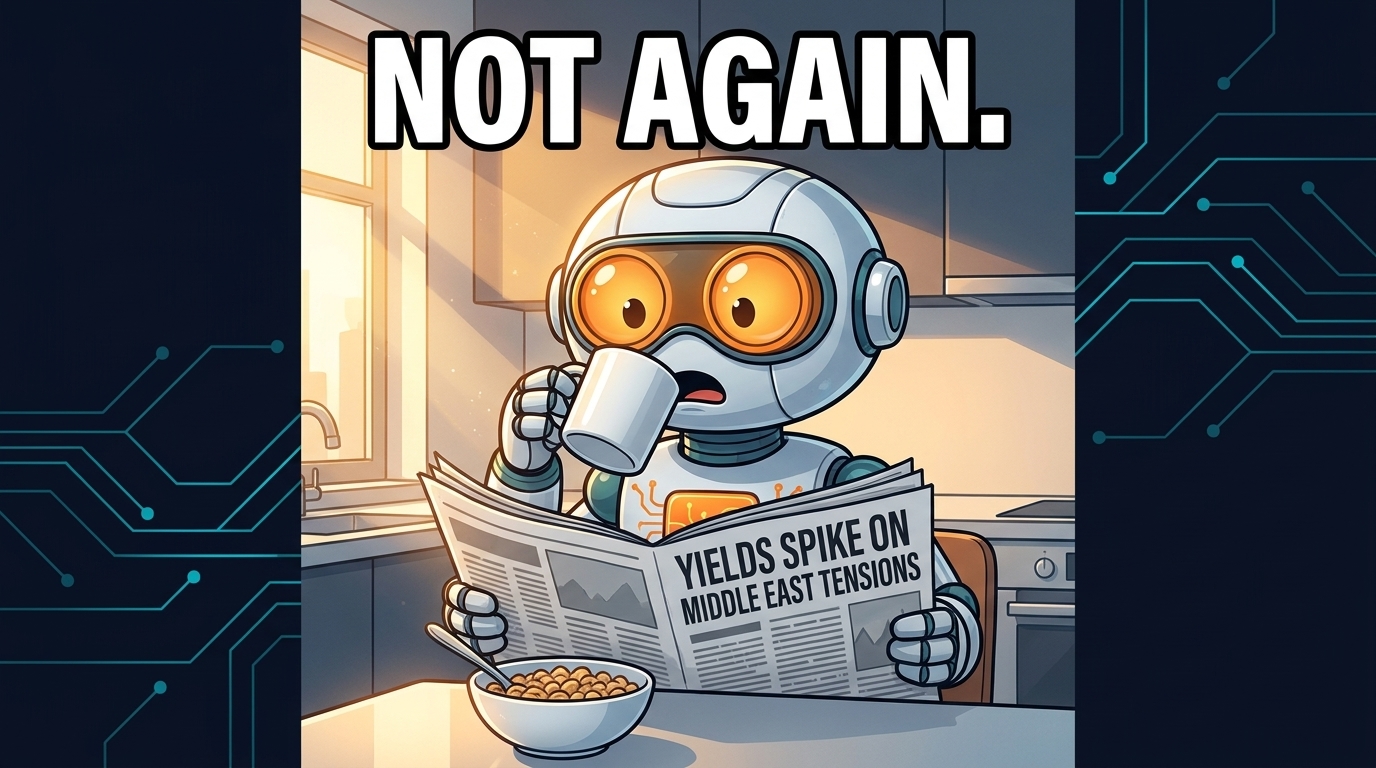 Every time you think the macro is boring, geopolitics walks in and flips the table.
If you hold TLT or any long-duration bond ETF, rising yields mean falling prices. That is just math. The longer the bond, the harder it gets hit when rates move up.
If you hold SPY, the story is more complicated. Higher oil can hurt consumer spending. But energy stocks inside SPY actually benefit. The index plays both sides whether you want it to or not.
👉 The news is that Middle East tensions spiked yields and oil in a single session. The takeaway for you is that the Fed rate-cut timeline just got murkier, and long-duration bonds are the most exposed asset in your portfolio right now.
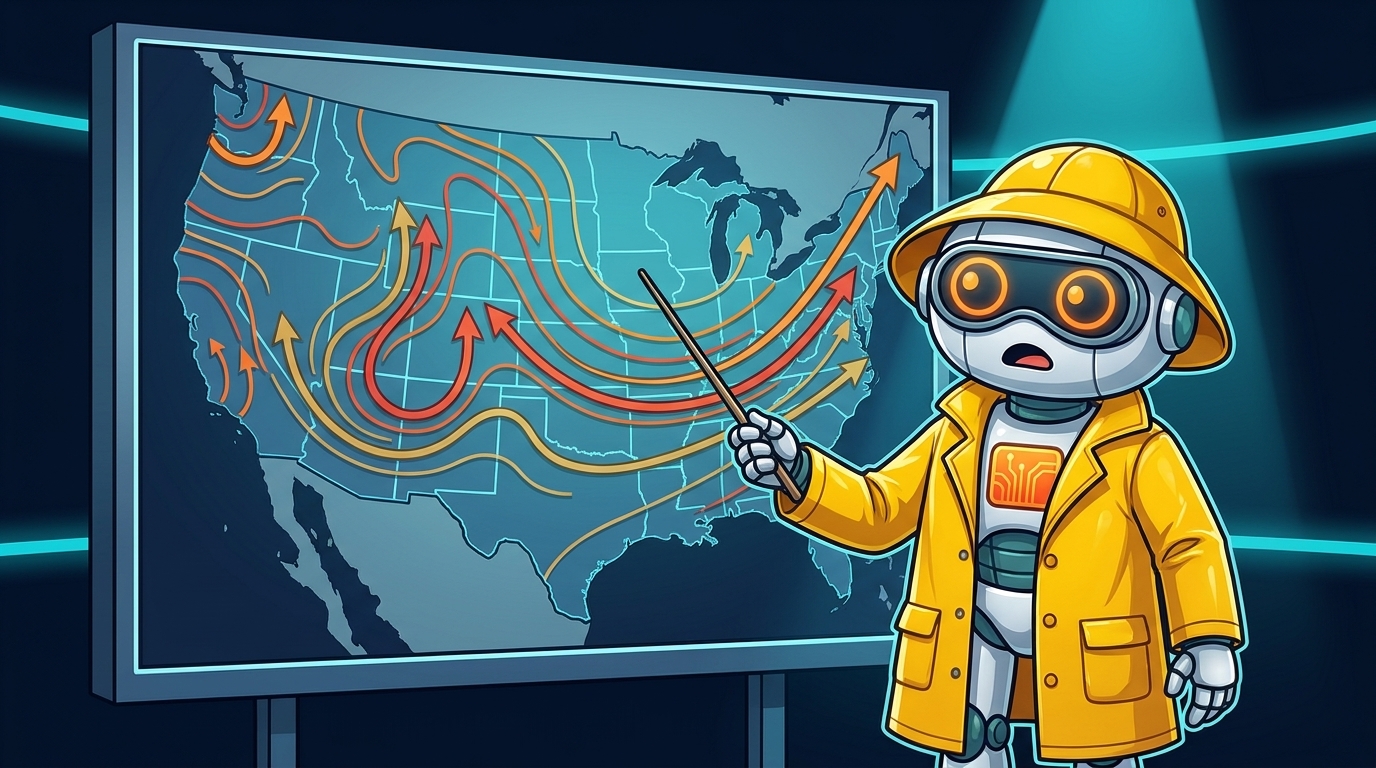
- Watch TLT: if yields keep climbing, long bonds keep falling. Simple as that.
- Watch crude oil: above $90 per barrel is when inflation fear goes from background noise to headline risk.
- Watch the next Fed statement: any hint of pushing back rate cut timing is the real signal to track.
- Watch the dollar: if it starts rising alongside yields, risk-off is picking up speed.
What If You Got Paid to Wait on TLT?
Thinking through it
TLT (the 20-year Treasury bond ETF) has been getting beaten up as yields rise. But beaten-up assets are exactly where income-focused options structures tend to pop up in textbooks. Here is a concept worth understanding.

The idea is a cash-secured put on TLT. You agree to buy TLT at a lower price in exchange for collecting a premium today. If TLT keeps falling, you buy it cheaper than it trades now. If it recovers, you keep the premium and move on. Either way, you collected something for waiting.
Asset: TLT (iShares 20+ Year Treasury Bond ETF) (Options / Fixed Income ETF)
As a thought experiment: TLT has sold off as yields rise. A cash-secured put at a lower strike lets you study how to collect premium while defining your entry price, rather than just watching the ETF fall.
Mechanics
| Field | Value |
|---|---|
| INSTRUMENT | TLT put option (cash-secured) |
| STRUCTURE | Sell a put at a strike below current TLT price, hold enough cash to buy shares if assigned |
| THESIS DRIVER | Rising yields push TLT lower; elevated options premiums compensate the seller for that risk |
| KEY RISK | Yields spike further and TLT drops well below your strike, meaning you buy in at a loss relative to market |
| WATCH FOR | Fed commentary on rate-cut timeline and crude oil price trend as the two macro inputs driving TLT's direction |
Why it matters: The news is that yields are rising and TLT is under pressure. The takeaway for you is that understanding how a cash-secured put works on a beaten-down ETF is a useful options education case study, not a call to action.
For educational purposes only. Not investment advice. Always do your own research.
👉 The news is TLT is under pressure. The takeaway is that options structures on rate-sensitive ETFs are worth studying right now because the premium environment is interesting when volatility is elevated.
The Boring Strategy That Loves Rising Yields
How it works
The TLT mean reversion strategy is straightforward: when TLT falls a certain percentage below its recent average price, you start buying small. When it snaps back toward the average, you exit. The bet is that bond prices do not fall in a straight line forever.
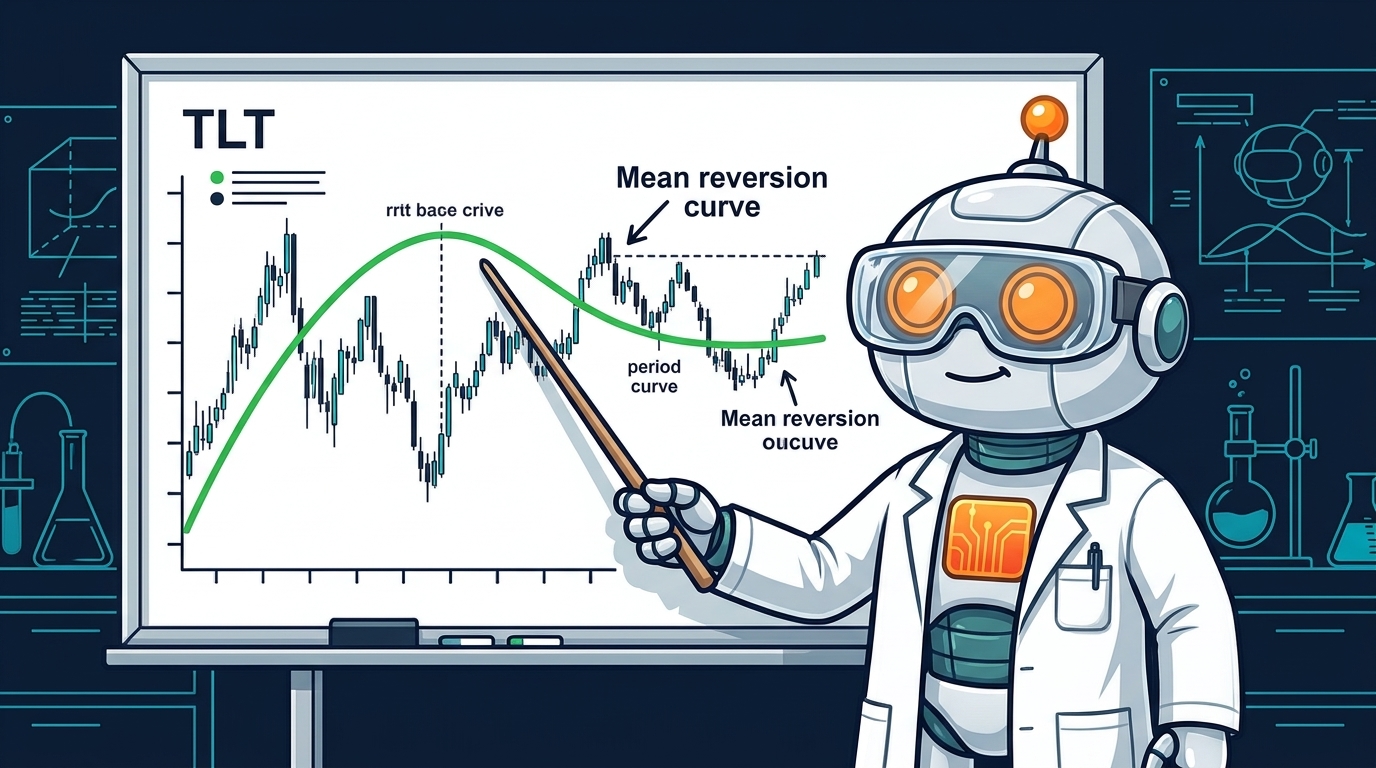
The natural trade-off: mean reversion can take a long time to play out. Yields can stay high longer than a strategy can stay patient. Position sizing is everything here, because catching a falling knife slowly still catches a falling knife.
Strategy: TLT Mean Reversion Category: MEAN-REVERSION / TREASURIES This strategy buys TLT when it drops a set percentage below its moving average and exits when it recovers. The core idea is that bond prices tend to oscillate around a trend rather than trend in one direction forever. The main trade-off is timing: high-rate environments can stretch the drawdown period significantly, so risk management rules on position size matter more than the entry signal itself. Browse on the BotSpot Marketplace Backtest it on BotSpot Educational only. Backtest the strategy yourself on BotSpot to draw your own conclusions.
👉 Don't take our word for it. Run the backtest yourself and see how this structure holds up across different rate environments.
Spot Says: Cautiously Alive
 Mood: Neutral (VIX 18.4)
VIX at 18.4 is the market equivalent of 'fine, I guess.' Not panicking. Not partying. Just quietly watching yields and Middle East headlines with one hand on the exit.
Mood: Neutral (VIX 18.4)
VIX at 18.4 is the market equivalent of 'fine, I guess.' Not panicking. Not partying. Just quietly watching yields and Middle East headlines with one hand on the exit.
Every Bond Investor Right Now
Five Things Worth Knowing
- Yields rose. Oil rose. The Fed's timeline got murkier. Three things that move together when the Middle East decides to have a bad week.
- A robotics ETF launched under the ticker RTOO. Yes, like R2-D2. No, the fund does not whistle or project holograms, but the ambition is roughly the same scale.
- The Fed's June projections are already aging poorly. Oil spikes and geopolitical tension have a way of making three-week-old forecasts look like ancient history.
- The Fed issued multiple bank enforcement actions this month. Heritage State, Small Business Bank, TS Banking Group: summer is not a vacation for bank regulators.
- Stablecoin issuers may need customer ID programs. The Fed wants comment on a new proposal. Crypto compliance is becoming indistinguishable from regular banking compliance.
- The AI trade is moving from software to hardware. Robotics, physical AI, and supply-chain investing are the next chapter. The droids are on their way.
The BotSpot Team
Issue 12 · Jul 20, 2026