🧨 The Hold That Broke the Bond Market
The Fed paused. Treasury yields hit a 19-year high. Warsh told everyone to read the market. The market is screaming.
GM, Spotters. This is BotSpot, brought to you by the team behind Lumiwealth. Each week we unpack the stories shaping markets and the questions a sharp trader might bring to a strategy session.
- 🏦 Fed holds rates. Warsh drops a press conference that leaves everyone more confused than before.
- 📈 The 30-year Treasury yield hits a 19-year high. Yes, that kind of high.
- 🍎 Apple crossed $5 trillion in market cap and Tim Cook is riding off into the sunset.
- 🤖 AI is making financial advisors work harder, not replace them. Spot has feelings about this.
- 🌍 The Iran war escalation is adding a geopolitical spice nobody ordered this week.
The Hold That Broke the Bond Market
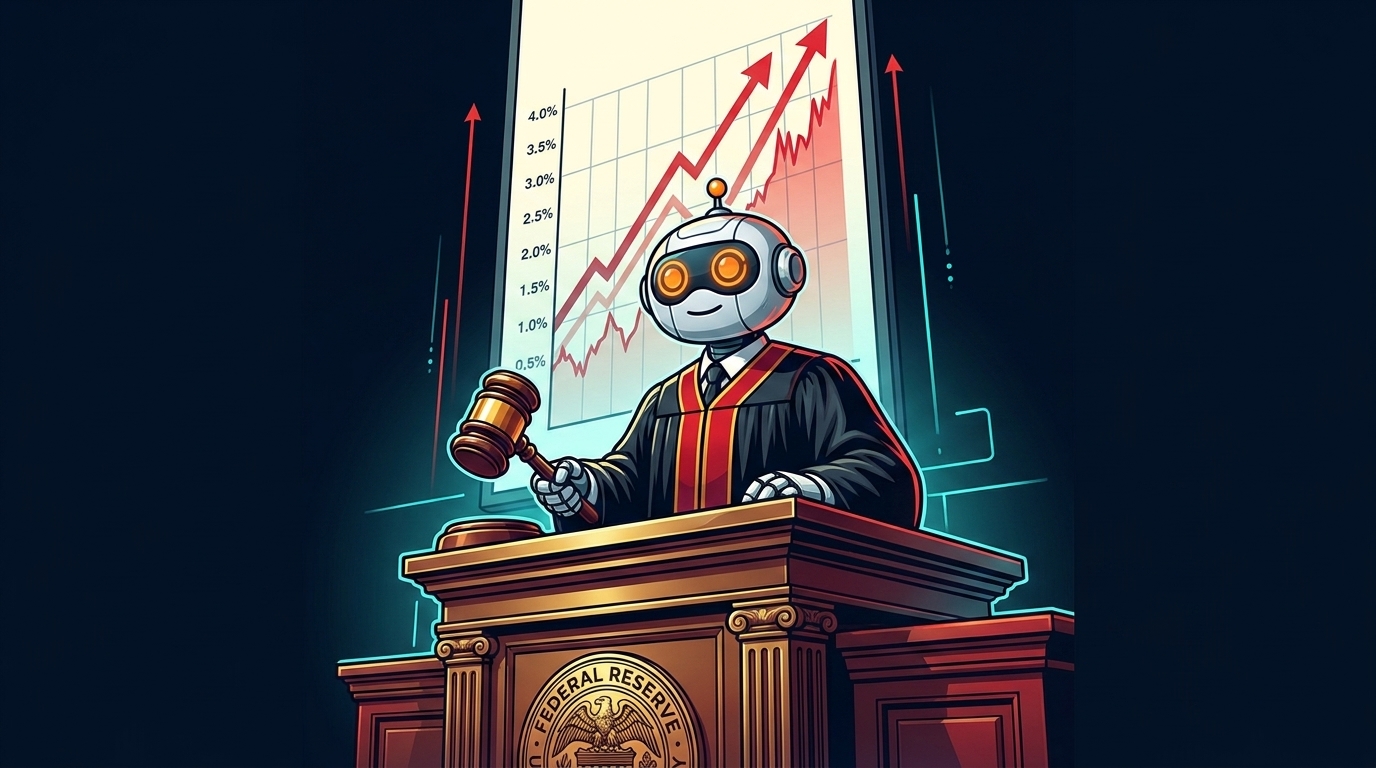
The Fed held rates on Wednesday. The bond market had a complete meltdown anyway.
Fed Chair Kevin Warsh kept rates exactly where they were, then told investors to just read the markets for guidance. The markets responded by sending the 30-year Treasury yield to its highest level in 19 years.
19-Year High — Where the 30-year Treasury yield sits right now. The last time it was this high, the iPhone did not exist.
Here is what makes this strange. Normally, when the Fed holds rates steady, bond yields settle down. This week, they did the opposite.
The market heard Warsh say rates are on hold, then looked at the Iran war escalating in the background, and decided to price in a hike coming later this year anyway. Wall Street is basically grading Warsh's homework and giving him a C minus.
"Warsh told investors to listen to the market. The market said: a hike is coming. Awkward."
— The week, summarized in one sentence
 The Fed held. The bond market did not get the memo.
Stocks fell. The dollar fell. Long-dated Treasury yields rose. That is a combination that usually shows up when the market smells something bad coming and is not sure where to hide.
The Iran escalation is pouring fuel on the fire. Geopolitical stress plus rate hike fears plus a confused central bank is a tough combo for anyone holding risk assets right now.
👉 The news is the Fed held rates but Treasury yields hit a 19-year high anyway. The takeaway for you is that 'the Fed held' does not mean 'everything is fine.' Watch the long end of the yield curve, not just the Fed statement.
- Watch the 30-year yield: if it keeps climbing, pressure on stocks with high valuations gets worse.
- Watch Warsh's next public comments: he basically handed the steering wheel to the market, which is wild.
- Watch TLT (the long Treasury bond ETF): it is the canary in this particular coal mine.
- Watch how the Iran situation develops: geopolitical risk plus rate fear is a double whammy for equities.
- Watch the next inflation print: that is what gives Warsh permission to move, in either direction.
Analyze the yield curve on BotSpot
Long Rates Are Screaming: Here Is One Structure Worth Studying
How to think about it
When long-term Treasury yields spike this fast, there are two ways to think about it. You can panic. Or you can study the structure of how traders typically respond to this kind of environment.

One structure that comes up in conversations about rising long rates is a put spread on TLT, the iShares 20-year-plus Treasury bond ETF. When yields go up, TLT goes down. A put spread is a way to study that relationship in options form, with a defined cost and a defined maximum loss.
Asset: TLT (iShares 20+ Year Treasury Bond ETF) (Options / Fixed Income ETF)
The 30-year yield is at a 19-year high and the Fed just signaled it may hike later this year. When yields rise, TLT falls. A put spread is one structure for studying how traders express that view with a limited, defined downside.
Mechanics
| Field | Value |
|---|---|
| INSTRUMENT | TLT put spread (buy lower strike put, sell further lower strike put) |
| STRUCTURE | Two-leg options trade: long one put, short one put at a lower strike, same expiration |
| THESIS DRIVER | 30-year Treasury yield at 19-year high, Fed signaling possible hike, inflation uncertainty |
| KEY RISK | If the Fed pivots dovish or yields drop fast, TLT rallies and the spread expires worthless |
| WATCH FOR | Next CPI print, Warsh speeches, Iran conflict developments, any Fed member comments on hikes |
Why it matters: The news is Treasury yields are at a 19-year high after a Fed hold that the market read as hawkish. The takeaway for you is that understanding how a put spread works on a rate-sensitive ETF like TLT is useful context for any week like this one.
For educational purposes only. Not investment advice. Always do your own research.
👉 This is a structure to study, not a signal to act on. Understanding how a two-leg trade works in a rising-rate environment is the education. The decision is always yours.
The Boring Treasury Strategy That Gets Interesting Fast
How it works
TLT mean reversion is one of those strategies that sounds incredibly boring until you look at a yield chart from this week. The idea is simple: when long-term Treasury yields spike far above their recent average, prices on TLT drop hard, and eventually they tend to snap back.
The trade-off is timing. Mean reversion strategies can get very uncomfortable before they get comfortable. If yields keep rising for weeks or months, you are holding a position that hurts every day until the snap-back happens. Patience is not optional here. It is the whole strategy.
Strategy: TLT Mean Reversion on Yield Spikes Category: MEAN-REVERSION / TREASURIES This strategy looks for moments when long-term Treasury yields move significantly above their recent rolling average, then takes a position expecting prices to revert toward that average. It is a systematic approach to buying a falling bond ETF when the drop looks extreme by historical standards. The key trade-off is that extreme moves can stay extreme for a long time, so position sizing and patience are the two most important variables in how this plays out. Browse on the BotSpot Marketplace Backtest it on BotSpot Educational only. Backtest the strategy yourself on BotSpot to draw your own conclusions.
👉 Don't take our word for it. Run the backtest yourself and see what extreme yield environments have looked like for this structure historically.
Spot's Fear and Greed Gauge
 Mood: Neutral (VIX 19.4)
VIX at 19.4 puts us squarely in neutral territory, but it is a nervous neutral. The bond market is melting and the Fed is confused, yet stocks have not fully panicked yet. This is the calm face over a very active stomach.
Mood: Neutral (VIX 19.4)
VIX at 19.4 puts us squarely in neutral territory, but it is a nervous neutral. The bond market is melting and the Fed is confused, yet stocks have not fully panicked yet. This is the calm face over a very active stomach.
This Week in Financial Chaos, Illustrated
Five More Things Worth Knowing
- Warsh said to read the markets. The market responded by going absolutely feral. Great system.
- The 30-year yield hit a 19-year high. Last time it was this high, you were buying a flip phone. Think about that.
- Apple crossed $5 trillion in market cap. Tim Cook is leaving the building, and he is leaving it as the biggest company on the planet. Not bad.
- AI is making clients smarter before advisor meetings. Advisors say clients show up now with AI-generated questions. Spot takes this personally.
- The Iran war is the wildcard nobody priced. Geopolitical risk plus rate hike fears in the same week is a two-for-one nobody wanted.
- The dollar fell even as yields rose. Usually those two move together. When they split, the market is telling you something it cannot fully explain yet.
The BotSpot Team
Issue 14 · Jul 30, 2026