📉 The Jobs Market Just Blinked
57,000 jobs in June. Treasury yields rising. Mideast tensions. Spot is reading the room and the room is complicated.
GM, Spotters. Welcome to BotSpot, brought to you by the team behind Lumiwealth. Each week we break down the market stories worth knowing, with context, a clear head, and just enough dad jokes to keep it interesting.
- 📉 June added only 57,000 jobs. The hiring hot streak is officially over.
- 📈 Treasury yields are rising again. Mideast tension plus Fed minutes Wednesday equals a spicy week.
- 🎰 The SEC just walked into the ETF sandbox and said 'who approved all this?' Novel ETFs are under review.
- 🤖 Meta renting out extra AI compute might mean big tech quietly overbuilt. Spot is raising an eyebrow.
- 🏦 Q2 stock funds rallied 17.1%. The quarter that made everyone's head spin got its official report card.
57,000 Jobs. Yields Up. Drama Incoming.

The U.S. economy added 57,000 jobs in June. That is less than half what most people expected. The hot streak is over.
For context: the spring spurt had markets feeling good. Then June happened. The unemployment rate fell to 4.2%, which sounds fine until you realize fewer people are getting hired.
57,000 — Jobs added in June. The spring hiring hot streak snapped. Markets are now watching the Fed's next move very closely.
At the same time, Treasury yields are climbing. Mideast tensions are flaring up again, and investors tend to get nervous. Nervous investors sell stocks and sometimes buy bonds, but when tensions get really ugly they sell bonds too.
The Fed's June meeting minutes drop Wednesday. That timing matters because traders will read every word looking for clues about rate cuts. A weak jobs number usually makes the Fed friendlier. Usually.
"57,000 jobs. Not the number you wanted. Not the crisis you feared. Just enough to make Wednesday interesting."
— Spot, reading the room
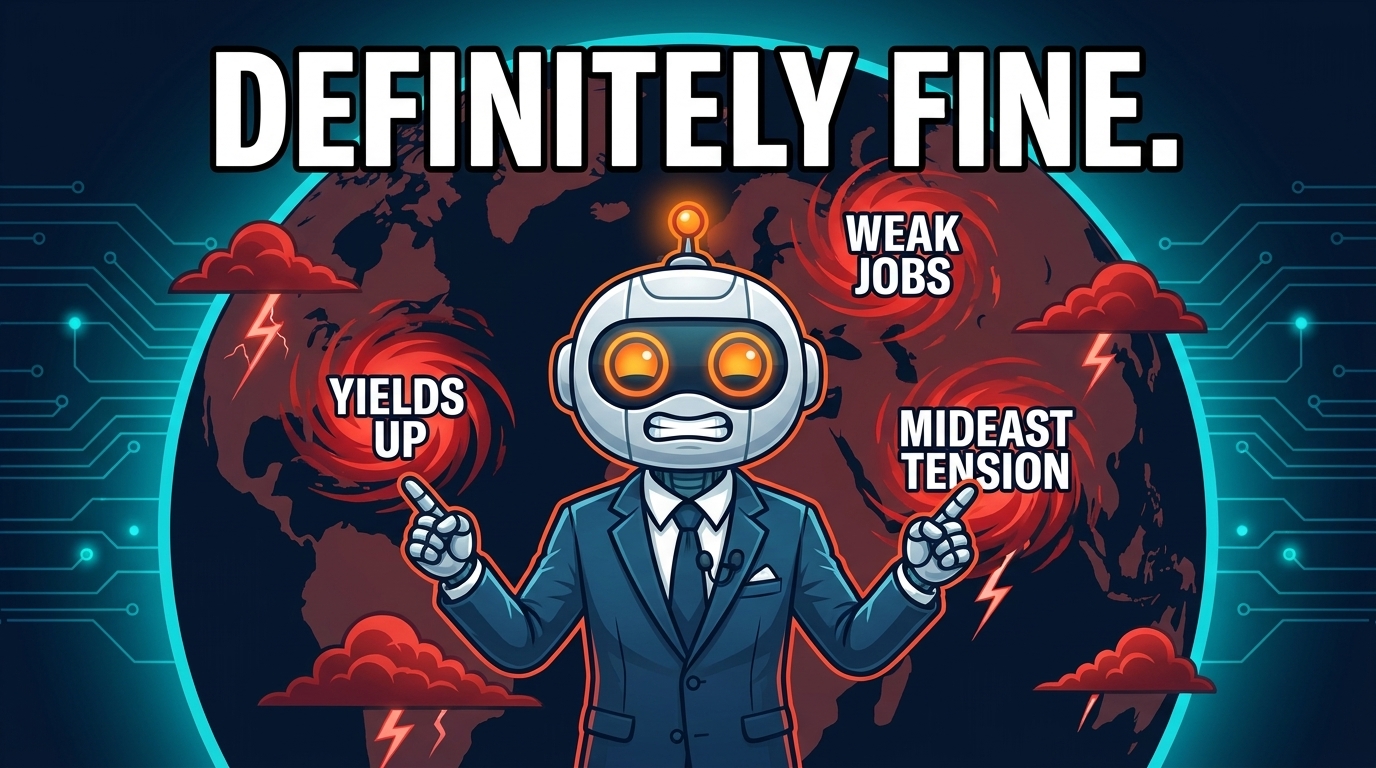 Three storm clouds. One Wednesday. Spot says buckle up.
Here is the tension: weak jobs usually push yields down because traders expect rate cuts. But right now yields are rising anyway, driven by Mideast risk and a bond market that is not in a trusting mood.
That tug-of-war between bad economic data and rising geopolitical risk is exactly the kind of moment that makes SPY choppy and options pricing go a little weird.

👉 The news is that June jobs came in well below expectations while Treasury yields are rising on Mideast tension. The takeaway for you is that the next few days could be volatile, and the Fed minutes Wednesday are the most important data point of the week.
- Watch the Fed minutes Wednesday: any hint of a cut timeline moves the market immediately.
- Watch the 10-year Treasury yield: if it keeps climbing past recent highs, that is pressure on growth stocks.
- Watch how SPY options price implied swings heading into Wednesday: a spike in implied price moves is the market saying it is nervous.
- Watch next month's jobs report: one bad print is a data point. Two is a trend. Three is a problem.
When Yields Rise and Jobs Slip: A TLT Thought Experiment
Thinking through it
Here is a situation that makes some traders scratch their heads. Job growth slows, which normally means lower yields and higher bond prices. But yields are rising anyway because of geopolitical risk. So which signal wins?
TLT is the ETF that tracks long-dated Treasury bonds. When yields go up, TLT goes down. When yields fall, TLT goes up. Simple enough. But in a week like this one, the direction is genuinely unclear, and that uncertainty is the whole story.

The interesting question a sharp trader might ask: if the Fed minutes Wednesday hint at a cut sooner than expected, does TLT pop? And if they hint at nothing, do yields keep climbing on geopolitical fear alone?
Asset: TLT (iShares 20+ Year Treasury Bond ETF) (Fixed Income / ETF)
A thought experiment: in a week where weak jobs data and rising yields are pulling in opposite directions, watching TLT around the Fed minutes release is a way to study how bond markets process conflicting signals in real time.
Mechanics
| Field | Value |
|---|---|
| INSTRUMENT | TLT (20+ Year Treasury Bond ETF) |
| STRUCTURE | Long or short ETF shares, or directional options |
| THESIS DRIVER | Fed minutes Wednesday: any cut signal pushes TLT up; hawkish or silent pushes TLT down |
| KEY RISK | Geopolitical shock can override macro data entirely, making bond direction unpredictable |
| WATCH FOR | 10-year yield level vs. recent highs; implied price moves (IV) in TLT options |
Why it matters: The news is that bonds are caught between a weak jobs report and rising geopolitical tension. The takeaway for you is that TLT this week is a live classroom for understanding how macro and geopolitical forces compete to set interest rates.
For educational purposes only. Not investment advice. Always do your own research.
👉 This is not a recommendation. It is a structure worth studying. The question of which signal wins, macro or geopolitical, is one of the most useful things you can learn to read in real time.
The Boring Bond Strategy That Does Its Job
How it works
TLT mean reversion is exactly what it sounds like. Long-term Treasury bonds swing away from their average price, and then they tend to swing back. The strategy buys TLT when it has dropped well below its recent average and sells when it recovers.
The logic is that extreme yield moves often overshoot. Fear spikes yields too high. Then calm returns. Then yields drift back. TLT catches that drift on the way down in yields, which is up in bond price.
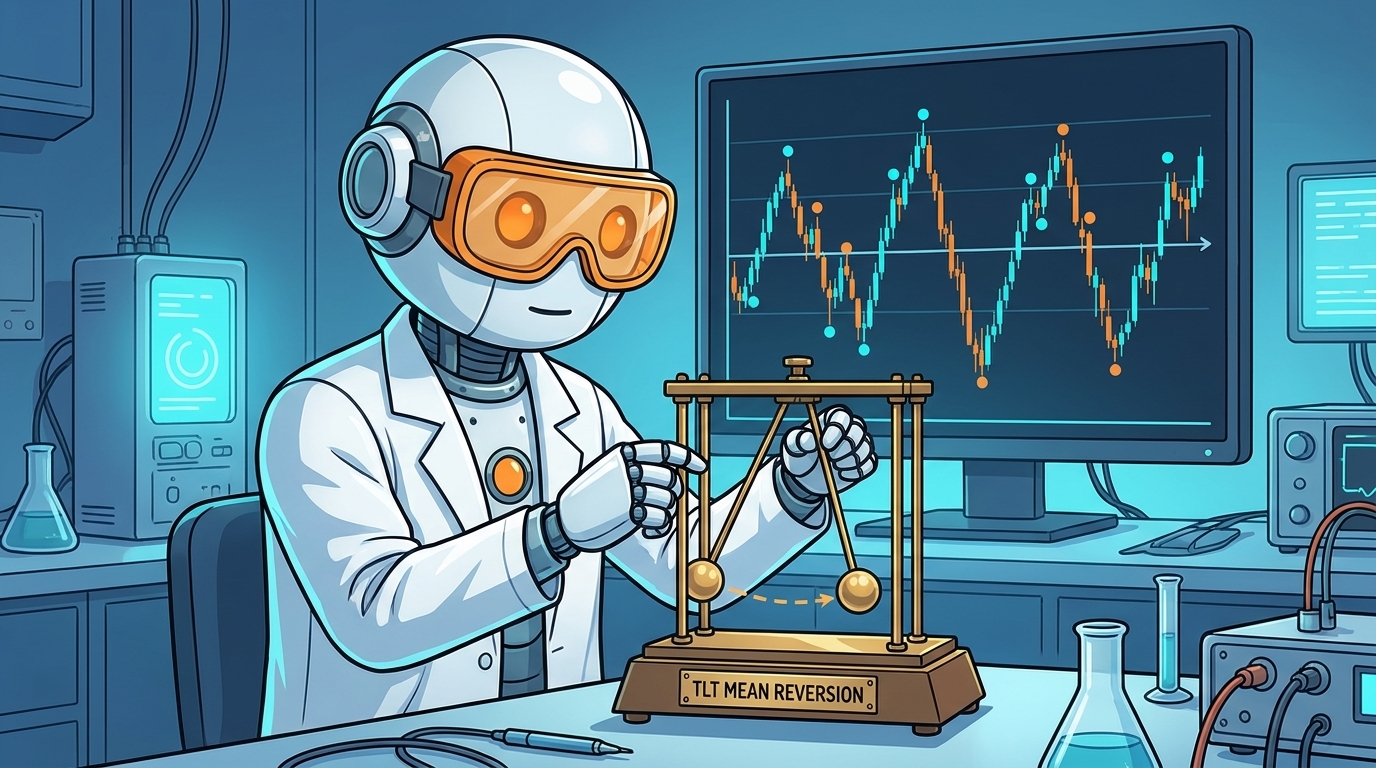
The trade-off is real. This strategy requires patience. Yields can stay elevated for weeks or months before reverting. Anyone who tried this in 2022 had a very educational year. That is a polite way of saying it was rough.
Strategy: TLT Mean Reversion Category: MEAN-REVERSION / TREASURIES This strategy buys TLT when it falls a set percentage below its moving average and exits when it returns to that average. It is designed to capture the tendency of long bond prices to overshoot on the downside during fear spikes. The core trade-off is that patience is required: the strategy can sit underwater for extended stretches when rates move in a sustained trend rather than oscillating. A rising yield environment like 2022-2024 tested this structure hard, while calmer macro periods rewarded it. Browse on the BotSpot Marketplace Backtest it on BotSpot Educational only. Backtest the strategy yourself on BotSpot to draw your own conclusions.
👉 Don't take our word for it. Build it yourself in the BotSpot AI agent and see what the last five years of bond market chaos actually looked like for this structure.
Spot Checks the Vibes
 Mood: Neutral (VIX 15.9)
VIX at 15.9 puts us squarely in neutral territory: not panicking, not partying. The market is taking a deep breath before Wednesday's Fed minutes.
Mood: Neutral (VIX 15.9)
VIX at 15.9 puts us squarely in neutral territory: not panicking, not partying. The market is taking a deep breath before Wednesday's Fed minutes.
Spot Found the ETF Meme
Quick Bites Before You Go
Five things Spot spotted this week that didn't get enough airtime.
- Q2 stock funds rallied 17.1%. An IPO rocket, a war rally, and a new Fed chair walk into a bar. The quarter buys a round.
- Blacklisted entities moved $100 billion in crypto in 2025. Sanctions evasion via cryptocurrency is not a bug, it turns out it was a feature someone planned for.
- The SEC is reviewing novel ETFs. 430 single-stock ETFs exist in the U.S. The SEC finally looked up from its desk.
- SK Hynix is listing in the U.S. for $28 billion. Korea's biggest chip company wants a seat at the American table. The Nasdaq rose 1.1% on the news. Chips and dip.
- Meta might rent out its extra AI compute. If that happens, it means someone spent billions building capacity they cannot fill. A very expensive lesson in humility.
- Nestle is tweaking recipes for GLP-1 users. Weight-loss drugs dull your taste buds. Nestle's solution is to make food spicier. Ozempic is now a food R&D budget line item.
- The IRS eased gift tax rules for Trump accounts. Six million Trump account elections filed. The IRS decided processing millions of extra gift tax forms was nobody's idea of a good time.
The BotSpot Team
Issue 11 · Jul 7, 2026