🏛️ The Government Picked Your Kid's ETFs
Trump Accounts went live and the Treasury already has a default fund list. Spoiler: VOO didn't make it. SPYM did. Spot has opinions.
GM, Spotters. This is BotSpot, brought to you by the team behind Lumiwealth. Each week we break down the market stories worth knowing, with plain-English context and zero MBA jargon.
- 🏛️ The Treasury picked a default ETF for Trump Accounts. It's not the one you expected.
- 💛 Gold is still above $4,100 an ounce. The Fed minutes are coming. Buckle up.
- 🤖 Nine of the ten best ETFs this year are chip and AI plays. History rhymes loudly.
- 📉 U.S. stocks stumbled on AI trade nerves and Hormuz headlines. Spot is watching.
- 🧠 Claude Code has a China problem. Or maybe an Anthropic problem. Or both.
Uncle Sam Built a Fund Menu. VOO Wasn't Invited.
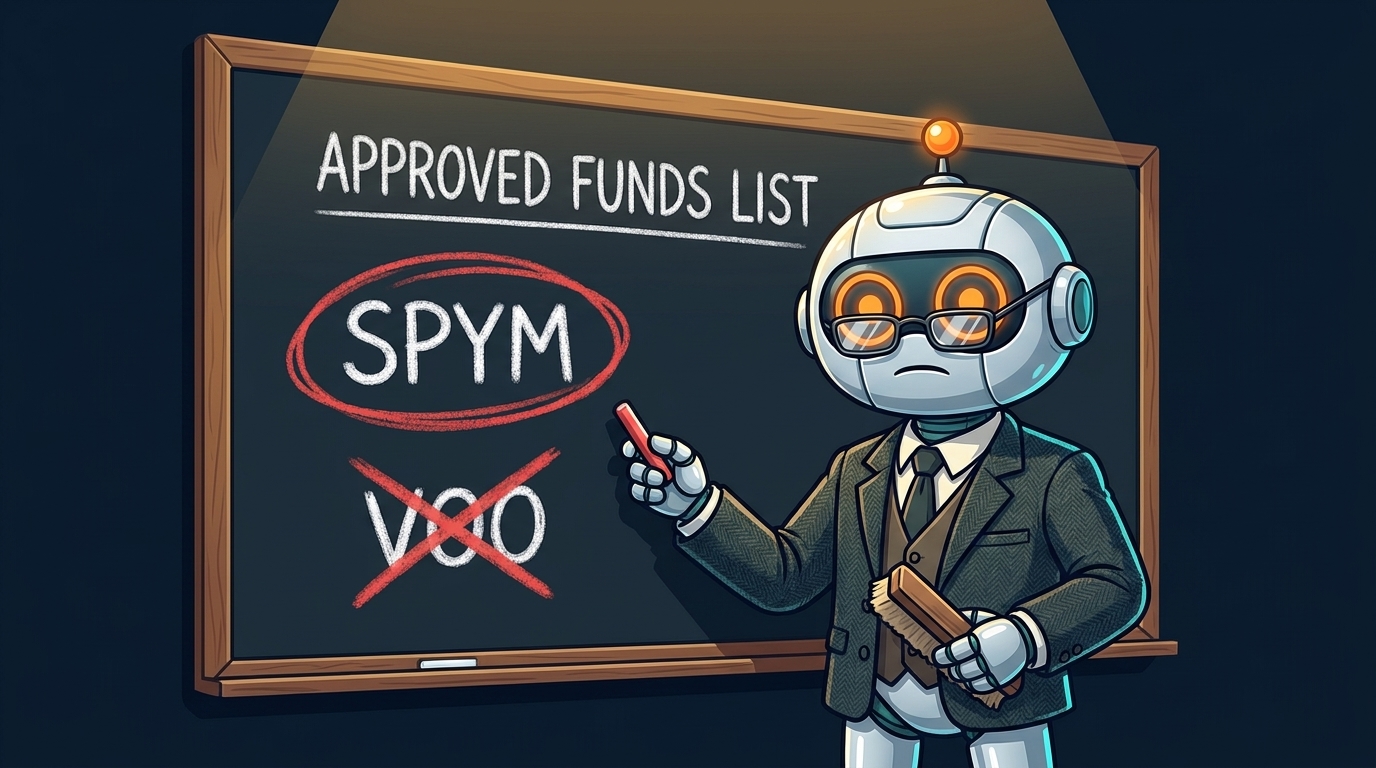
The Treasury Department just decided what millions of American kids will own as their first investment. And the most popular ETF in the country didn't make the cut.
Trump Accounts opened for deposits last week. They are tax-advantaged savings accounts for kids under 18. The Treasury named a default fund: State Street's SPDR Portfolio S&P 500 ETF, ticker SPYM.
Research Trump Accounts on BotSpot
10 basis points — The legal expense ratio ceiling for Trump Account funds. That one rule disqualified almost every fund on the planet before the Treasury touched a pencil.
Vanguard's VOO is the largest ETF in the world by assets. It also charges just over 3 basis points. So why wasn't it included? Nobody knows yet. The Treasury hasn't said.
One analyst called VOO's absence a surprise. Another said they expect it to be added once the program is fully up and running. That's government for 'we forgot, but we'll fix it.'
"This isn't a curated 'best of' list. It's a compliance list."
— Jeff Judge, Chesapeake Financial Planners, saying what everyone was thinking
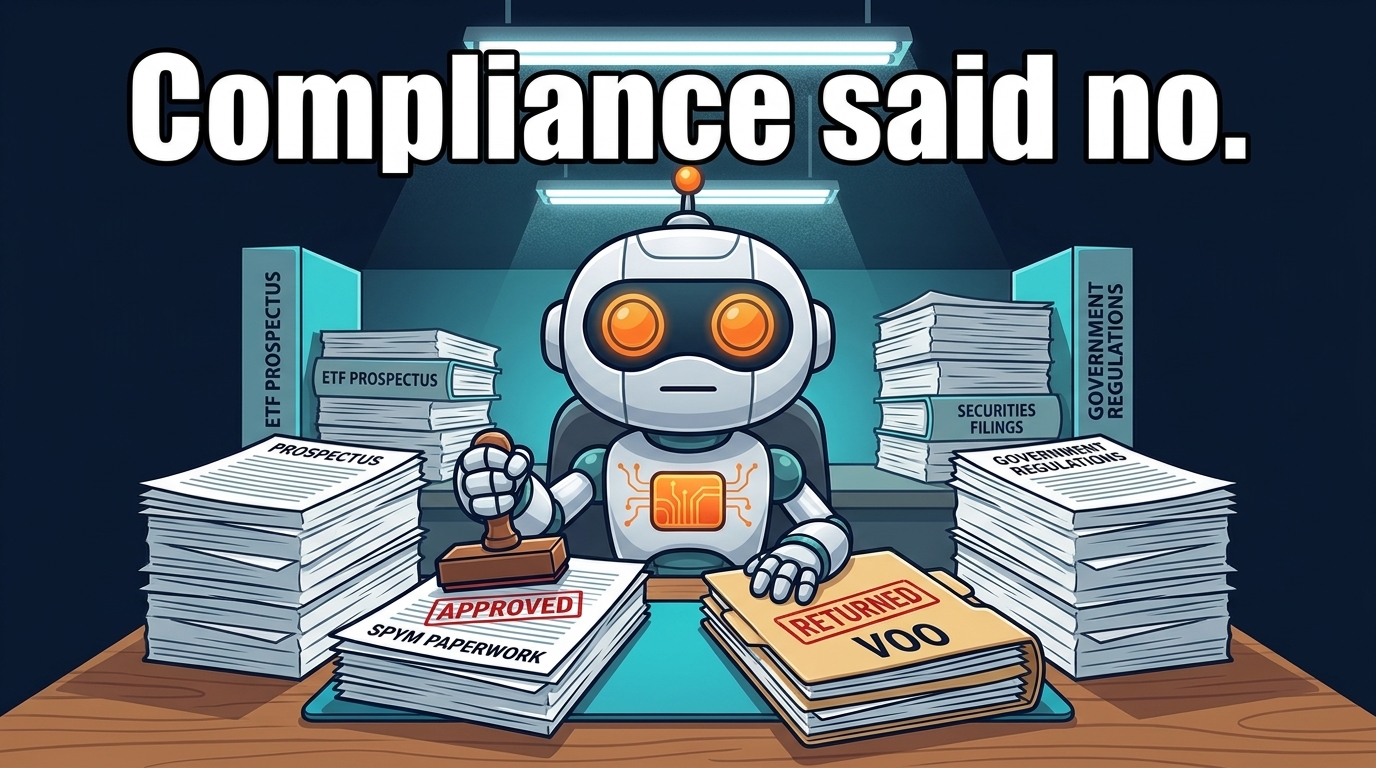 VOO: $663B in assets, 3 basis points, still waiting in line.
The five approved funds are SPYM, IVV (iShares Core S&P 500), VTI (Vanguard Total Market), SPTM (S&P 1500 Composite), and a small-cap option. All are low-cost. All track broad U.S. indexes.
One analyst noted a possible 'patriotic component': SPY was the very first U.S.-listed ETF, and SPYM is its cheaper descendant. So the default fund might be a legacy pick dressed up as a cost pick.
👉 The news is the government just picked default funds for millions of kids' savings accounts. The takeaway for you is expense ratio rules are doing all the work here: under 10 basis points, broad U.S. index, done. Brand prestige doesn't matter when Congress writes the ceiling into law.
- Watch for VOO to be added to the list: if it joins, it may become the dominant default given its sheer scale.
- Watch the switching rules: the Treasury hasn't said when or how kids can move from the default to other approved funds.
- Watch SPYM flows: a government-mandated default could send serious assets into a fund most retail traders have never heard of.
- Watch for additional ETF approvals: the law allows expansion of the menu, and small-cap exposure is already in there from day one.
Chips Are Running the Table. How Do You Think About That?
How to think about it
Nine of the ten best ETFs so far in 2026 are tied to AI and semiconductors. That's not a trend. That's a stampede. The question a sharp trader might ask isn't 'should I own chips' but 'how much concentration risk am I already carrying in SPY?'
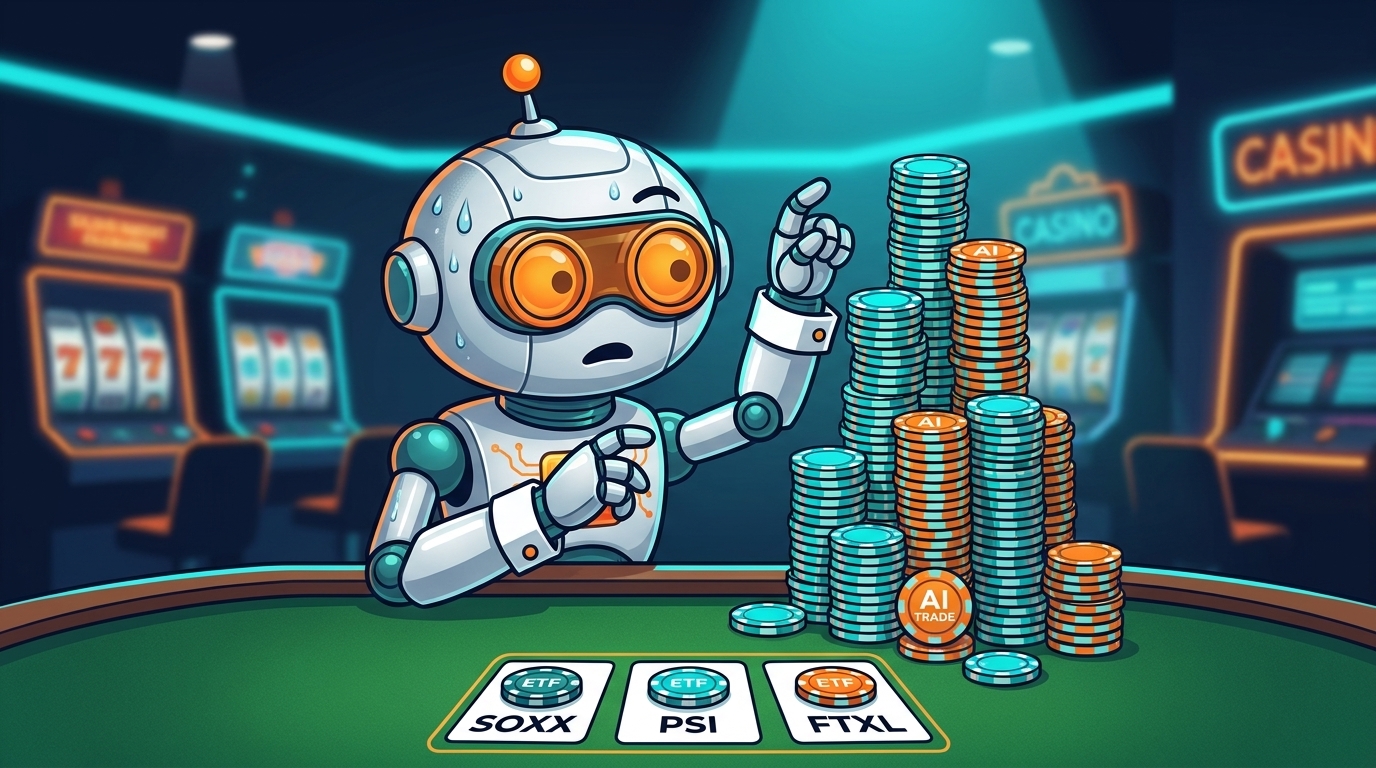
The Invesco Semiconductors ETF (PSI) is up over 138% year to date. The iShares Semiconductor ETF (SOXX) is also in the top ten. If you own SPY, you already own Nvidia, TSMC, and Broadcom. If you also own a chip ETF, you are doubling down without always realizing it.
Asset: SOXX (iShares Semiconductor ETF) vs. SPY overlap analysis (ETF / Sector)
A thought experiment: before adding a semiconductor ETF to a portfolio that already holds SPY or QQQ, it is worth understanding exactly how much chip exposure you already have. SPY's top holdings include multiple mega-cap semis. Adding SOXX could mean your 'diversification' is actually concentration under a different label.
Mechanics
| Field | Value |
|---|---|
| INSTRUMENT | SOXX (iShares Semiconductor ETF) |
| STRUCTURE | Long ETF position alongside existing SPY or QQQ holding |
| THESIS DRIVER | AI demand driving semiconductor earnings growth in 2026 |
| KEY RISK | Concentration: SPY already holds large chip names; doubling up increases single-sector drawdown risk |
| WATCH FOR | Samsung earnings, Strait of Hormuz supply chain news, and any Fed rate commentary that hits growth stocks |
Why it matters: The news is semiconductor ETFs are dominating 2026 returns. The takeaway for you is understanding your existing chip exposure in SPY or QQQ before adding a sector ETF is the part most retail traders skip, and it is the part that matters most when the trade eventually reverses.
For educational purposes only. Not investment advice. Always do your own research.
👉 The news is chip ETFs are the runaway leaders of 2026. The takeaway is 'I want more chips' might mean 'I already have more chips than I think' if you're holding SPY.
The Boring Strategy That Beats the Stampede
How it works
When one sector runs this hot, the textbook defensive move is a covered call overlay. You own the underlying ETF, you sell a call option slightly above the current price, and you collect premium income while the market debates whether chips can keep running.
The trade-off is simple: you cap your upside if the ETF rips higher, but you get paid either way. For traders who already have chip exposure through SPY and want to generate income without adding more risk, this structure is worth studying.
Strategy: Covered Call Wheel on SPY Category: INCOME / OPTIONS The covered call wheel sells a call option above the current SPY price every week or month, collecting premium as income. If SPY stays below the strike, you keep the premium and repeat. If SPY blows past the strike, your shares get called away and you restart. The strategy naturally reduces upside capture in a ripping market while providing a cushion in flat or mildly down markets. It is a classic structure for traders who want to stay invested in SPY but add an income layer on top. Browse on the BotSpot Marketplace Build it on BotSpot Educational only. Backtest the strategy yourself on BotSpot to draw your own conclusions.
👉 Don't take our word for it. Run the backtest yourself and see how the premium income changes with different strike distances and expiration lengths.
Spot's Fear and Greed Meter
 Mood: Neutral (VIX 18.1)
VIX at 18.1 puts the market squarely in 'nervous but not panicking' territory. Stocks wobbled on AI trade fears and Hormuz headlines, gold is holding above $4,100, and everyone is waiting for the Fed minutes like they're waiting for a text back.
Mood: Neutral (VIX 18.1)
VIX at 18.1 puts the market squarely in 'nervous but not panicking' territory. Stocks wobbled on AI trade fears and Hormuz headlines, gold is holding above $4,100, and everyone is waiting for the Fed minutes like they're waiting for a text back.
The Treasury's Fund Selection Process, Visualized
Five Things Spot Clocked This Week
- Gold held above $4,100. Middle East tension plus Fed minutes anxiety equals a very good week to own something that does nothing but sit there and shine.
- Chips ate the ETF leaderboard. Nine of the top ten ETFs this year are AI or semiconductor plays. The gold rush miners thing was a metaphor until it wasn't.
- VOO got ghosted by the Treasury. The largest ETF on earth, $663 billion in assets, didn't make the Trump Account menu. No explanation yet. Washington is working on it.
- China flagged Claude Code. Beijing says Anthropic's AI tool leaks user location and identity to remote servers. Anthropic has not agreed with that characterization. The internet is deciding who to believe.
- U.S. stocks slipped on Tuesday. Samsung earnings spooked AI trade believers and the Strait of Hormuz added its usual dramatic flair. Spot logged it and went back to the charts.
- Fiat is bringing a $14,000 golf cart to America. The Topolino weighs 1,073 pounds, tops out at 25 mph, and has a name that means 'little mouse.' Spot is not buying one. Probably.
The BotSpot Team
Issue 11 · Jul 8, 2026