🏦 IQQ Enters the Chat
BlackRock launched a Nasdaq-100 ETF. State Street already has one. Invesco is watching its monopoly dissolve in real time.
GM, Spotters. This is BotSpot, brought to you by the team behind Lumiwealth. Each week we walk through the market stories worth knowing, with context, color, and zero MBA jargon.
- 📊 BlackRock's IQQ launched this week, bringing the Nasdaq-100 ETF count to three. QQQ is sweating.
- 🟡 Gold climbed back above $4,100 after Wednesday's selloff. Geopolitical tension plus a softer dollar did the work.
- 📋 The Fed minutes from June dropped. The hawks are circling. Spot has thoughts.
- 🌐 The IMF trimmed global growth to 3% for 2026 but quietly dropped its recession warning after the June ceasefire.
- 📈 Global M&A topped $3 trillion in the first half of 2026. AI megadeals are doing the heavy lifting.
QQQ Had a 27-Year Monopoly. Now It Has Roommates.

For 27 years, Invesco's QQQ was the only game in town if you wanted the Nasdaq 100 in one ticker. Then State Street showed up two weeks ago. Then BlackRock walked in this week with IQQ.
BlackRock's new iShares Nasdaq 100 ETF (IQQ) started trading this week. It tracks the same index as QQQ, holds the same stocks, and even added SpaceX to the mix. The only real question is: why pay more?
Research IQQ vs QQQ with BotSpot AI
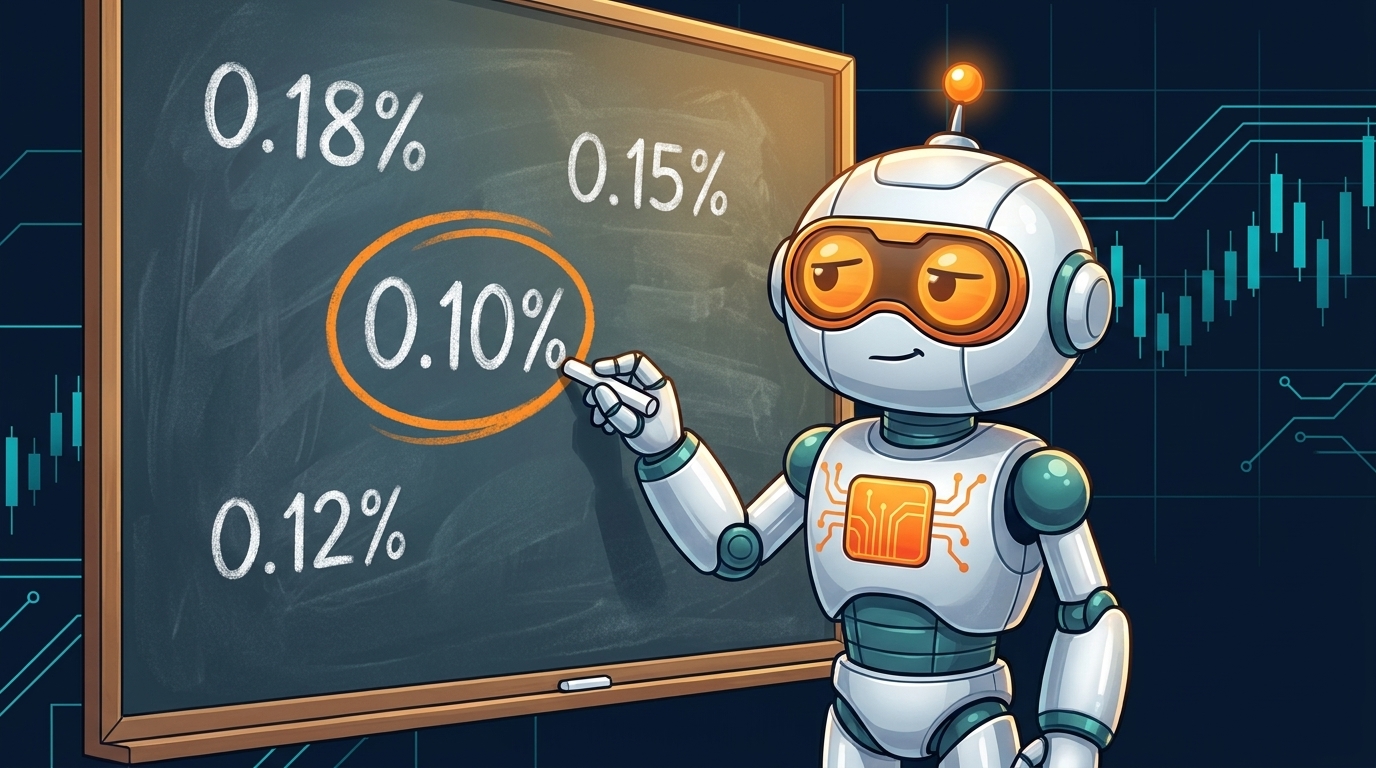
0.10% vs 0.18% — IQQ's waived fee vs QQQ's fee. On a $100,000 position, that is $80 a year back in your pocket. Every year. Forever.
Here is the fee breakdown, from most to least expensive. QQQ charges 0.18%. Invesco's own cheaper version, QQQM, charges 0.15%. BlackRock's IQQ charges 0.12%, but a temporary waiver brings it to 0.10% through July 2027. State Street's QNDX charges 0.10% permanently.
Bloomberg's ETF analyst James Seyffart put it plainly: QQQ is still the second-most-famous ticker after SPY, and most traders will keep using it. But long-term, buy-and-hold investors are going to look hard at those cheaper alternatives.
"The Qs are probably the second-most famous ticker outside of SPY. That is still what most traders are going to use."
— James Seyffart, Bloomberg Intelligence, not even a little worried about QQQ
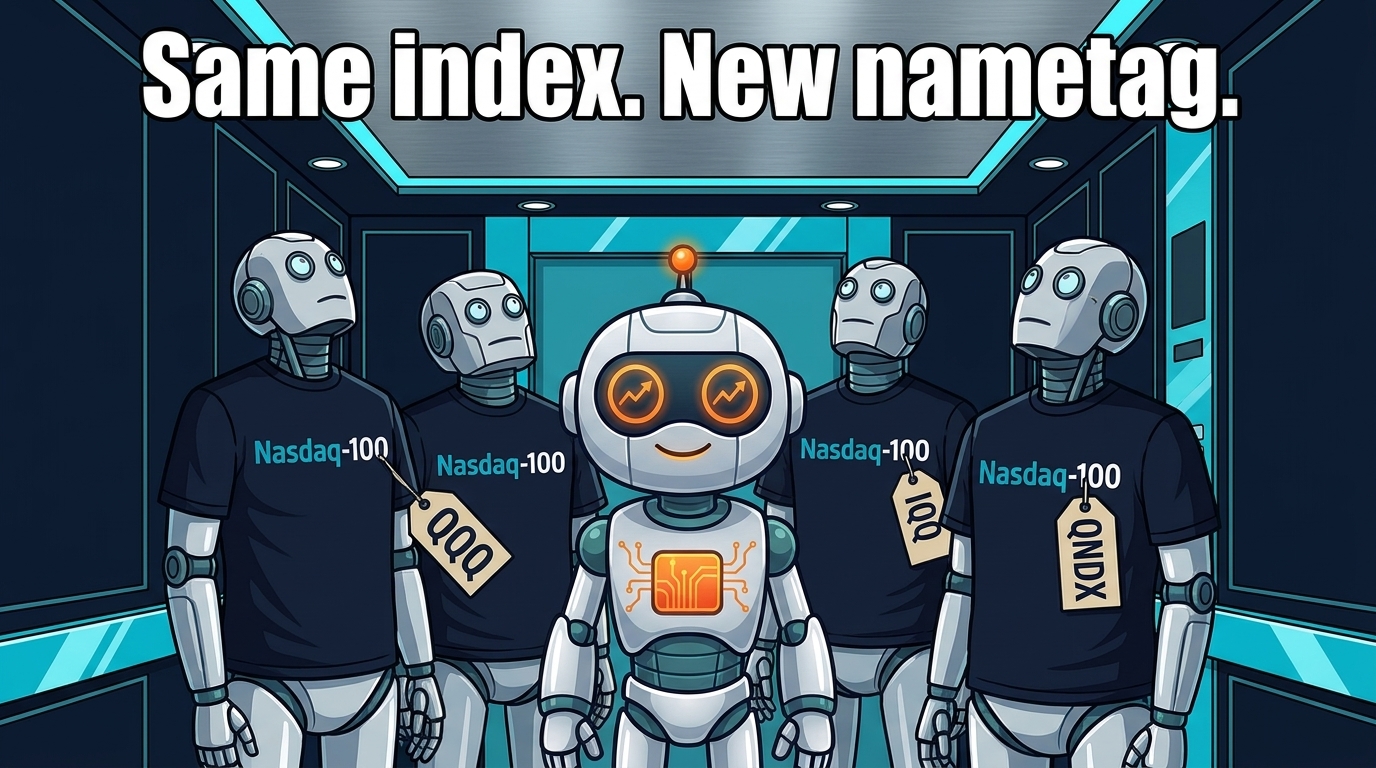 BlackRock's fee waiver expires July 2027. Mark your calendar.
The real moat QQQ still holds is liquidity. Invesco's global ETF head Brian Hartigan pointed out that half a trillion dollars of options are tied to QQQ. You cannot clone that overnight.
One analyst called out BlackRock's temporary waiver strategy directly: 'I don't get what their approach is to try to do this temporary waiver and then go back up to 12. Just come in at 10 basis points, like State Street did.' Harsh. Fair.
👉 The news is BlackRock launched IQQ and now three funds track the same Nasdaq-100 index. The takeaway for you is if you already hold QQQ, the fee difference probably is not worth a tax event to switch. If you are starting fresh, the cheaper options are worth a look.
- Watch what IQQ's fee becomes after July 2027 when the waiver expires. That is the real number.
- Watch options open interest on IQQ and QNDX. Until liquidity builds, QQQ still wins for active traders.
- Watch QQQM. Invesco's own cheaper fund at 0.15% is the sleeper pick that rarely gets discussed.
- Watch advisor model portfolios. BlackRock's distribution network means IQQ could show up in 401(k)s faster than you expect.
Analyze ETF fee differences on BotSpot
Gold Above $4,100 and the Fed Is Still Hawkish. Interesting Timing.
How to think about it
Gold climbed back above $4,100 this week after a Wednesday selloff, powered by Middle East tensions and a softer dollar. At the same time, the Fed's June minutes signaled that hawks are still very much in the room.

A hawkish Fed is historically bad for gold because it pushes real rates up and makes the dollar stronger. But Middle East tension pushes money into safe havens fast. Right now both forces are live at the same time, which makes this a genuinely interesting case study in how gold reacts to competing signals.
Asset: GLD (SPDR Gold Shares ETF) (Commodities / ETF)
Gold is holding above $4,100 despite hawkish Fed signals, suggesting geopolitical demand is overwhelming rate pressure for now. The structure worth studying is how gold and real Treasury yields move together, and what a resumption of rate-cut expectations might mean for that relationship.
Mechanics
| Field | Value |
|---|---|
| INSTRUMENT | GLD (SPDR Gold Shares ETF) |
| DRIVER TO WATCH | Real yield direction vs geopolitical risk premium |
| COMPETING FORCE | Hawkish Fed minutes signaling rates staying higher for longer |
| SUPPORTING FORCE | Softer dollar and renewed Middle East tensions this week |
| KEY RISK | A surprise hawkish move or ceasefire extension could erase the risk premium quickly |
Why it matters: The news is gold is back above $4,100 even as Fed hawks push back. The takeaway for you is that gold's price right now is a tug-of-war between two forces, and understanding which one is driving the bus is the whole game.
Research this idea with BotSpot AI
For educational purposes only. Not investment advice. Always do your own research.
👉 The news is gold is fighting two bosses at once. The idea worth studying is which force has been more predictive of gold direction historically: real yield moves or geopolitical spikes.
The Boring Treasury Strategy That Wakes Up When Fear Does
How it works
TLT mean reversion is one of the oldest boring-but-interesting strategies in the ETF playbook. The idea is simple: when Treasury yields spike sharply in a short window (meaning TLT drops hard), bond prices tend to bounce back toward their recent average. The strategy leans into that reversion rather than chasing the trend.
The natural trade-off is that this strategy can be painfully early. Yields can keep rising longer than the model expects, especially when the Fed is actively hawkish. This week is a live example: yields edged higher again after the Fed minutes, which would stress any mean-reversion position in TLT.
Strategy: TLT Mean Reversion on Yield Spikes Category: MEAN-REVERSION / TREASURIES This strategy buys long-dated Treasury exposure via TLT when yields have spiked sharply over a short lookback window, betting on a reversion toward the recent average. It tends to be active during periods of fear and rate uncertainty, which makes this week a topical case study. The key trade-off is timing: a hawkish Fed can extend the pain window significantly before the bounce arrives. Run your own backtest to see how the entry and exit rules behave across different rate environments. Browse on the BotSpot Marketplace Backtest it on BotSpot Educational only. Backtest the strategy yourself on BotSpot to draw your own conclusions.
👉 Don't take our word for it. Run the backtest yourself and see how the strategy behaves in hawkish Fed environments versus rate-cut cycles. The difference might surprise you.
Spot Checks the Vibe
 Mood: Neutral (VIX 16.9)
VIX at 16.9 puts us firmly in the shrug zone. Not scared, not euphoric. Markets are digesting Fed minutes and Middle East headlines without fully committing to either direction.
Mood: Neutral (VIX 16.9)
VIX at 16.9 puts us firmly in the shrug zone. Not scared, not euphoric. Markets are digesting Fed minutes and Middle East headlines without fully committing to either direction.
Nail on the Head
Seven Things Spot Caught This Week
- BlackRock launched IQQ this week. Same Nasdaq-100 index, lower fee, and a temporary waiver that sounds like a car dealer's zero-percent financing offer.
- Gold bounced back above $4,100. Geopolitical tension plus a softer dollar brought it back. The hawkish Fed minutes tried to ruin the party and mostly failed.
- The Fed June minutes dropped Wednesday. Hawks are still in the building. Rate cuts are not on the near-term agenda, and the minutes made sure you knew it.
- The IMF quietly dropped its recession warning. Global growth got trimmed to 3%, but the Iran-war-triggers-recession scenario got shelved after the June ceasefire. Small mercies.
- Global M&A crossed $3 trillion in H1 2026. AI megadeals are doing most of the work. Bankers are having a very good summer. Everyone else is just watching.
- Treasury yields edged higher again. Below Wednesday's multi-week peak, but still drifting up. The bond market is reading the same hawkish Fed minutes you just did.
- QQQ's moat is liquidity, not fees. Half a trillion dollars of options are tied to QQQ. That number does not move to IQQ overnight. Active traders are staying put.
The BotSpot Team
Issue 11 · Jul 9, 2026