🔁 Tech V-Bounce #5: Same Movie, New Popcorn
Deutsche Bank says buy the dip. Again. For the fifth time. We checked.
GM, Spotters. This is BotSpot, brought to you by the team behind Lumiwealth. Each week we walk through the market stories worth knowing about, with context, color, and a clear head.
- 🔁 Tech just made its fifth V-shaped bounce in 30 months. Deutsche Bank is calling for a sixth.
- 🤖 Broadcom just became the biggest winner of the Anthropic IPO. $161 billion locked in. Yes, billion.
- 🇨🇳 China's AI bubble lost 40% from its summer peak. And it was at 250x earnings at the top.
- 🏦 State Street just made its S&P 500 ETF work inside a 401(k). The dual share class era begins.
- 📈 The Dallas Fed wants two more rate hikes. Markets came back to risk anyway. Classic Monday morning.
Tech's Fifth V-Shaped Bounce in 30 Months
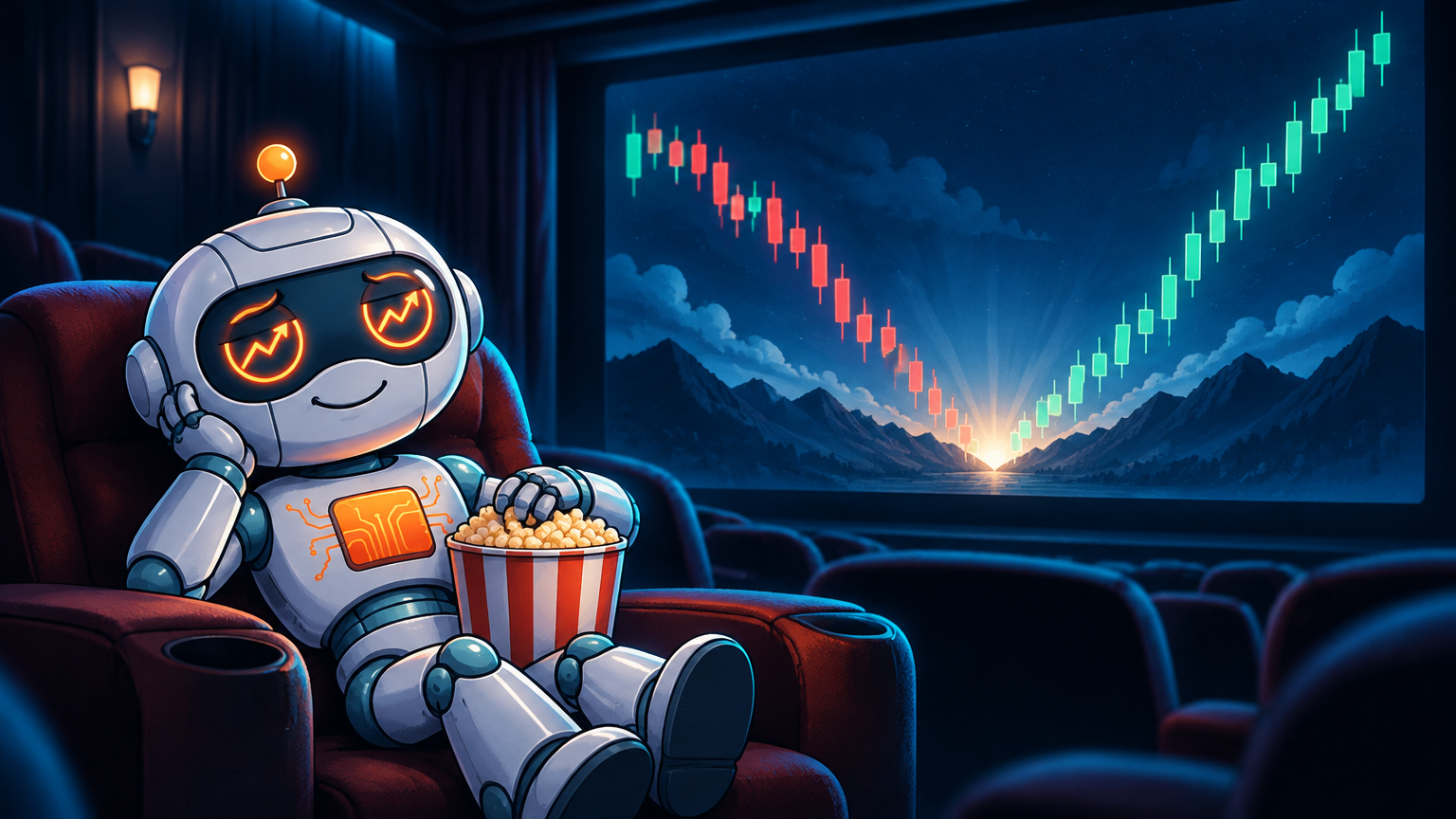
Tech stocks sold off hard last week. Then they bounced. Deutsche Bank is calling it the start of bounce number five. Or is it six? We lost count.
According to MarketWatch, tech has now made five big V-shaped recoveries in just 30 months. The Nasdaq slipped about 8% from its early-October record through last Friday.
5 bounces / 30 months — Tech has snapped back from every single selloff since mid-2024. Deutsche Bank thinks investor positioning is way too cautious for how strong earnings actually are.
Deutsche Bank's angle is interesting. They say that investor positioning in tech is pricing in much slower earnings growth than the sector is actually delivering. In plain English: traders are scared, but the numbers are not bad.
Meanwhile, oil fell, stock futures rose Monday morning, and investors crept back toward risk after last week's Intel and Binance bruises. Cautious return to risk is the phrase the WSJ used. That is a very polite way to describe tiptoeing back into a pool you just got dunked in.
"Positioning is consistent with much slower earnings growth than the sector is achieving."
— Deutsche Bank, Nov 2, 2026, saying the quiet part loud
 Deutsche Bank has been right four times. Their record is solid. Their optimism is contagious.
There is a real tension here worth sitting with. The Dallas Fed's Lorie Logan said this week that at least two more rate hikes are needed. That is the kind of sentence that should put a dent in a tech rally.
And yet futures are up, oil is down, and risk is back on the menu. The market is betting the Fed blinks before Logan's two hikes land. That is a bet with a track record of winning. And a track record of occasionally blowing up spectacularly.
👉 The news is tech just completed its fifth V-shaped bounce in 30 months, with Deutsche Bank calling for another leg up. The takeaway for you is that the pattern is real, but every bounce ends eventually, and Logan's rate-hike talk is the tail risk worth watching.
- Watch the Nasdaq's 8% gap: does it close fully, or does it stall at the old high?
- Watch the Dallas Fed's tone: Logan's 'two more hikes' comment is the bear case in four words.
- Watch tech earnings beats vs. analyst estimates: Deutsche Bank says beats are being ignored. If that changes, so does the thesis.
- Watch China's STAR50 as a leading indicator: it peaked first, dropped 40%, and US tech followed with a milder version of the same story.
- Watch oil: lower oil equals lower inflation expectations, which is the quiet fuel under every tech bounce.
Broadcom and the $161 Billion Lock-In
Thinking through it
Broadcom dropped 33% from its June all-time high as the AI trade got repriced. Then Anthropic filed its S-1 and quietly disclosed it has $161 billion in five-year equipment leases locked in with Broadcom. That is not a rumor. That is in the regulatory filing.
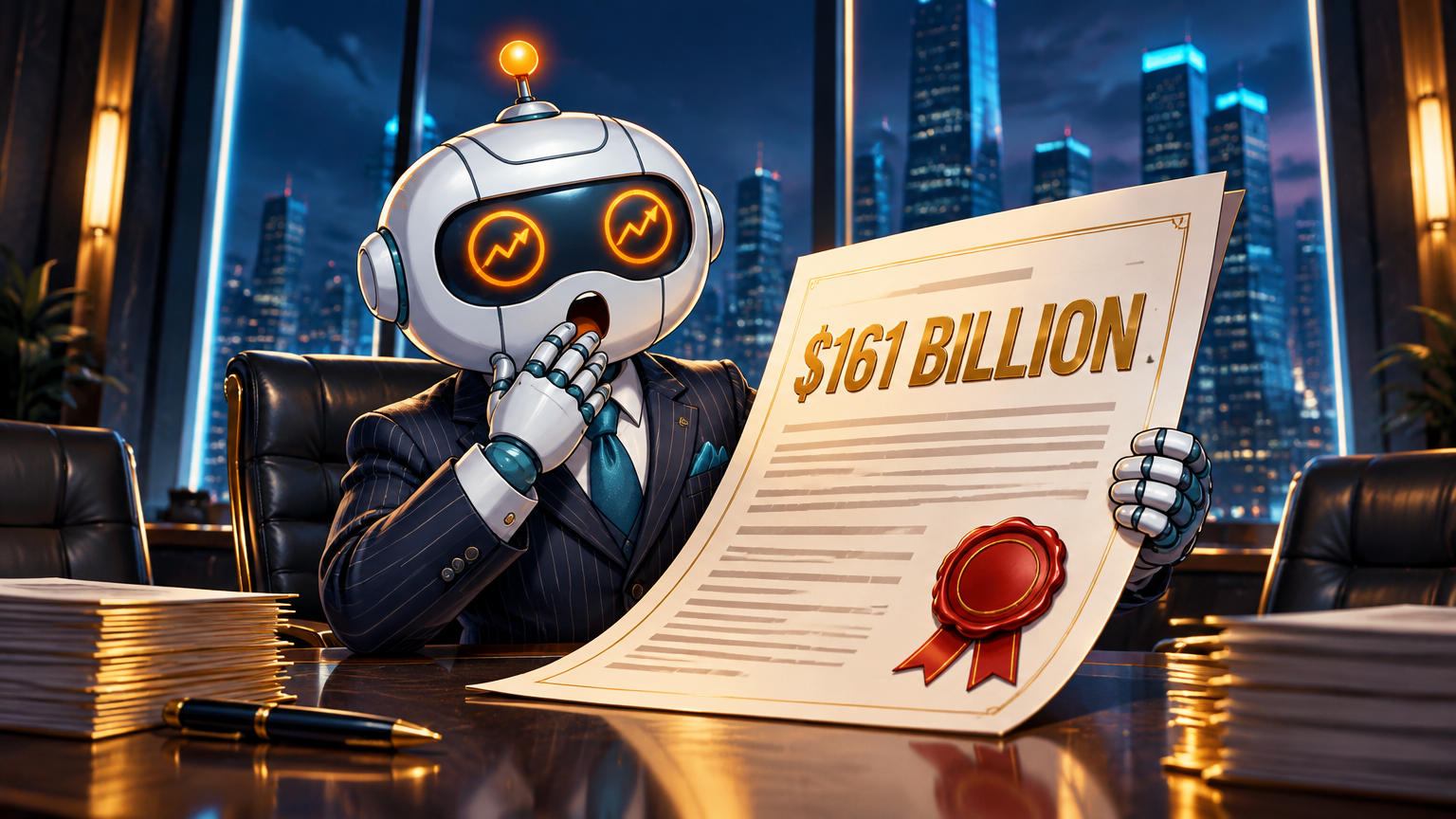
Anthropic is expected to become Broadcom's biggest XPU customer as soon as next year, representing roughly half of the 32 gigawatts of compute Broadcom expects to sell through early 2028. Broadcom's CEO has said AI semiconductor revenue should roughly double next year and double again the year after. That is a lot of doubling.
Asset: AVGO (Broadcom Inc.) (Large-Cap Semiconductor / AI Infrastructure)
Broadcom has fallen 33% from its June high but just had its forward revenue backlog confirmed by a $161B customer commitment in Anthropic's S-1. The question worth studying is whether the drop priced in risk that the filing just removed.
Mechanics
| Field | Value |
|---|---|
| INSTRUMENT | AVGO common stock or long calls |
| STRUCTURE | Long exposure (shares or defined-risk options) after the 33% drawdown |
| THESIS DRIVER | $161B Anthropic contract + OpenAI 'Jalapeno' chip + Google TPU partnership |
| KEY RISK | $63B AI debt deal exposed to more rate hikes; Logan's two-hike warning is not background noise |
| WATCH FOR | Anthropic IPO pricing, Fed rate decisions, and AVGO's own revenue guidance update next quarter |
Why it matters: The news is Broadcom's biggest AI contract just got confirmed in a regulatory filing after a 33% drop. The takeaway for you is that understanding how to read S-1 filings for supplier clues is one of the most underused edges in public markets.
For educational purposes only. Not investment advice. Always do your own research.
👉 The news is Anthropic's S-1 quietly confirmed Broadcom as the backbone of AI Act 2. The takeaway is that S-1 filings are treasure maps for supplier relationships, and most retail traders never read them.
The Boring Strategy That Keeps Winning: Tech Dip Accumulation
How it works
The idea is simple: set a rule that adds to QQQ or a broad tech ETF every time it drops more than a set percentage from a recent high, like 5% or 8%. You are not guessing the bottom. You are just buying more when things get cheaper, systematically, without emotion. This is sometimes called a rules-based accumulation overlay on a core position.

With five documented V-shaped recoveries in 30 months, the historical pattern of tech bouncing from oversold conditions makes this structure worth studying. The obvious trade-off is that on the sixth or seventh drop, the V might not come. A dip-buying rule without a hard stop can turn a strategy into a very expensive holding pattern.
Strategy: QQQ Rules-Based Dip Accumulation Category: MOMENTUM / SYSTEMATIC BUY This strategy adds to a QQQ position whenever it drops a fixed percentage from a recent high, then reduces or holds flat during recovery. It automates the instinct to 'buy the dip' without relying on gut feel. The core trade-off is that it performs well in range-bound, V-shaped markets and struggles in prolonged downtrends. It is worth backtesting across different drawdown thresholds to see how the timing sensitivity changes outcomes. Browse on the BotSpot Marketplace Backtest it on BotSpot Educational only. Backtest the strategy yourself on BotSpot to draw your own conclusions.
👉 Don't take our word for it. Run the backtest yourself and see what threshold actually worked across the last five bounces. The answer might surprise you.
Spot's Gut Check: Fear or Greed?
 Mood: Neutral (VIX 19.1)
VIX at 19.1 puts us right in the neutral zone, but the edges are close. One more hawkish Fed comment or one more tech earnings miss and we slide toward Fear fast. For now, the market is doing its best 'everything is fine' impression.
The Market in One Image
Bite-Sized Cookies for the Road
- Deutsche Bank is calling bounce number five. They've been right four times. Their confidence is either wisdom or muscle memory at this point.
- Broadcom has $161 billion in Anthropic contracts. The number was buried in an S-1. Most traders missed it. Wall Street did not.
- China's STAR50 lost 40% from its summer peak. Investors were paying 250 times earnings at the top. Even for AI stocks, that is a lot of faith.
- State Street just put an ETF inside a 401(k). SPYM now has a mutual-fund share class, which is the financial equivalent of putting wheels on a suitcase. Surprisingly, nobody did it first.
- Dallas Fed wants two more rate hikes. Logan said it out loud. Markets came back to risk anyway. Mondays are like that.
- Tokenized stocks are here, but the fine print is messy. No dividends, no voting rights, no instant settlement for institutions. Other than that, totally revolutionary.
- Investors are officially hedging AI risk. After three years of buying AI with both hands, the WSJ says they are finally reading the fine print on the downside.
The BotSpot Team
Issue 27 · Nov 2, 2026