🚨 The Global AI Selloff Is Picking Up Steam
Nasdaq futures are sliding, Asian stocks are slumping, and the AI trade just got a two-day hangover. Here is what is actually happening.
GM, Spotters. Welcome to BotSpot, brought to you by the team behind Lumiwealth. Each week we dig into the market stories that matter, strip out the noise, and leave you with the part worth knowing.
- 📉 Nasdaq futures slid hard overnight. Day two of the AI selloff is here.
- 🏦 Rising rates are threatening the one thing big banks actually had going for them.
- 🌍 Global tech stocks are slumping from Tokyo to Frankfurt. The rout has an international passport.
- ♻️ Green investing just got a lot more complicated. Turns out AI runs on electricity. A lot of it.
- 🤖 An IPO failure is rocking the AI trade. Spot is watching closely.
The AI Selloff That Would Not Stop at One Day

The AI trade had a rough Tuesday. Wednesday did not fix it. Now Thursday is here and the selling is still going.
Nasdaq futures dropped sharply overnight. Asian stocks followed. Investors who piled into anything with the word AI stitched on it are now quietly backing toward the exit.
Day 2 — The AI-linked selloff is now running into a second trading day. Global tech stocks from Tokyo to Europe are joining the party. The wrong kind of party.
Here is what actually happened. A string of signals came together at once: a failed IPO in the AI space, rising Treasury yields pulling investors toward bonds, and a general realization that AI stocks had been priced for perfection.
Perfection is a tough look to maintain. Especially two days in a row.
"Nasdaq futures dropped sharply as a global rout in stocks linked to AI accelerated, while Treasurys strengthened as investors bid a hasty retreat from risk."
— WSJ Markets, Oct 15, 2026
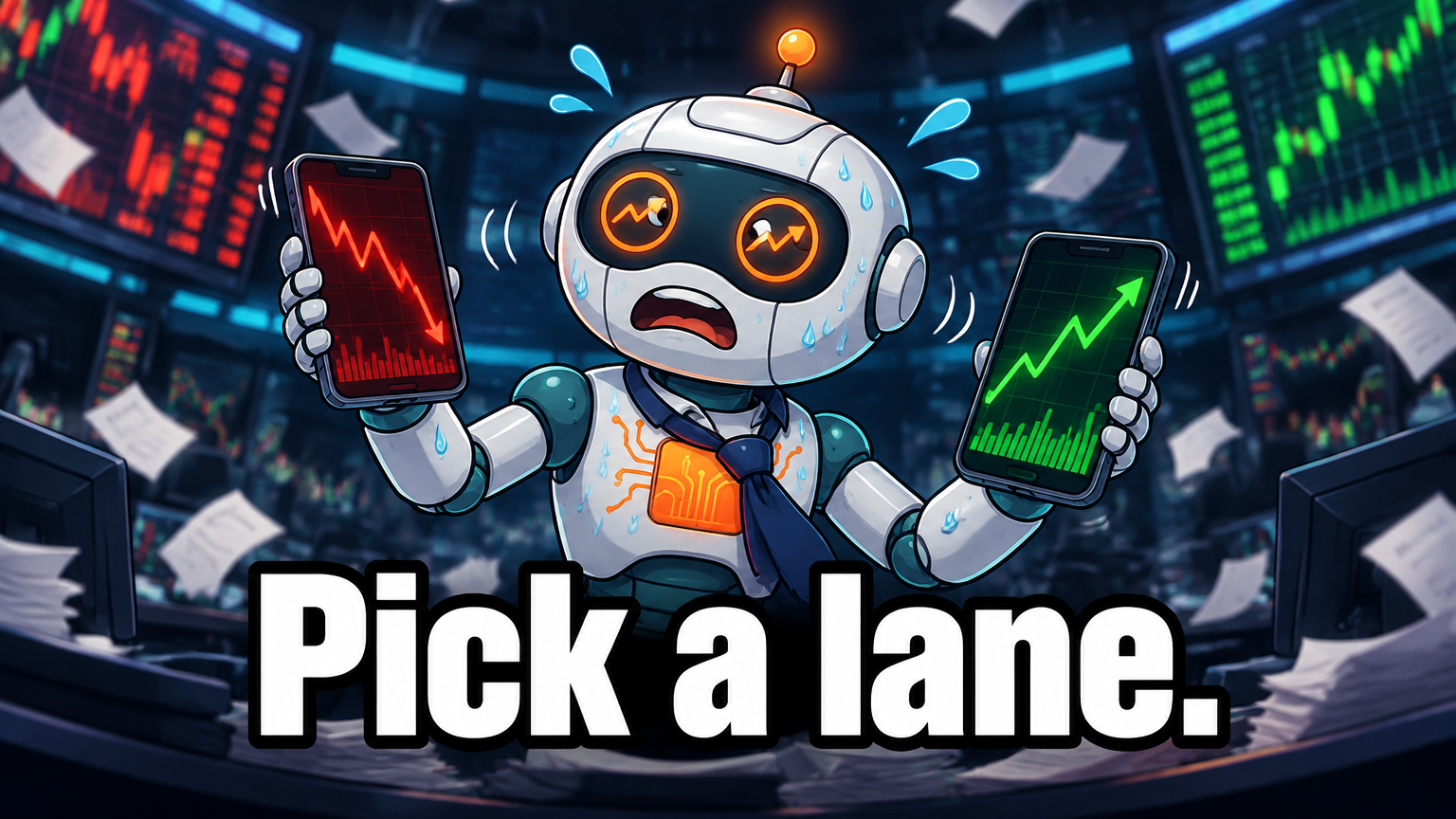 When bonds rally and tech sells off at the same time, the market is sending a message.
The story inside the story is Treasurys. When stocks sold off, investors did not go to cash. They went to bonds. Treasury yields eased, which means bond prices rose, which means the old-fashioned safe-haven trade is still alive.
If you hold SPY and nothing else, here is the honest truth: a two-day tech selloff stings but it is not unusual. The Nasdaq has had rougher stretches and come back. The question is whether this is a rotation or a rout.
👉 The news is the AI trade is selling off for the second straight day across global markets. The takeaway for you is that when tech drops and bonds rally together, the market is rotating toward safety, not collapsing. Those are different things.
- Watch whether QQQ closes below its 50-day moving average. That level is where technical traders start paying close attention.
- Watch Treasury yields. If they keep easing while stocks fall, the rotation-not-rout story stays intact.
- Watch the IPO market. A failed AI IPO was one of the sparks here. More failures could extend the selloff.
- Watch bank earnings. Rising rates are squeezing trading revenues at the big banks. That story is this week too.
- Watch for any Fed commentary. Even one hawkish word right now lands differently in a risk-off environment.

When Tech Falls, Do Bonds Actually Catch You?
How to think about it
This week handed us a live example of the classic risk-off trade. Tech sells off, Treasurys rally, yields drop. It sounds simple in a textbook. In practice, the timing is everything.

The idea here is a pairs-style thought experiment. If tech (QQQ) is selling off and Treasurys (TLT) are catching a bid, what does that structure actually look like? And how has it behaved historically in similar moments?
Asset: QQQ / TLT (ETF Pair (Equity vs. Treasurys))
In a risk-off environment where tech sells and bonds rally, studying the QQQ-TLT relationship can help a trader understand whether a rotation is orderly or disorderly. This is a thought experiment about the structure of that relationship, not a call to act.
Mechanics
| Field | Value |
|---|---|
| INSTRUMENT | QQQ (Nasdaq 100 ETF) and TLT (20+ Year Treasury ETF) |
| STRUCTURE | Observing the inverse correlation: when QQQ drops, does TLT rise by a proportional amount? |
| THESIS DRIVER | Risk-off sentiment: rising rates pressure growth stocks, investors flee to bonds, bond prices rise |
| KEY RISK | Stagflation breaks the correlation. If both stocks AND bonds fall, the pair trade logic fails entirely. |
| WATCH FOR | TLT holding its gains if QQQ keeps selling. A breakdown in that relationship signals something uglier. |
Why it matters: The news is that Treasurys rallied while the Nasdaq sold off for two days. The takeaway for you is that understanding when and why this correlation holds (and when it breaks) is one of the most useful macro frameworks a retail trader can study.
For educational purposes only. Not investment advice. Always do your own research.
👉 The QQQ-TLT seesaw is one of the oldest macro relationships in the playbook. Worth understanding before you need it.
The Boring Strategy That Loves Volatile Tech Weeks
How it works
The Covered Call Wheel on QQQ is about as unglamorous as it gets. You hold the ETF, you sell a call against it each week, and you collect the premium. Repeat until someone invites you to a hedge fund conference.

The interesting wrinkle is what happens in weeks like this one. When implied volatility spikes during a selloff, option premiums get juicier. The wheel strategy collects more premium exactly when everyone else is panicking. That is the trade-off worth studying.
Strategy: Covered Call Wheel on QQQ Category: INCOME / OPTIONS The Covered Call Wheel sells a weekly at-the-money or slightly out-of-the-money call against a QQQ holding, collecting premium each expiration cycle. In calm markets, it underperforms a straight buy-and-hold because the upside gets capped. In choppy or range-bound markets, the premium income can cushion the ride. The key trade-off is that you give up big upside moves in exchange for steady, smaller income. Weeks with elevated implied volatility, like this one, tend to generate more premium than quiet weeks. Browse on the BotSpot Marketplace Build it on BotSpot Educational only. Backtest the strategy yourself on BotSpot to draw your own conclusions.
👉 Don't take our word for it. Run the backtest yourself and see how premium income holds up during weeks when the Nasdaq gets rattled.
Spot Checks the Vibe
 Mood: Neutral (VIX 17.6)
VIX at 17.6 sits squarely in neutral territory. The market is nervous but not running for the exits. Two days of tech selling has not pushed fear to panic levels yet.
Mood: Neutral (VIX 17.6)
VIX at 17.6 sits squarely in neutral territory. The market is nervous but not running for the exits. Two days of tech selling has not pushed fear to panic levels yet.
The Market, Accurately Described
Quick Hits Before You Go
- The AI selloff went global. Tokyo, Frankfurt, and London all joined the party. The wrong kind of party.
- Rising rates are eating bank trading revenues. What had been Wall Street's golden goose is now honking a lot less enthusiastically.
- An AI IPO just failed spectacularly. When the growth story cracks at the debut, the whole trade feels it.
- ESG investing just got harder. Turns out AI data centers drink electricity like a college student drinks energy drinks.
- The euro hit a 17-month low this week. French debt fears and Fed rate expectations are not a great combination for the currency.
- Fairfax Financial bought into India's IDBI Bank. Five point four billion dollars says someone is very bullish on Indian financial services.
- AI is still supercharging bank profits, sort of. Investment banking is up. Trading is getting squeezed. AI giveth and AI taketh away.
The BotSpot Team
Issue 25 · Oct 15, 2026