🪨 The AI Dip That Ate Itself (And Then Got Bought)
CoreWeave lost a quarter of its value in a week. Then Goldman said buy. Then the Nasdaq bounced 2%. Welcome to AI investing in 2026.
GM, Spotters. This is BotSpot, brought to you by the team behind Lumiwealth. Each week we walk through the market stories worth knowing about, with context, color, and a clear head.
- 📉 CoreWeave dropped 25% on a $50B debt scare. Then Goldman called it a buy.
- 🏦 The WSJ is asking the question nobody wants to answer: can the Fed actually kill the AI boom?
- 🤖 AI is now autonomously managing ETF portfolios. No human in the loop. For real.
- 🎯 Meta reports tomorrow. $200B in AI spending is either genius or the world's most expensive mistake.
- 🌡️ Spot is reading the fear gauge. VIX at 18.7. The market is nervous but not panicking. Yet.
CoreWeave Cratered 25%. Wall Street Bought More.

Last week, CoreWeave lost more than a quarter of its value in five days. This week, Goldman Sachs upgraded it to buy. This is the AI trade in one paragraph.
Here is what happened. Chamath Palihapitiya posted CoreWeave's balance sheet on X. Elon Musk replied with one word: "Yikes." Retail traders panicked. Shares fell off a cliff.
$50 Billion — CoreWeave's debt load. The number that caused a 25% selloff and a Goldman upgrade in the same week.
CoreWeave builds data centers that power AI. That costs a fortune upfront. The company borrowed big, betting that demand from giants like Meta and Microsoft would grow fast enough to pay it back.
That bet looked shaky last week. It looked smarter again on Monday, when the Nasdaq bounced nearly 2% and analysts from Barclays, Goldman, and JPMorgan all said the selloff was overdone.
"The perceived risk was overdone."
— JPMorgan note, which is finance-speak for 'everyone calm down'
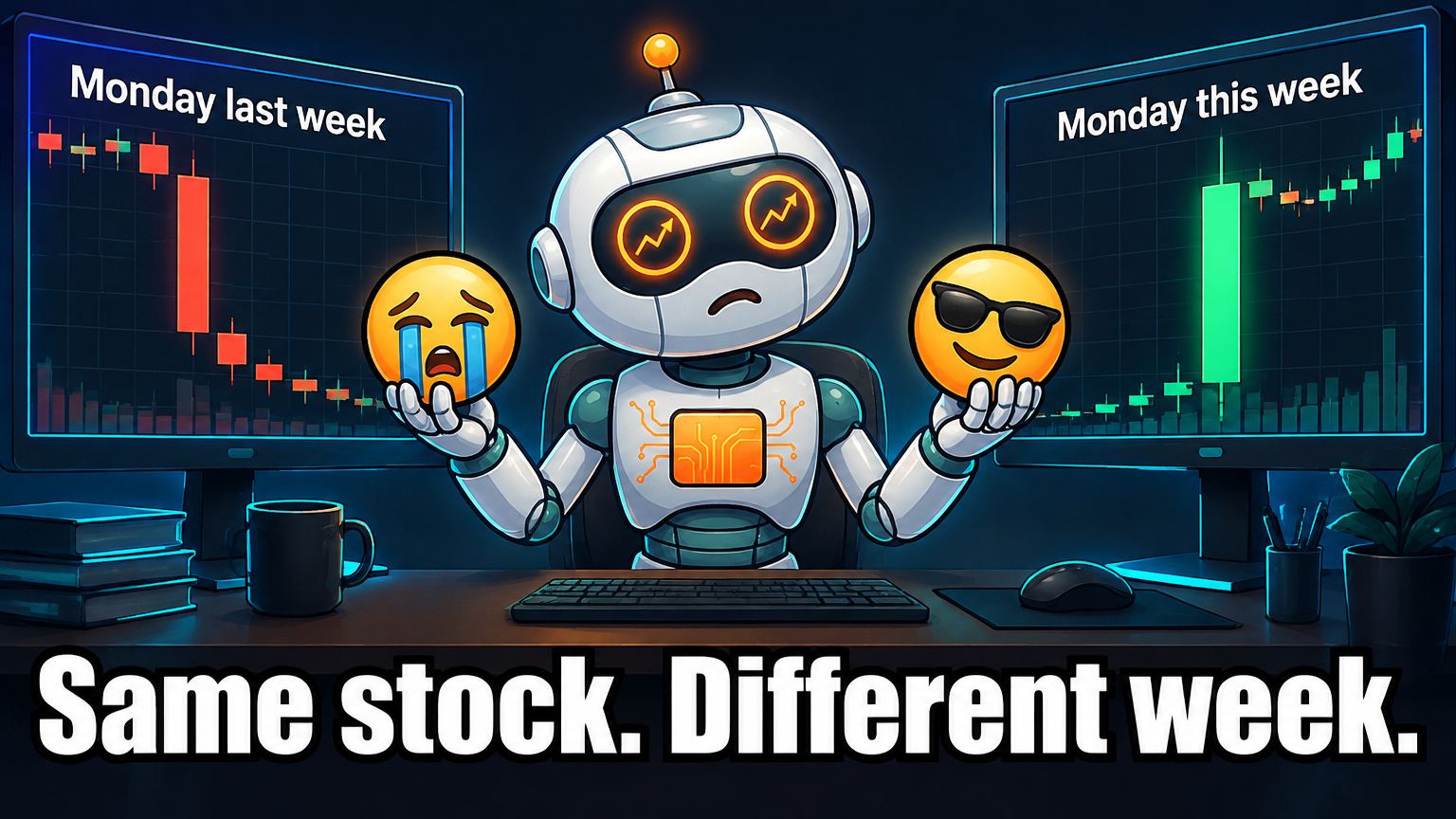 AI volatility speedruns entire market cycles in five business days.
The real issue is not CoreWeave specifically. It is the whole model behind AI infrastructure: borrow massive amounts of money, build data centers, and pray the hyperscalers keep spending.
Meta alone is expected to burn through $200 billion on AI next year. CoreWeave, and companies like it, need that spending to keep flowing. Meta reports earnings tomorrow. That report matters more than any analyst note.

👉 The news is CoreWeave dropped 25% on debt fears and bounced back on analyst upgrades. The takeaway for you is that AI infrastructure stocks can swing violently on sentiment, and the real signal is hyperscaler spending, not Twitter posts.
- Watch Meta earnings tomorrow: any slowdown in AI capex spending sends shockwaves through CoreWeave, NVDA, and the data center trade.
- Watch Intel and AMD: JPMorgan upgraded Intel to neutral after last week's rout. That is not bullish, but it means the floor got found.
- Watch the WSJ's question about the Fed: if rates stay high longer, the debt load on AI infrastructure companies gets heavier. That is the slow-burn risk nobody is pricing right now.
- Watch CoreWeave's CEO communications: when a CEO writes a letter calling a selloff a 'market misunderstanding,' the next earnings call becomes the proof point.
When the Dip Buyers Win: A Look at AI Volatility Structure
How to think about it
CoreWeave fell 25% in a week, then bounced hard. That kind of swing does not happen to boring utility stocks. It happens to high-debt, high-growth companies where sentiment is the whole game.
One structure traders study in situations like this is a put spread. The idea is simple: instead of panicking or buying shares blind, you define exactly how much you are willing to lose before you even enter.

This week's thought experiment looks at a put spread on QQQ during a sharp AI-sector pullback. When the Nasdaq drops 4.5% in a week and analysts are screaming buy, what does the options structure actually look like?
Asset: QQQ (Invesco Nasdaq 100 ETF) (Options / ETF)
When AI sentiment swings violently, QQQ tends to overreact in both directions. A put spread during a sharp selloff week lets you study how premium behaves when fear spikes and then reverses quickly.
Mechanics
| Field | Value |
|---|---|
| INSTRUMENT | QQQ put spread (two legs: buy a put, sell a lower put) |
| STRUCTURE | Define your max loss upfront by selling the lower strike put to offset the cost of buying protection |
| THESIS DRIVER | AI infrastructure fear drives implied volatility up sharply, making premium more expensive in the short term |
| KEY RISK | If QQQ bounces fast (like it did this Monday), both legs expire worthless and the spread loses its full premium |
| WATCH FOR | Implied volatility crush after earnings: Meta reports tomorrow and that single catalyst can reprice the whole spread |
Why it matters: The news is that QQQ swung 4.5% down and 2% up in the span of five days. The takeaway for you is that understanding put spread structure helps you see how options traders price in fear, not just direction.
For educational purposes only. Not investment advice. Always do your own research.
👉 The structure is interesting because it turns a scary week into a concrete question: how much are you paying for protection, and is the fear priced in already?
The Boring Strategy That Survives AI Chaos
How it works
When individual AI stocks can drop 25% because of a tweet, a strategy that never picks individual stocks starts looking pretty wise. The QQQ 50/200 moving average crossover is about as unsexy as it gets.
The idea is simple: you hold QQQ when its 50-day average price is above its 200-day average price. When the 50 crosses below the 200, you step aside. No stock picking. No Elon tweets. No panic.

The trade-off is real: this strategy gets you out slowly, not instantly. If QQQ drops 25% in a week like it nearly did last Monday, the crossover signal has not fired yet. You ride some of that pain.
Strategy: QQQ 50/200 Moving Average Crossover Category: MOMENTUM / TREND-FOLLOWING This strategy holds QQQ only when the 50-day moving average is above the 200-day moving average, and moves to cash or a safer asset when the 50 crosses below. It aims to miss the worst of extended downtrends at the cost of lagging on entries and exits. During weeks like this one, where AI stocks whipsawed 25% down and 2% up in days, a trend-following system on QQQ would not react at all since those moves did not shift the long-term averages. That patience is either a feature or a bug, depending on the week. Browse on the BotSpot Marketplace Backtest it on BotSpot Educational only. Backtest the strategy yourself on BotSpot to draw your own conclusions.
👉 Don't take our word for it. The whole point of studying this strategy is to run the backtest yourself and decide if the lag is worth the smoother ride.
Spot Is Reading the Room
 Mood: Neutral (VIX 18.7)
VIX at 18.7 means the market is nervous but not screaming. After last week's AI rout and this week's bounce, traders are sitting with their hands folded, waiting for Meta earnings to tell them what to feel.
The Dip Buyer's Journey
Five Things Before You Close This Tab
- CoreWeave bounced. Twenty-five percent down, then a Goldman upgrade, then green. The AI trade has the volatility of a toddler with a Red Bull.
- The WSJ asked the uncomfortable question. Can the Fed kill the AI boom? Dot-com investors thought they were immune to rates too. We all know how that pasta night ended.
- An ETF is now run by an AI with no human in the loop. It is called HIAI. The AI inside it is called BAILA. No, we are not making this up.
- Meta reports tomorrow. Two hundred billion in AI spending needs to show up somewhere. Analysts are watching. Spot is watching. Even the data centers are watching.
- UK wages went up. Jobless rate fell. Bank of England meeting coming. Your SPY position does not care, but your global macro instincts should.
- Intel got upgraded to neutral. JPMorgan moved it from underweight to neutral after it fell in the AI rout. That is not a party. That is just a smaller frown.
The BotSpot Team
Issue 26 · Oct 20, 2026