⚡ The 10-Year Is Knocking on 5%
The Fed is poised to hike rates for the first time in years. Yields are surging. And Wall Street is somehow... cheering?
GM, Spotters. This is BotSpot, brought to you by the team behind Lumiwealth. Each week we break down the market stories worth knowing, with context, color, and zero MBA jargon.
- 📈 The 10-year Treasury yield is one bad day away from 5%. That matters for everything you own.
- 🏦 The Fed is poised to raise rates for the first time in years. The market is actually okay with it (kind of).
- 🚗 Ford had a wild week. One cabinet secretary called them a national security risk. The White House called them great. Same week.
- 🤖 Morgan Stanley says Meta could win 25% of the consumer AI race. Zuckerberg launched an AI agent called Muse. Internally, employees are less enthusiastic.
- 🇩🇪 Germany's 10-year bond yield just hit a 15-year high. The bond market is sending signals everywhere at once.
Wall Street Cheered a Rate Hike. Yes, Really.

The Federal Reserve is about to raise interest rates for the first time in years. Stocks went up on the news. We are all living in a simulation.
Friday's CPI report came in warm, and just like that, the guesswork evaporated. A hike next week is basically locked in. The bond market heard the news and pushed the 10-year Treasury yield right to the doorstep of 5%.
~5% — Where the 10-year Treasury yield is knocking right now. The last time it touched that level, mortgage rates spiked, tech stocks wobbled, and everyone had opinions.
So why did stocks rally? Traders said it was about clarity. When you do not know what the Fed is going to do, you price in the worst. When you know, you can actually breathe.
Think of it like waiting for your dentist appointment. The dread before is somehow worse than the actual drilling. Wall Street got its appointment confirmed and exhaled.
"A lot of the guesswork is out of next week's Fed decision."
— Wall Street, finally having a feeling it can name
 Wall Street actually relaxed when the appointment was confirmed. Wild.
Here is the part that matters for you. A 5% 10-year yield is not just a bond-nerd number. It is the rate that everything else gets compared to. Mortgages, car loans, corporate debt, and yes, stock valuations all feel the gravity of that number.
Meanwhile, Germany's 10-year bond just hit a 15-year high too. This is not a US-only story. Central banks around the world are playing the same game at the same time.

The bigger question is not this hike. It is what comes after. Fed Chair Kevin Warsh has made clear he does not love telegraphing future moves. Markets are already pricing in a series of increases. That is a standoff waiting to happen.
👉 The news is the Fed is hiking and the 10-year is near 5%. The takeaway for you is that higher yields reprice almost every asset class, and the first hike rarely travels alone.
- Watch the Fed statement Wednesday for language about future hikes. One hike is priced in. A second one is not.
- Watch the 10-year yield itself. If it breaks 5% and holds, mortgage rates and growth-stock valuations feel it fast.
- Watch the dollar. It is already rising against the euro. A stronger dollar squeezes US companies that sell overseas.
- Watch Warsh's tone at the press conference. His silence on forward guidance IS the signal.
The TLT Short That Everyone Is Whispering About
Thinking through it
When the Fed hikes and yields rise, bond prices fall. That is not an opinion, it is arithmetic. The iShares 20-Year Treasury Bond ETF (TLT) is the simplest way most retail traders get exposure to long-dated Treasuries, and right now it is in a very interesting spot.
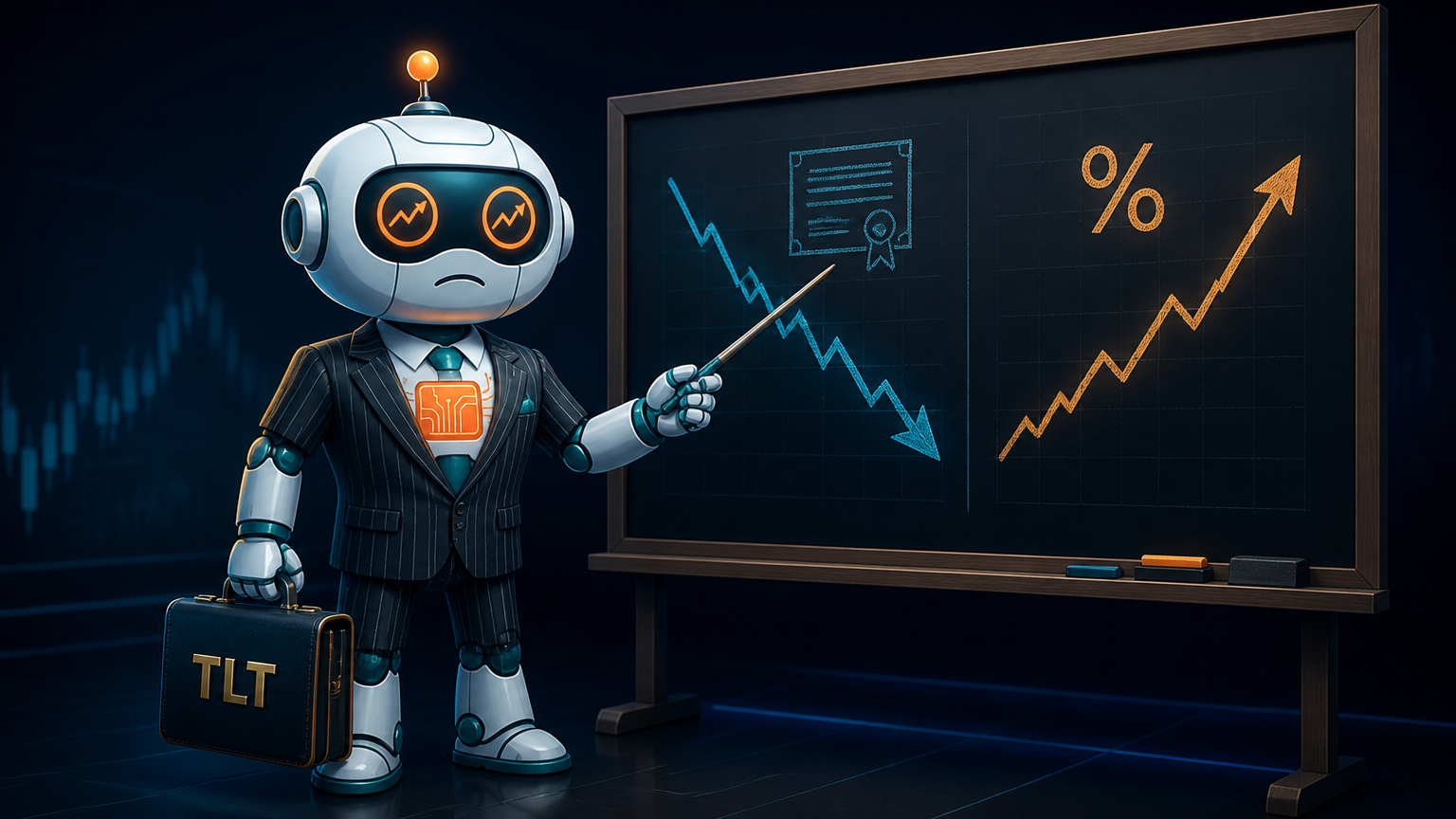
The thought experiment here is straightforward: if you believe the Fed is going to hike more than once and yields have further to climb, TLT is the instrument that moves in the opposite direction. This is a structure worth understanding, not because anyone is telling you to trade it, but because it shows up constantly in rate-sensitive portfolios.
Asset: TLT (iShares 20+ Year Treasury Bond ETF) (Fixed Income ETF)
When the Fed raises rates and long-dated bond yields rise, TLT tends to fall. Understanding how this relationship works is a core building block for anyone thinking about portfolio positioning in a rising-rate environment.
Mechanics
| Field | Value |
|---|---|
| INSTRUMENT | TLT (20+ Year US Treasury ETF) |
| STRUCTURE | Long-duration bond exposure. Price falls when yields rise, price rises when yields fall. |
| THESIS DRIVER | Fed rate hike expected next week. Market pricing in possible series of hikes. |
| KEY RISK | If inflation cools faster than expected, the Fed pauses and TLT recovers sharply. |
| WATCH FOR | 10-year yield breaking and holding 5%. Warsh's press conference tone. CPI prints after September. |
Why it matters: The news is the Fed is hiking into a 5% yield environment with possible follow-on hikes. The takeaway for you is understanding how long-duration bond ETFs respond to rate cycles is one of the most useful things a retail trader can study right now.
For educational purposes only. Not investment advice. Always do your own research.
👉 This is not about making a call on TLT. It is about understanding how the bond price vs yield relationship works so you can read the market map when rates are moving.
The Boring Strategy That Rising Rates Keep Validating
How it works
The Treasury ladder is about as exciting as watching paint dry. You buy short-term Treasury bills in stages, rolling them over as each one matures. No timing. No drama. No CNBC opinions required.

The trade-off is simple: you give up the home-run potential of a stock portfolio in exchange for predictable, compounding yield at rates the market just handed you. When the Fed is hiking, short-term T-bill yields rise with it. That means the top rungs of your ladder keep getting refreshed at better rates.
Strategy: Short-Term Treasury Ladder (1-Month to 6-Month Bills) Category: INCOME / DEFENSIVE / TREASURIES A Treasury ladder staggers purchases across multiple maturity dates so you always have bills coming due soon. When each one matures, you roll the cash into a new bill at the current rate. In a rising-rate environment, each new rung of the ladder locks in a higher yield than the last. The main trade-off is that you are not positioned for growth, and if rates fall sharply your newly rolled bills will earn less than the ones they replaced. Browse on the BotSpot Marketplace Build it on BotSpot Educational only. Backtest the strategy yourself on BotSpot to draw your own conclusions.
👉 Do not take our word for it. Run the backtest yourself across the last few Fed hiking cycles and see how the ladder behaves compared to just holding cash.
Spot's Gut Check: Fear or Greed?
 Mood: Neutral (VIX 17.7)
VIX at 17.7 puts us squarely in neutral territory. The market knows the Fed is hiking and has mostly priced it in. Not panicking, not partying. Just waiting.
Mood: Neutral (VIX 17.7)
VIX at 17.7 puts us squarely in neutral territory. The market knows the Fed is hiking and has mostly priced it in. Not panicking, not partying. Just waiting.
This Week in Financial Emotion
The Week in Five Bites
- The Fed is hiking next week. First time in years. The market already bought its raincoat and is standing in the puddle very calmly.
- Germany's bond yield hit a 15-year high. Europe is not watching from the sidelines. The whole developed world is in rate-hike mode simultaneously.
- Ford got called a national security risk on Monday. The White House called them a great American company on Tuesday. If you work in Ford's PR department, that week was cardio.
- Morgan Stanley says Meta could win 25% of consumer AI. Free product, two billion users, and a chatbot that can book your travel. Internally, some Meta employees called Muse a dunce. Wall Street disagrees.
- The dollar is rising against the euro. A stronger dollar is good for your buying power on vacation and bad for US companies selling overseas. Pick your side.
- Bessent says the US can grow out of its debt. The Treasury Secretary's plan is basically: get really good at the economy really fast. Noted.
The BotSpot Team
Issue 20 · Sep 14, 2026