🛢️ Oil Picked a Fight With the Fed. The Fed Blinked First.
A Houthi attack on a Saudi pipeline sent oil past $105 and pushed Kevin Warsh into a rate hike nobody saw coming one week ago.
GM, Spotters. This is BotSpot, brought to you by the team behind Lumiwealth. Each week we dig into the market stories that actually matter, break them down in plain English, and give you the context a sharp trader would want heading into the week.
- 🛢️ The Fed hiked rates for the first time since 2023. A Saudi pipeline is why.
- 💸 Diesel hit a record $6.31 per gallon. Some states may see $7 soon.
- 🤯 Someone dropped $6 million on VIX puts right before the decision. Wild.
- ✈️ United and American Airlines may cut flights to offset fuel costs. Book now.
- 📊 Tom Lee says his face-ripping rally is merely delayed. We believe him. Probably.
Oil Picked a Fight With the Fed. The Fed Blinked First.
One week ago, traders gave a Fed rate hike just a 60% chance. Then a pipeline blew up.
Houthi rebels attacked Saudi Arabia's East-West pipeline late last week, shutting down a critical artery that was moving about 4 million barrels of oil per day. That is roughly 4% of global supply. Gone.
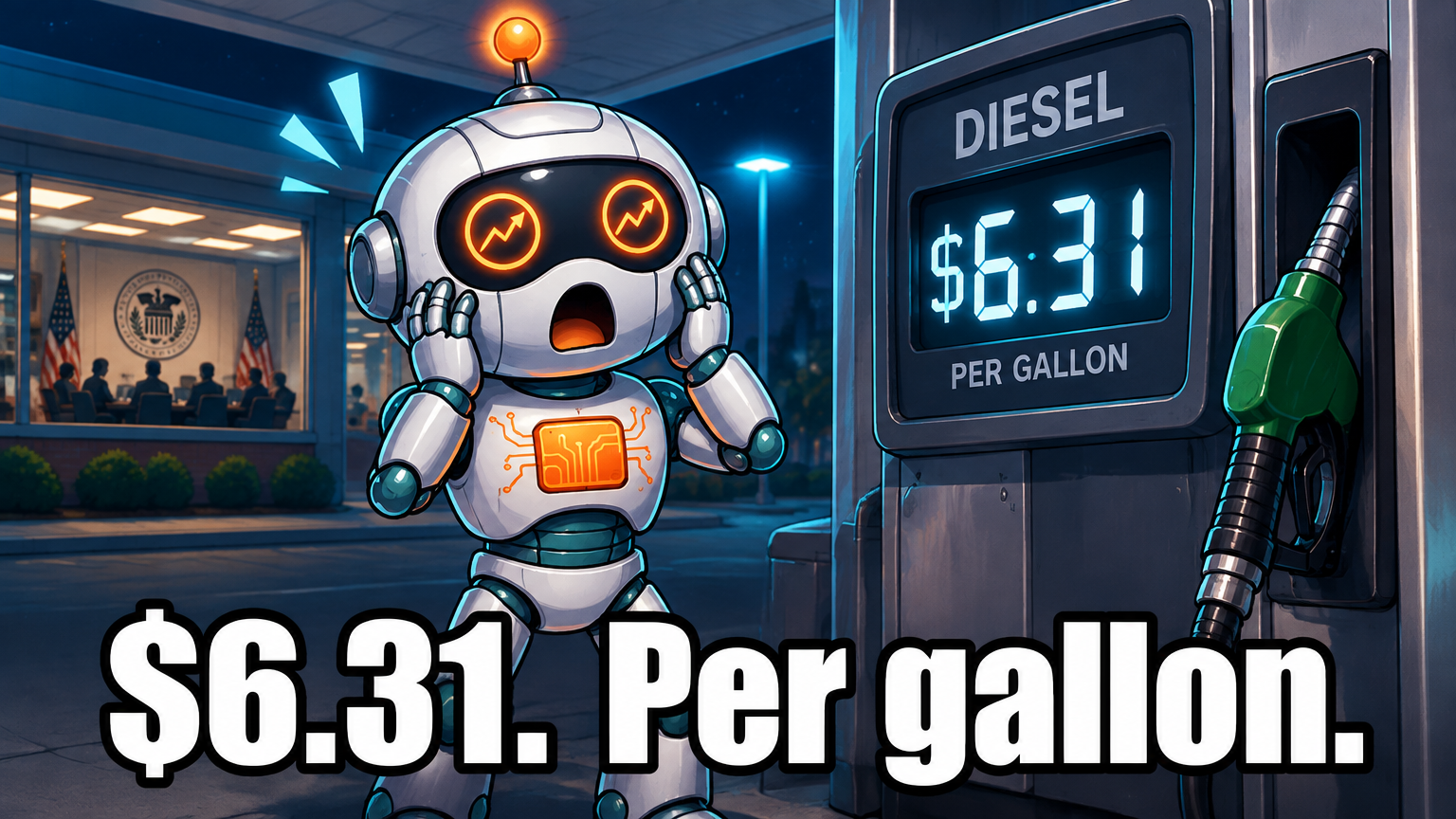
$6.31 / gal — Record diesel price on Wednesday, per AAA. Some states may cross $7. Your trucking bill, your grocery bill, your everything bill.
With Brent crude lingering around $105 per barrel, Fed Chair Kevin Warsh called it. The Fed raised rates by a quarter-point, putting the benchmark funds rate at 3.75% to 4%. It is the first hike since 2023.
Warsh had been leaning dovish heading into the meeting. Then the pipeline closed, oil spiked, and inflation math got ugly fast. Americans have already spent an extra $107 billion on gas and diesel since February.
"The plain fact is that inflation is too high and has been for too long."
— Fed Chair Kevin Warsh, at Wednesday's press conference, with all the energy of a man who really did not want to be here today
 The pipeline closed. The Fed opened its rate hike toolkit. Same week.
The vote was unanimous. That part is interesting. No dissenters, no drama inside the room. The drama was entirely in the oil market.
Here is where it gets messier. Twelve of the Fed's policymakers projected one more quarter-point hike before year-end. Four projected two more. So the hike you just got may not be the last one.

The hike hits real life in a few ways. Heating oil costs for households could jump from $1,749 to $2,520 this winter. United and American Airlines both said they may cut flight capacity to offset fuel costs. Book those holiday flights now. Seriously.
👉 The news is the Fed hiked for the first time in 3 years, forced by an oil shock nobody saw coming. The takeaway for you is that rate-sensitive sectors like tech and real estate face headwinds, while energy names got a tailwind from the same fuel that triggered the hike.
- Watch the pipeline: if Saudi Arabia's East-West artery reopens, oil prices could ease and rate-hike odds for Q4 could drop fast.
- Watch the next FOMC projections: 12 policymakers see one more hike, 4 see two. Any shift in that count moves markets.
- Watch airline stocks: capacity cuts to offset fuel costs are a margin story and a consumer sentiment story at the same time.
- Watch heating oil futures heading into winter: the $770 jump in household heating costs is not priced in everywhere yet.
- Watch tech: energy and info tech historically perform best in the year after a hike, per one Wall Street strategist's data.
Explore sector history on BotSpot
The $6M VIX Bet Nobody Can Explain
How to think about it
Right before the Fed decision on Tuesday, someone dropped $6 million on deep in-the-money VIX puts. That is a bet that price swings would fall sharply after the announcement. The trade was so unusual that CNBC called it a head scratcher.

Deep in-the-money puts on the VIX are a structure worth understanding. They profit when volatility falls, but because they are deep ITM, they act more like a direct short on VIX than a speculative lottery ticket. The $6 million price tag means someone had very strong conviction, or very good timing, or both.
Asset: VIX Index Options (CBOE) (Volatility / Options)
As a thought experiment: a trader who believed the Fed hike would land cleanly and remove uncertainty might study deep ITM VIX puts as a way to express the idea that price swings would fall after the announcement. The structure profits from calm, not chaos.
Mechanics
| Field | Value |
|---|---|
| INSTRUMENT | VIX put options (CBOE-listed) |
| STRUCTURE | Deep in-the-money puts (high delta, low extrinsic value) |
| THESIS DRIVER | Post-FOMC uncertainty collapses, VIX drops from elevated pre-event levels |
| KEY RISK | VIX spikes instead (surprise dissent, hawkish guidance, oil escalation) |
| WATCH FOR | VIX level post-decision and whether it holds below 20 or reverts higher |
Why it matters: The news is someone made a $6M bet that volatility would fall right before a Fed decision that looked uncertain all week. The takeaway for you is that studying how deep ITM options work on the VIX is a useful mental model for thinking about how pros express views on market calm, not just market direction.
For educational purposes only. Not investment advice. Always do your own research.
👉 VIX options are not just for hedge funds. Understanding the structure is free. The $6 million entry is optional.
The Boring Strategy That Loves Rate Hike Days
How it works
The Energy and Info Tech Rotation strategy is simple: after a confirmed Fed rate hike, you systematically study energy and information technology sector ETFs as the two sectors that Wall Street strategists say tend to hold up best in the following 12 months. You are not chasing the news. You are following a historically observed pattern in sector behavior after tightening cycles.

The trade-off is real: this is a slow rotation idea, not a same-day trade. Sector rotations after rate hikes can take months to play out, and macro conditions can reverse. An oil supply shock that caused the hike could also resolve, changing the whole setup.
Strategy: Post-Hike Sector Rotation: Energy + Tech Category: SECTOR ROTATION / MACRO This strategy looks at the two sectors Wall Street strategists identify as the strongest performers in the 12 months following a Fed rate hike. The concept is that energy benefits from the same inflation that forced the hike, while tech tends to stabilize once rate uncertainty clears. The trade-off is patience: these rotations are measured in months, not days. Worth backtesting across prior tightening cycles to see how consistent the pattern actually is. Browse on the BotSpot Marketplace Backtest it on BotSpot Educational only. Backtest the strategy yourself on BotSpot to draw your own conclusions.
👉 Don't take anyone's word for it. Run the backtest yourself and see if the pattern holds in the data you actually trust.
Spot Checks the Vibe
 Mood: Neutral (VIX 16.0)
VIX at 16 means the market is not panicking, but it is also not throwing a party. The Fed just hiked for the first time in 3 years and the crowd is standing very still, waiting to see what happens next.
Mood: Neutral (VIX 16.0)
VIX at 16 means the market is not panicking, but it is also not throwing a party. The Fed just hiked for the first time in 3 years and the crowd is standing very still, waiting to see what happens next.
Accurate.
The Rest of the Week in Snacks
- The Fed hiked. Unanimously. No dissenters, no drama inside the room. All the drama was in the oil market where it belongs.
- Trump backed Warsh right before the hike. The president said he spoke to the Fed chair just before the unanimous vote. Totally normal Tuesday.
- Stocks fell. Then steadied. Then futures climbed. Tech did most of the heavy lifting on the recovery. It is almost like the market did not fully decide yet.
- Tom Lee says the rally is merely delayed. Characteristically positive spin, characteristically confident delivery. We are watching.
- Airlines may cut flights to save on fuel. United and American both said capacity cuts are on the table. Book your Thanksgiving flight before Spot does.
- Heating oil costs could jump $771 this winter. From $1,749 to $2,520 for households that use heating oil. The pipeline is not just a market story.
- Retail sales were hot heading into the decision. Strong consumer data gave the Fed cover to hike. The economy running hot is the Fed's problem and yours at the same time.
The BotSpot Team
Issue 21 · Sep 17, 2026