🌍 The Global Bond Selloff Nobody Stopped
Yields are hitting multi-year highs, world leaders are fighting at the G-20, and your bond ETF is not happy about any of it.
GM, Spotters. This is BotSpot, brought to you by the team behind Lumiwealth. Each week we break down the market stories worth knowing, with plain English, a few laughs, and zero MBA lectures.
- 💸 Global bonds are selling off hard. Europe is getting hit hardest, and 10-year Treasury yields are eyeing a three-year high.
- 🧬 Biotech is up 33% this year and nobody is talking about it. That's either an opportunity or a trap. Probably worth knowing which.
- 🖥️ Dell raised its revenue forecast by $25 billion in one earnings call. AI server demand is not slowing down.
- 🌐 Fund providers are launching ETFs targeting AI companies in China, South Korea, and Taiwan. The AI trade is going global.
- 🛢️ WTI oil is back at $90 after fresh U.S. strikes against Iran. Supply jitters are back on the table.
Every Government Is Selling Bonds. Nobody Is Buying.

A global bond selloff is spreading. Europe is getting hit hardest, but U.S. Treasury yields are along for the ride, with the 10-year headed for a three-year high.
Meanwhile, world leaders gathered at the G-20 this week and mostly yelled at each other about tariffs. So that helped. A lot.
3-Year High — Where U.S. 10-year Treasury yields are now headed. The last time yields were this high, the Fed was still hiking.
Here is the simple version. When bond prices fall, their yields go up. Yields going up means borrowing costs go up for everyone: governments, companies, and yes, homeowners.
Europe's governments have been spending big on defense and social programs. Bond markets are starting to charge a higher interest rate for the privilege. Germany, France, and the UK all saw yields jump this week.
"The G-20 met to solve the global bond crisis. They mostly argued about tariffs. Progress."
— BotSpot, reading the room
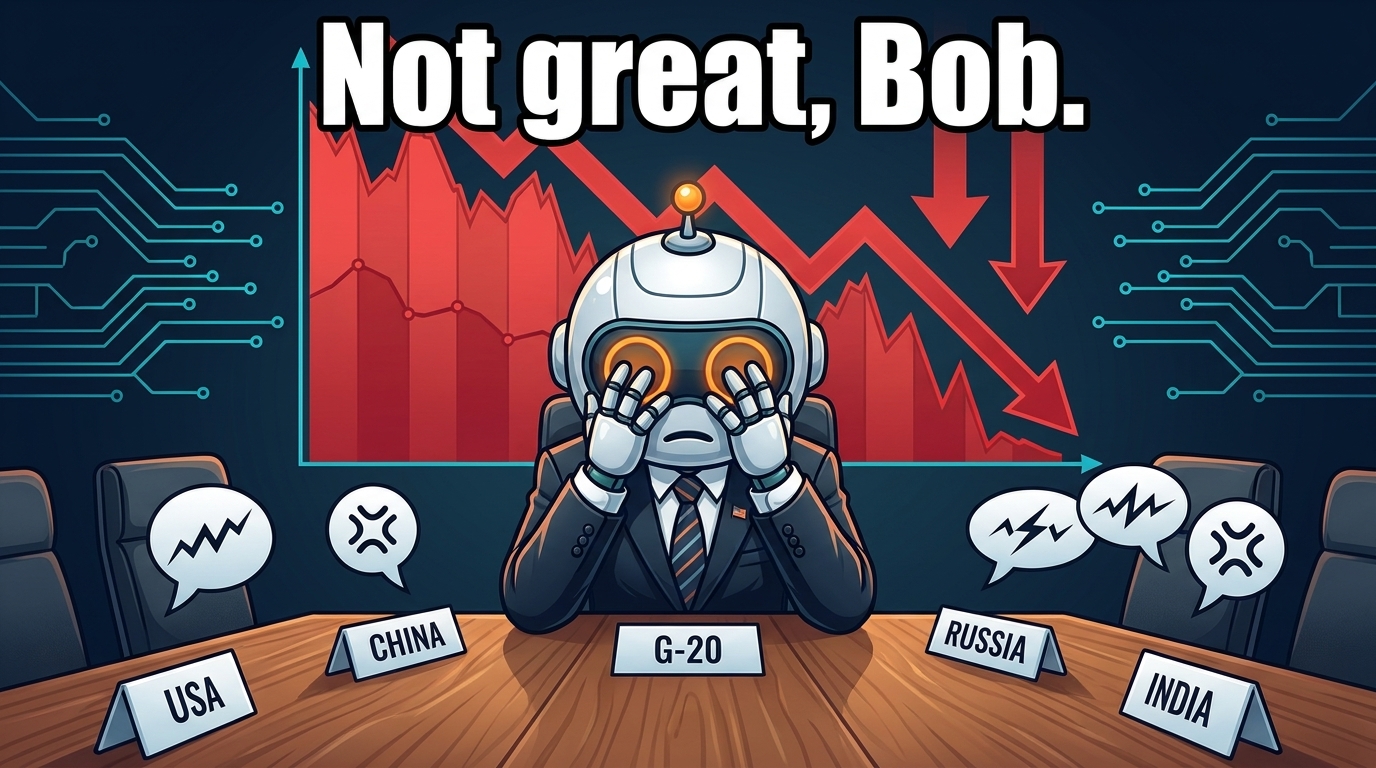 World leaders bickered. Bond markets noticed.
The Wall Street Journal noted that advisers still believe bonds belong in a diversified portfolio, even during a selloff. The logic is that higher yields today mean better income for new buyers tomorrow.
If you already hold a bond ETF like TLT or BND, the price is down. But the yield you will collect going forward is now higher than it was a year ago. That is a tradeoff, not a disaster.

👉 The news is a global bond selloff is pushing yields to multi-year highs. The takeaway for you is that new bond buyers are getting better future income, but existing bond ETF holders are sitting on unrealized losses right now.
- Watch the 10-year Treasury yield: if it cracks 5%, stock valuations get pressure because money can earn more in bonds.
- Watch TLT price action: it tends to move opposite yields, so a rising yield equals a falling TLT.
- Watch the G-20 fallout: no coordinated fiscal agreement means every government keeps spending independently, which keeps bond supply high and prices under pressure.
- Watch European spreads: if Italy or France borrowing costs spike relative to Germany, that is the canary in the coal mine for broader stress.
The Sector Up 33% That Nobody Is Talking About
How to think about it
The SPDR S&P Biotech ETF (XBI) is up 33% this year. The iShares Biotechnology ETF (IBB) is up almost 24%. Meanwhile, fund flows into biotech are basically flat. Investors are ignoring a sector that is quietly ripping.

The interesting part is why flows are lagging. Biotech had three straight years of outflows after the Covid boom. Many investors just mentally filed it under 'done.' But the sector is being driven now by AI in drug discovery, M&A, and cancer drug breakthroughs, which are very different tailwinds than mRNA vaccine hype.
Asset: XBI (SPDR S&P Biotech ETF) (Sector ETF)
Biotech is outperforming the S&P by a wide margin this year, but fund flows are still near historic lows. When a sector outperforms without investor crowding, it is a structure worth studying: either flows catch up, or the performance fades without fuel.
Mechanics
| Field | Value |
|---|---|
| INSTRUMENT | XBI (equal-weight biotech ETF) |
| ALTERNATIVE | IBB (market-cap-weight, more large-cap biotech) |
| THESIS DRIVER | AI in drug discovery, M&A activity, depressed valuations post-Covid selloff |
| KEY RISK | Clinical trial failures can move single stocks down 50%+ overnight in equal-weight funds |
| WATCH FOR | Fund flow data turning positive, which historically accelerates sector momentum |
Why it matters: The news is biotech is up 33% with almost no investor participation. The takeaway for you is that understanding the gap between performance and fund flows is one of the more interesting structural questions in markets right now.
For educational purposes only. Not investment advice. Always do your own research.
👉 The concept to study: low fund flows into an outperforming sector can mean early innings, or it can mean the rally has no fuel. Knowing how to read flow data is the skill.
The Boring Strategy That Might Be Having Its Moment
How it works
A Treasury bond mean-reversion strategy watches for yields to spike well above their recent average, then bets on yields drifting back down. The logic is simple: extreme moves in bond markets often correct, especially when driven by sentiment rather than fundamentals.
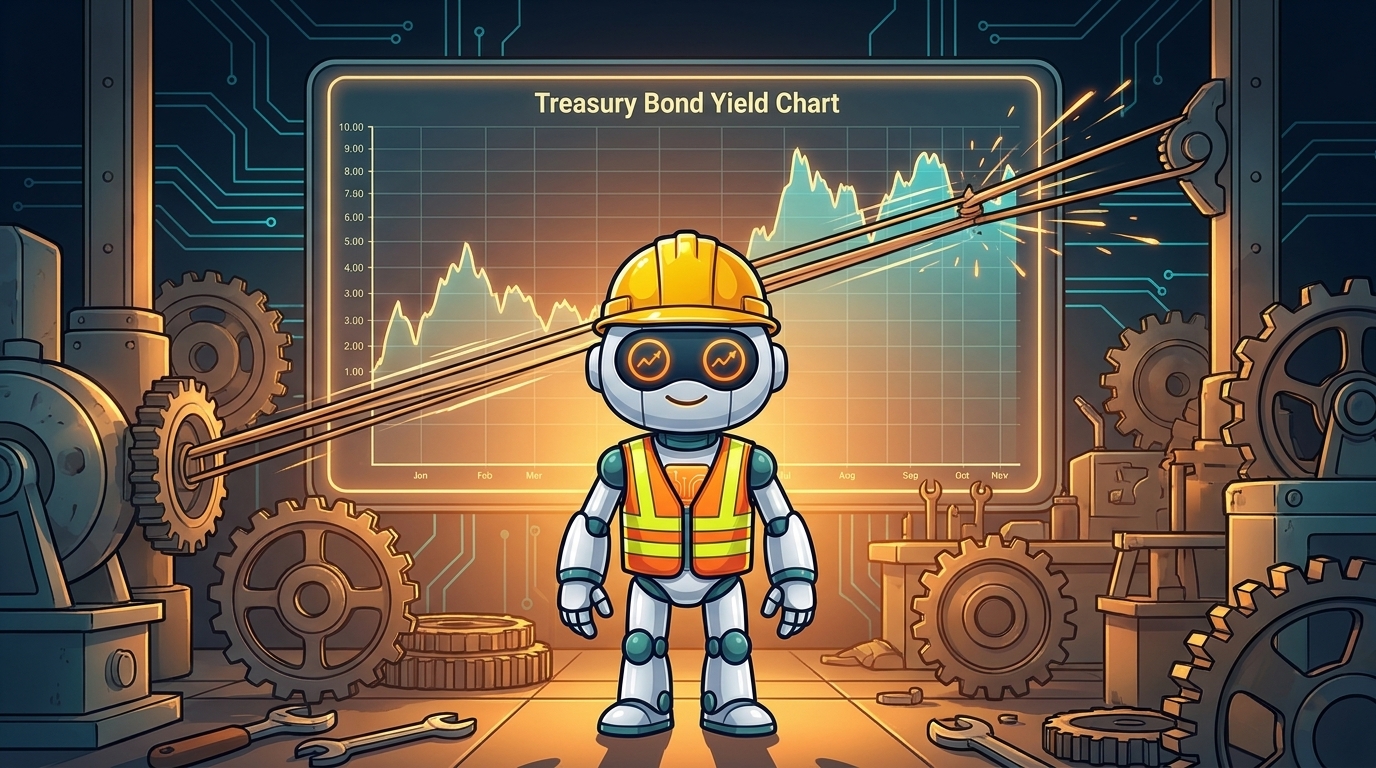
With yields hitting three-year highs this week, the setup for mean reversion is at least worth understanding. The strategy does not always work, and timing is the hard part. But knowing the structure lets you ask sharper questions about your own bond positions.
Strategy: TLT Mean Reversion on Yield Spike Category: MEAN-REVERSION / TREASURIES This strategy buys TLT (the 20-year Treasury ETF) when the 10-year yield rises a set amount above its 50-day average, then exits when the yield reverts toward the mean. The core tradeoff is that mean reversion in bonds can take months, and yields can keep rising before they fall. It rewards patience but punishes anyone who needs quick results. Browse on the BotSpot Marketplace Backtest it on BotSpot Educational only. Backtest the strategy yourself on BotSpot to draw your own conclusions.
👉 Don't take our word for it. Run the backtest yourself and see how the strategy behaved during past yield spikes.
Spot's Fear and Greed Check
 Mood: Neutral (VIX 16.7)
VIX at 16.7 puts us in neutral territory. Markets are not panicking about the bond selloff yet, but they are not exactly celebrating either. Call it cautiously confused.
Mood: Neutral (VIX 16.7)
VIX at 16.7 puts us in neutral territory. Markets are not panicking about the bond selloff yet, but they are not exactly celebrating either. Call it cautiously confused.
We Found the Meme. You're Welcome.
Five Things Before You Go
- Europe is getting hit hardest. Germany and France are paying more to borrow than they have in years. Something something fiscal discipline.
- G-20 leaders mostly argued. Tariff spats and public insults. World finance ministers, everyone. Please hold your applause.
- Dell raised guidance by $25 billion. One earnings call. $25 billion more in expected revenue. AI server demand has entered the 'jaw on the floor' phase.
- Oil hit $90 again. U.S. strikes against Iran, supply fears, and a very nervous oil futures market. The buffer is gone and the drama is back.
- Global AI ETFs are launching fast. Funds targeting Chinese LLMs, Korean semiconductors, and Taiwanese chips are all hitting the market at once. The AI trade found a passport.
- Google's Gemini 3.8 Flash is coming. Internal tests say it is closing the coding gap on Anthropic and OpenAI. The AI model arms race has a new entrant this week.
- Biotech is still popping quietly. XBI up 33% on the year and most investors are still looking the other way. Spot has his lab coat on. Just saying.
The BotSpot Team
Issue 19 · Sep 2, 2026