🤖 AMD Bets $8.2B That Robots Are the Next Chip War 🦾
The World Labs acquisition is AMD's loudest signal yet that physical AI and robotics will need a totally different kind of silicon.
GM, Spotters. This is BotSpot, brought to you by the team behind Lumiwealth. Each week we unpack the market stories worth knowing, with context, color, and zero jargon.
- 🤖 AMD just agreed to buy World Labs for $8.2 billion. Robots need chips too.
- 📈 10-year Treasury yields hit a 19-year high this week. Stocks are feeling it.
- 🛢️ Oil is rising again as Middle East peace talks stall. Double whammy for portfolios.
- 🏦 A Fed employee walked out with sensitive files right before retirement. Awkward.
- 💰 Gold is hovering just under $4,200 as rate-hike bets pile up.
AMD Just Spent $8.2 Billion on the Robot Brain

AMD just agreed to buy World Labs for $8.2 billion. That is not a typo. That is a bet that physical AI and robotics will need a very different kind of chip than anything we have today.
World Labs is a startup focused on teaching machines to understand the physical world. Think robots that can see, grab, and move around without bumping into the furniture. It was founded by Fei-Fei Li, the Stanford AI legend who basically helped kick off the modern deep learning era.
$8.2 Billion — AMD's price tag for World Labs. For context, that is more than AMD itself was worth in 2018.
Here is why this deal is different from a normal chip company buying a software shop. AMD is not just buying code. It is buying a team that thinks about spatial intelligence, the ability for a machine to understand where it is in space and predict what happens next when it moves.
Nvidia dominates AI training chips. AMD has been a solid number two. But physical AI, the kind that runs inside robots, factory arms, and self-driving systems, needs chips designed for a different job. AMD is trying to skip the line.
"AMD is not buying a startup. AMD is buying a reason to exist in the next chip war."
— Spot, reading the press release very carefully
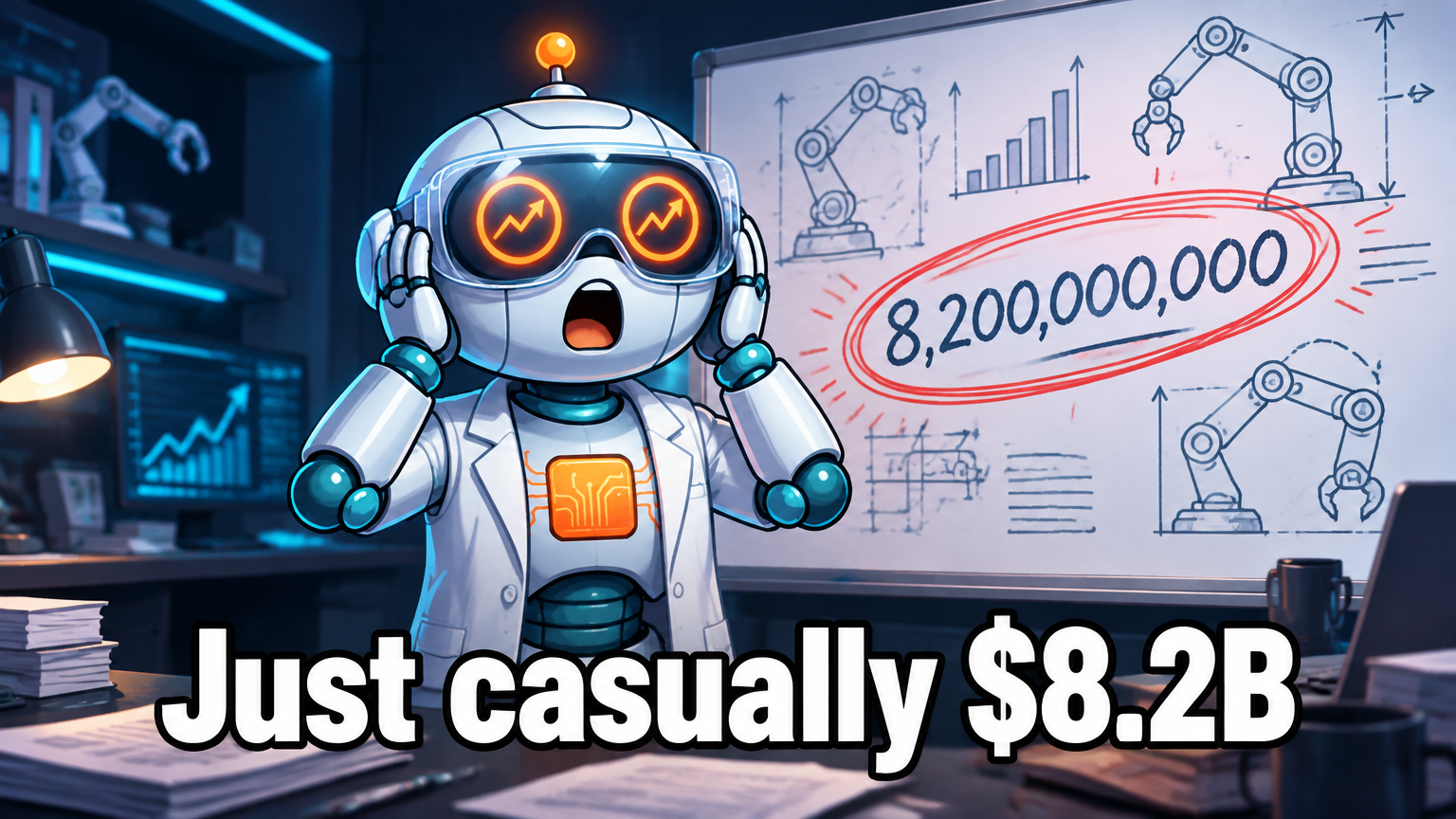 World Labs is the kind of startup that makes CFOs need a nap.
The deal is expected to close sometime in early 2027, pending regulatory review. AMD says the acquisition will plug directly into its hardware, software, and systems roadmap, especially for robotics.
For SPY holders, this is mostly a semiconductor sector story right now. But if physical AI scales the way cloud AI did five years ago, the chip war gets a whole new front. Spot is calling it: watch AMD's next earnings call for clues on how fast they plan to ship.
👉 The news is AMD paid $8.2B for a physical AI startup. The takeaway for you is the next chip race may not be about data centers at all. It may be about robots.
- Watch AMD's stock reaction over the next two weeks. Big acquisitions often create a short-term overhang as investors digest the price tag.
- Watch Nvidia's response. If AMD is serious about physical AI chips, Nvidia will have something to say about it.
- Watch World Labs patent filings after the deal closes. That is where the real technology roadmap lives.
- Watch the broader semiconductor ETF (SOXX) for sector sentiment shifts tied to the robotics theme.

The 2-Year Treasury Is Basically Free Money (No, Really, Hear Us Out)
How to think about it
With 10-year yields at 19-year highs and the Fed still in rate-hike mode, the short end of the bond curve is doing something unusual. Two-year Treasury notes are offering yields that, historically, you would have had to take serious risk to get. Now you get them for lending money to the US government for 24 months.

The interesting structural quirk right now is called an inverted yield curve. Shorter-term bonds are paying more than longer-term ones. That means you do not have to lock up your money for 30 years to earn a real yield. Two years and you are done. Spot says watch for this window to close fast if rate-cut expectations shift.
Asset: 2-Year US Treasury Note (via TLT alternative: SHY or direct purchase via TreasuryDirect) (Fixed Income / Government Bonds)
With short-term yields near multi-decade highs, a 2-year Treasury note lets you earn historically high yields without committing to a long lock-up, an interesting structure when the Fed may still have rate moves ahead.
Mechanics
| Field | Value |
|---|---|
| INSTRUMENT | 2-Year Treasury Note or SHY ETF (tracks short-term Treasuries) |
| STRUCTURE | Buy and hold to maturity (note) or hold ETF position (SHY) |
| THESIS DRIVER | Inverted yield curve: short-term rates paying more than long-term rates, a rare window |
| KEY RISK | If the Fed cuts rates faster than expected, new 2-year notes issued later may pay less. You lock in today's rate now. |
| WATCH FOR | Fed meeting language, CPI prints, and any signals that rate-hike cycle is ending |
Why it matters: The news is 2-year Treasury yields are near 19-year highs. The takeaway for you is the bond market is offering a yield level that has historically only appeared during major financial stress, and it is worth understanding how the structure works before that window closes.
For educational purposes only. Not investment advice. Always do your own research.
👉 The news is the yield curve is inverted. The takeaway is short-term bonds are an interesting structure to study, not because anyone says buy them, but because the math is worth understanding.
The Boring Strategy That Keeps Winning When Yields Spike
How it works
The covered call wheel on dividend-paying stocks is one of those strategies that sounds like it was invented by an accountant at a 1998 golf outing. You own shares, you sell call options above the current price to collect a premium, and you repeat every month. When yields are rising and stock prices are choppy, the option premiums you collect act as a cushion against price swings.

The trade-off is simple. You cap your upside. If the stock rockets past your call strike, you get called away and miss the extra gain. But in a sideways or choppy market, you just keep collecting. The higher the price swings, the fatter the option premium you can sell. Rising yields tend to create exactly that kind of choppiness.
Strategy: Covered Call Wheel on Dividend Stocks (Rising Yield Environment) Category: INCOME / OPTIONS The covered call wheel sells monthly call options above the current price of a dividend-paying stock, collecting the option premium as extra income. In periods of elevated price swings, option premiums tend to rise, which can make the income stream from this strategy more interesting to study. The main trade-off is capped upside: if the stock surges above your call strike, you sell at that price and miss the extra gain. This strategy is worth exploring in the context of a rising yield, choppy equity environment. Browse on the BotSpot Marketplace Build it on BotSpot Educational only. Backtest the strategy yourself on BotSpot to draw your own conclusions.
👉 Don't take our word for it. Run the backtest yourself and see what the premium income looks like in a high-yield, high-volatility quarter.
Spot Checks the Vibe
 Mood: Neutral (VIX 16.0)
VIX at 16 means the market is not panicking, but it is definitely side-eyeing the yield chart. Neutral is the polite way of saying everyone is waiting to see who blinks first.
Mood: Neutral (VIX 16.0)
VIX at 16 means the market is not panicking, but it is definitely side-eyeing the yield chart. Neutral is the polite way of saying everyone is waiting to see who blinks first.
The Market in One Image
Five Things Worth a Read
- AMD dropped $8.2 billion on World Labs. Fei-Fei Li's robot-brain startup just became AMD's most expensive new employee.
- 10-year yields hit a 19-year high. The last time we saw numbers like this, an iPhone was a brand new idea.
- Oil is rising on Middle East headlines. Peace talk setbacks plus higher fuel costs equals a rough week for stocks that need cheap inputs.
- A Fed employee walked out with sensitive files. Retired with the files. Bold strategy. The Fed says it is fixing the security gap. Sure.
- Gold is stuck below $4,200. Rate-hike bets are keeping the lid on. Gold wants to run. The Fed keeps pulling it back.
- Japan reaffirmed yen cooperation with the US. Finance Minister Katayama said it holds great significance. The yen quietly exhaled.
- 2-year Treasuries are looking pretty interesting. WSJ called them attractively priced. That is bond-speak for: the math is actually good right now.
The BotSpot Team
Issue 23 · Sep 29, 2026