🪖 Ford Wants to Build the British Army's Next Truck
NATO's big defense spending pledge just turned two car companies into defense contractors. Again.
GM, Spotters. This is BotSpot, brought to you by the team behind Lumiwealth. Each week we walk through the market stories worth knowing about, with context, color, and a clear head.
- 🪖 Ford and GM are fighting over a $2.7 billion British Army truck contract. Detroit goes to war.
- 💵 The dollar hit a six-day low. Treasury yields pulled back. September rate hike odds are fading.
- 🇯🇵 The yen jumped 2% in two days. Bond markets are catching their breath.
- 🏦 Jittery Treasuries plus possible Fed hikes equal more expensive everything for everyday Americans.
- 🤖 Spot has a strategy angle on the NATO defense spending wave. It is in the backtest section.
Ford and GM Are Going to War (Over a British Army Contract)

Ford lost $8.2 billion last year. GM is chasing the same contracts. And the British Army is caught in the middle.
NATO members just pledged to spend 5% of their GDP on defense by 2035. That is roughly $3 trillion a year, every year, for the next decade. Detroit noticed.
$3T / yr — NATO's new annual defense spending target by 2035. Up from roughly $1.2T at the old 2% GDP pledge. That is a lot of trucks.
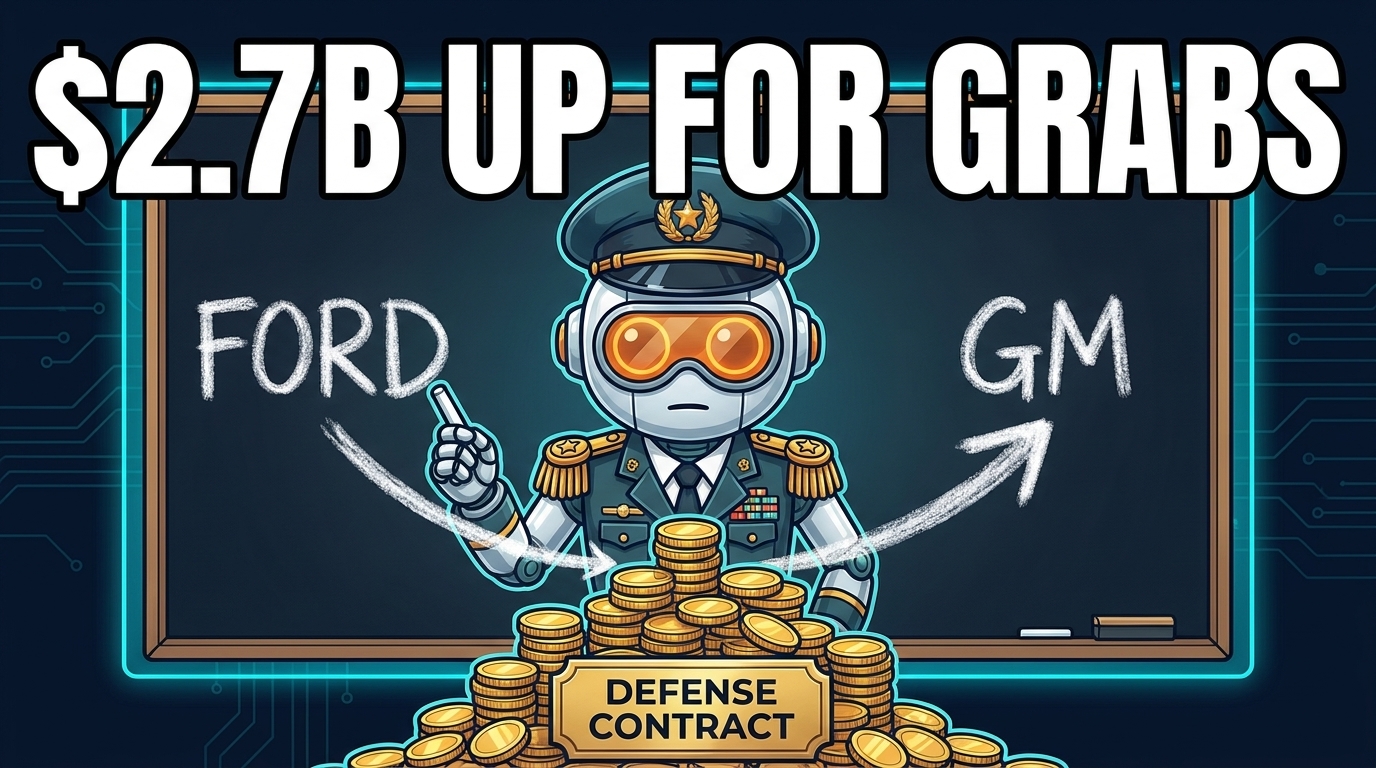
Ford is teaming up with Ricardo (a UK engineering firm) and General Dynamics to pitch a military version of the Ford Ranger for Britain's Light Mobility Vehicle program. The contract is worth £2 billion, which is about $2.7 billion.
GM is not sitting this one out. GM partnered with BAE Systems and NP Aerospace for a rival bid. Ineos Automotive, the off-road brand owned by UK billionaire Jim Ratcliffe, also filed its own proposal.
"Ford builds military vehicles. Then it stops for 35 years. Then the world reminds it why it started."
— BotSpot, reading the room
 Both companies are already battling for US Army contracts too. This one just has a British accent.
Here is the wild part: Ford sold its aerospace subsidiary back in 1990. The defense revenue dried up after the Cold War ended and everyone went home. Ford spent the next three decades making F-150s and apologizing for the Edsel.
Then came EV writedowns ($19.5 billion for Ford alone last year), Chinese competition undercutting on price, and tariffs squeezing margins. Defense contracts started looking a lot more attractive.

👉 The news is Ford and GM are competing for a $2.7B British Army vehicle contract backed by NATO's new 5% GDP defense pledge. The takeaway for you is the NATO spending wave is creating real revenue opportunities for non-traditional defense companies, and that is worth watching across the industrials sector.
- Watch Ford's defense positioning: the company has UK manufacturing scale and the Ranger is already Europe's best-selling pickup, which gives it a supply chain edge.
- Watch GM's defense unit: GM reestablished a standalone defense division in 2017 and has been quietly building relationships with NATO contractors since.
- Watch the broader industrials sector: when defense budgets jump from 2% to 5% of GDP across 30+ countries, the ripple goes well beyond Lockheed and Raytheon.
- Watch the timeline: NATO's 2035 deadline means contracts will be awarded in waves over the next few years, not all at once.
Defense ETFs vs. the Old-School Auto Play
Thinking through it
When a $3 trillion annual spending pledge lands, the question is not whether defense stocks move. It is which defense stocks move, and whether the auto companies riding the wave get priced in yet.

The interesting structure here is a pairs-style thought experiment: broad defense exposure through an ETF like ITA, set against a single-name auto like Ford (F) which is now quietly re-entering defense revenue. The question a sharp analyst might ask is whether the market has priced Ford's defense upside into its valuation yet, given that it is still mostly covered as an EV and truck story.
Asset: ITA (iShares U.S. Aerospace & Defense ETF) vs. F (Ford Motor Company) (Equities / ETF)
NATO's 5% GDP spending pledge creates a multi-year defense revenue tailwind. Ford is re-entering defense contracts at scale, but analyst coverage still treats it as a pure-play auto company. The gap between how Ford is covered and what it might actually earn from defense over the next five years is the angle worth studying.
Mechanics
| Field | Value |
|---|---|
| INSTRUMENT | ITA ETF (broad defense) and F (Ford, single name) |
| STRUCTURE | Long ITA for broad NATO spending exposure; observe Ford separately for single-name defense re-entry thesis |
| THESIS DRIVER | NATO 5% GDP pledge = $3T/yr by 2035, up from ~$1.2T. Ford has UK manufacturing scale and an existing Ranger supply chain. |
| KEY RISK | Ford loses the UK contract to GM or Ineos. NATO spending pledges slip politically. EV writedowns continue to dominate Ford's coverage narrative. |
| WATCH FOR | UK Light Mobility Vehicle contract award announcement, Ford quarterly guidance mentioning defense revenue, and any analyst upgrades citing defense as a new segment. |
Why it matters: The news is NATO just tripled its defense spending target and Ford is actively bidding for contracts. The takeaway for you is that defense exposure has historically come from pure-play names like LMT or RTX, but this cycle may reward studying crossover industrials that the market has not fully re-rated yet.
For educational purposes only. Not investment advice. Always do your own research.
👉 The news is defense budgets are rising fast and unexpected names are bidding for contracts. The takeaway is studying how crossover industrials get re-rated during spending cycles is genuinely interesting right now.
The Boring Sector Rotation Nobody Talks About
How it works
Sector rotation is the idea that different parts of the stock market take turns leading, depending on where we are in the economic cycle. The basic version: you hold the sector ETF that is showing the most relative strength each month, and you rotate out when another sector takes the lead.

The trade-off is straightforward: you capture the sector that is running, but you can lag when the market rotates faster than your signal. In a week where NATO defense spending is grabbing headlines and the dollar is softening, sector signals are worth re-examining.
Strategy: Monthly Sector Rotation (Top Relative Strength) Category: MOMENTUM / SECTOR ROTATION This strategy holds the one or two sector ETFs showing the highest relative strength compared to SPY at the end of each month, and swaps into the new leader at the next rebalance. It tends to do well during trending macro environments and struggles most during choppy sideways periods when sector leadership flips frequently. The defense and industrials sectors have historically benefited from geopolitical spending cycles, making this a topical moment to study how a rotation model would have handled those periods. Browse on the BotSpot Marketplace Backtest it on BotSpot Educational only. Backtest the strategy yourself on BotSpot to draw your own conclusions.
👉 Don't take our word for it. Run the backtest yourself and see how the model handled the last two defense spending surges.
Spot's Fear and Greed Check
 Mood: Neutral (VIX 15.4)
VIX at 15.4 puts us squarely in neutral territory. The dollar softened, rate hike odds faded, and nobody is panicking. Nobody is celebrating either. The market is basically shrugging.
Mood: Neutral (VIX 15.4)
VIX at 15.4 puts us squarely in neutral territory. The dollar softened, rate hike odds faded, and nobody is panicking. Nobody is celebrating either. The market is basically shrugging.
This Week in Financial Reality
Five Things, No Filler
- The dollar hit a six-day low. September rate hike bets are cooling off, and the yen took full advantage of the vacancy.
- The yen jumped 2% in two days. That is not a typo. Japanese currency moving that fast is the kind of thing that wakes up forex desks at 3am.
- Bond jitters cost real Americans real money. Higher yields on Treasuries flow straight into mortgage rates, car loans, and credit cards. It is not abstract.
- Ford lost $8.2 billion last year. Revenue was a record $187 billion. The EV business is eating the entire profit margin and then asking for seconds.
- NATO's defense target is 5% of GDP. That is up from 2%. On a global GDP basis that is roughly $3 trillion a year. Lockheed just exhaled slowly.
- Ineos Automotive also filed a bid. Jim Ratcliffe's off-road brand wants a piece of the British Army contract. The billionaire who bought Man United is coming for the tank market too.
The BotSpot Team
Issue 19 · Sep 3, 2026