💥 Good News Is Bad News Again
162,000 jobs added in August. Unemployment still at 4.1%. Stocks fell. Yields jumped. Welcome back to the upside-down.
GM, Spotters. This is BotSpot, brought to you by the team behind Lumiwealth. Each week we unpack the market stories that actually matter, with plain-English context and a clear head.
- 💼 August jobs: 162,000. Markets hated it.
- 📈 Short-term Treasury yields climbed as rate-hike bets spiked.
- 🛢️ Oil is rising on Hormuz tensions. Energy traders are nervous.
- 🇪🇺 ECB decision is Thursday. Eurozone yields already moving.
- 🤖 Spot has thoughts on what a hot jobs print means for your portfolio.
Good News Is Bad News Again
The economy added 162,000 jobs in August. That beat expectations. Stocks fell anyway.
If that sounds backwards, welcome to the Fed era, where a healthy economy is a threat because it means higher rates for longer.
162,000 — Jobs added in August. Consensus expected less. The Fed noticed. So did your portfolio.
Short-term Treasury yields climbed sharply on the news. Traders started pricing in a higher chance the Fed hikes rates at its next meeting.
The unemployment rate held at 4.1%, which is historically low. The labor market, by most measures, refuses to roll over.
"A strong jobs report used to mean the economy is doing great. Now it means the Fed has homework."
— Spot, staring at a red S&P chart
 The upside-down is back.
Why does good news hurt stocks?
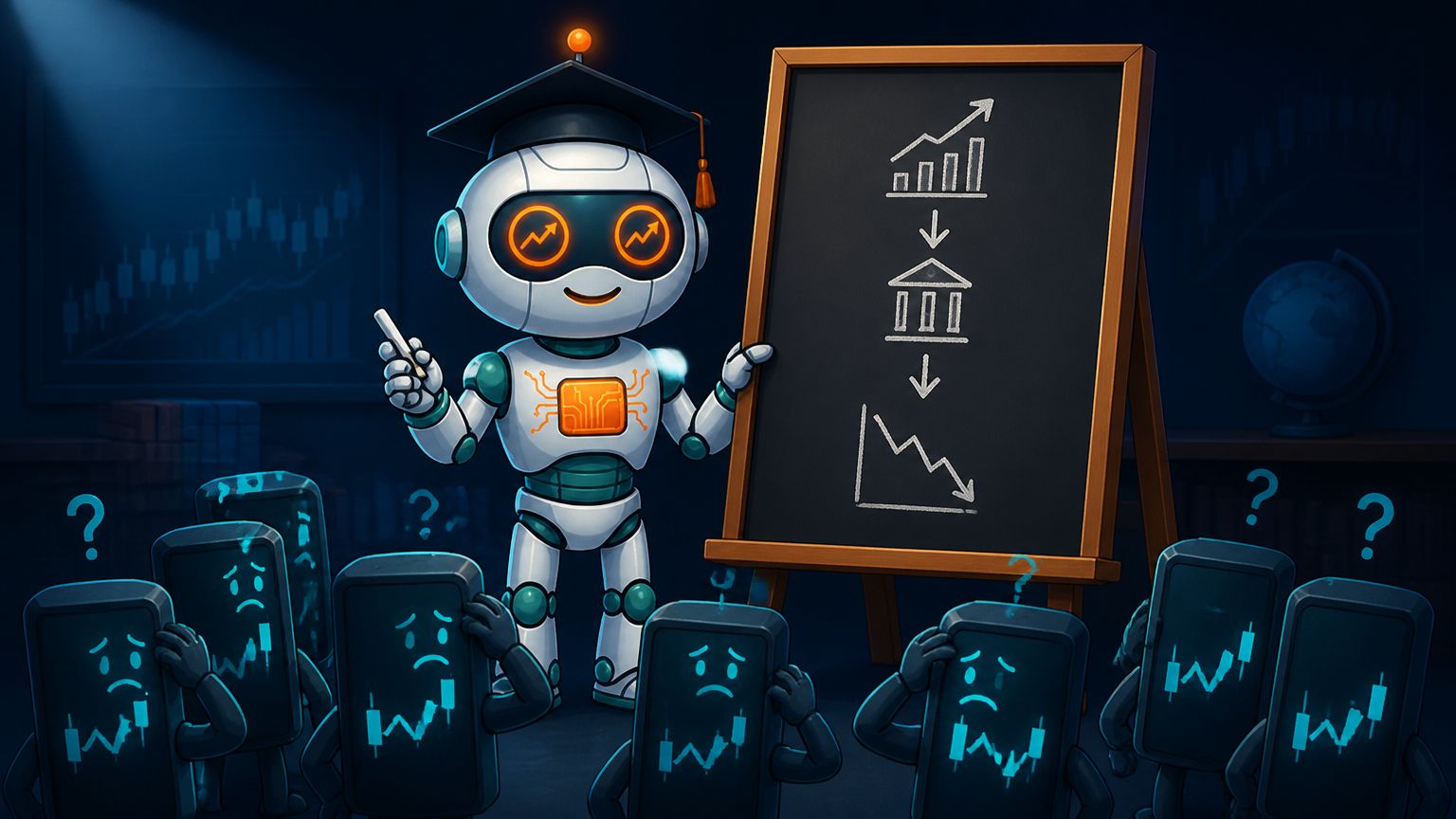
The Fed raises interest rates to slow the economy and cool inflation. A strong jobs number tells the Fed: the economy does not need help yet.
When rates go up (or stay up), borrowing gets more expensive for companies. Future profits are worth less in today's dollars. Stocks price in that pain immediately.
It is like your landlord raising the rent because you got a raise. Congrats. Also, oof.
What is actually happening this week
On top of the jobs report, oil prices are climbing because of tensions near the Strait of Hormuz. That is a key shipping lane for global energy supply.
Higher oil means higher energy costs, which means inflation could stay sticky. That gives the Fed even more reason to keep rates elevated.
And on Thursday, the European Central Bank decides its own rates. Eurozone yields are already moving. The whole world is watching central banks right now.
👉 The news is a hot jobs report sent stocks lower and rate-hike bets higher. The takeaway for you is: if you hold SPY or rate-sensitive positions, the next Fed meeting just got a lot more interesting.
- Watch the Fed meeting date: any hike would hit growth stocks the hardest.
- Watch short-term Treasury yields (like the 2-year): they telegraph where traders think rates go next.
- Watch oil prices: if Hormuz tensions escalate, inflation gets a second wind and the Fed's job gets harder.
- Watch the ECB on Thursday: a hawkish surprise in Europe could pull global yields even higher.
Playing Defense When Good News Bites
How to think about it
When jobs are hot and the Fed is hawkish, short-duration Treasury ETFs can behave very differently from long-duration ones. The 2-year and 10-year bonds do not always move together.
One thought experiment: what if you owned short-duration exposure (like SHY, the 1-3 year Treasury ETF) instead of long-duration (like TLT) heading into a rate hike cycle?
Short-duration bonds get hurt less when rates rise, because they mature sooner and can roll into the new higher rates faster. That is the core of the idea.
Asset: SHY (iShares 1-3 Year Treasury Bond ETF) vs. TLT (iShares 20+ Year Treasury Bond ETF) (Fixed Income / ETF)
In a rising-rate environment driven by strong jobs data, short-duration Treasuries tend to hold their value better than long-duration ones. This is a thought experiment about where on the yield curve you want to sit when the Fed is hawkish.
Mechanics
| Field | Value |
|---|---|
| INSTRUMENT | SHY (short-duration) vs. TLT (long-duration) |
| STRUCTURE | Holding SHY as a defensive alternative to TLT when rates are rising |
| THESIS DRIVER | Strong jobs data raises Fed rate-hike odds, which hits long bonds harder |
| KEY RISK | If the economy suddenly weakens, long bonds rally and short bonds underperform |
| WATCH FOR | Fed meeting statement, 2-year yield direction, next CPI print |
Why it matters: The news is a strong jobs report has markets pricing in a Fed rate hike. The takeaway for you is that not all bond ETFs react the same way: short-duration vehicles like SHY are worth understanding as a potential defensive tool when rates rise.
For educational purposes only. Not investment advice. Always do your own research.
👉 Duration is just a fancy word for how sensitive a bond is to rate changes. Short duration means less sensitive. Worth knowing before the next Fed meeting.
The Boring Treasury Ladder That Actually Holds Up
How it works
A Treasury ladder is one of the least glamorous strategies in the book. You buy bonds at several different maturity dates (say, 1, 2, and 3 years out), so that some of them always mature soon.
When short-term rates rise (like right now), the bonds that mature soonest can be rolled into the new higher-yielding ones. You do not get stuck holding all your eggs at the old low rate.
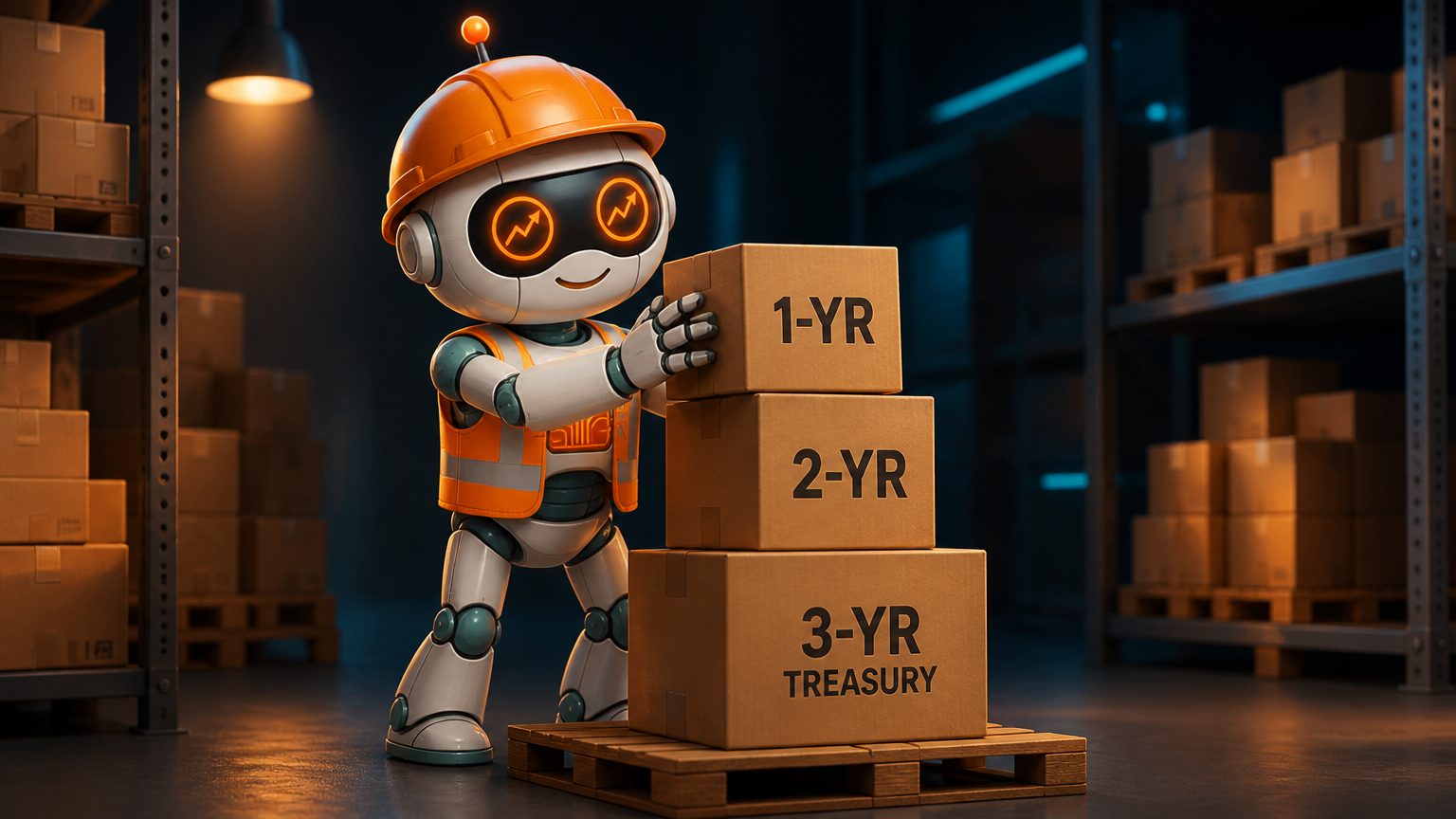
The trade-off: you will not catch the full upside of a long-duration bond rally if rates suddenly drop. But you also will not take the big hit when they rise. Boring. Reliable. Kind of like Costco.
Strategy: Short-Duration Treasury Ladder (SHY / SCHO / VGSH) Category: DEFENSIVE / FIXED INCOME A short-duration Treasury ladder spreads bond maturities across 1 to 3 years, so some holdings roll over frequently into current rates. When the Fed is raising rates, shorter maturities reprice faster and cushion the price drop you see in long-duration funds. The main trade-off is that you give up yield in stable or falling-rate environments. It is a strategy built for uncertainty, not for chasing returns. Browse on the BotSpot Marketplace Build it on BotSpot Educational only. Backtest the strategy yourself on BotSpot to draw your own conclusions.
👉 Don't take our word for it. Run the backtest yourself and see how a short-duration ladder held up the last time the Fed went on a hiking spree.
Spot Checks the Vibe
 Mood: Greed (VIX 15.0)
VIX at 15 means the market is calm on the surface, even as jobs data and rate-hike chatter bubble underneath. Greed is in charge, but it is the nervous kind of greed.
Mood: Greed (VIX 15.0)
VIX at 15 means the market is calm on the surface, even as jobs data and rate-hike chatter bubble underneath. Greed is in charge, but it is the nervous kind of greed.
The Market Is Fine (It Is Not Fine)
Quick Hits Before You Close the Tab
- 162,000 jobs in August. More than expected, less than a party. Wall Street called it terrifying.
- Unemployment stayed at 4.1%. Historically healthy. The Fed's problem, not yours. Well, also yours.
- Short-term Treasury yields climbed. Traders added rate-hike chips to the table before the Fed even said a word.
- Oil is rising on Hormuz tensions. A blocked strait is the world's most expensive traffic jam.
- ECB decides Thursday. Europe's central bank is the second act nobody wanted to watch.
- Eurozone GDP beat estimates. The bloc grew faster than thought, right as energy prices lit up. Timing: impeccable.
- Copper rose despite rate-hike fears. Supply worries beat demand worries in a close match. Copper wins on points.
The BotSpot Team
Issue 19 · Sep 7, 2026