💥 $100 Oil Is Back. Here Comes the Ripple.
Yemeni rebels hit Saudi oil facilities. Brent crossed $100. Treasury yields jumped. Stocks fell. Spot is calling it: this one has legs.
GM, Spotters. This is BotSpot, brought to you by the team behind Lumiwealth. Each week we dig into the market stories worth knowing about, with context, color, and a very stressed robot mascot.
- 🛢️ Brent crude briefly crossed $100 for the first time since July after an attack on Saudi oil facilities
- 📉 Stocks fell and Treasury yields hit multi-year highs on the same day. Double trouble.
- 🤖 Anthropic is heading for what could be the biggest IPO raise ever. Lessons from SpaceX inside.
- 🔬 ASML just locked in TSMC and Samsung on its most advanced chip machines. Monopoly vibes.
- 🏦 Treasury Secretary Bessent said 'I am the house now.' Markets asked: what does that mean for the yen?
Rebels Hit Saudi Oil. Your Portfolio Felt It.
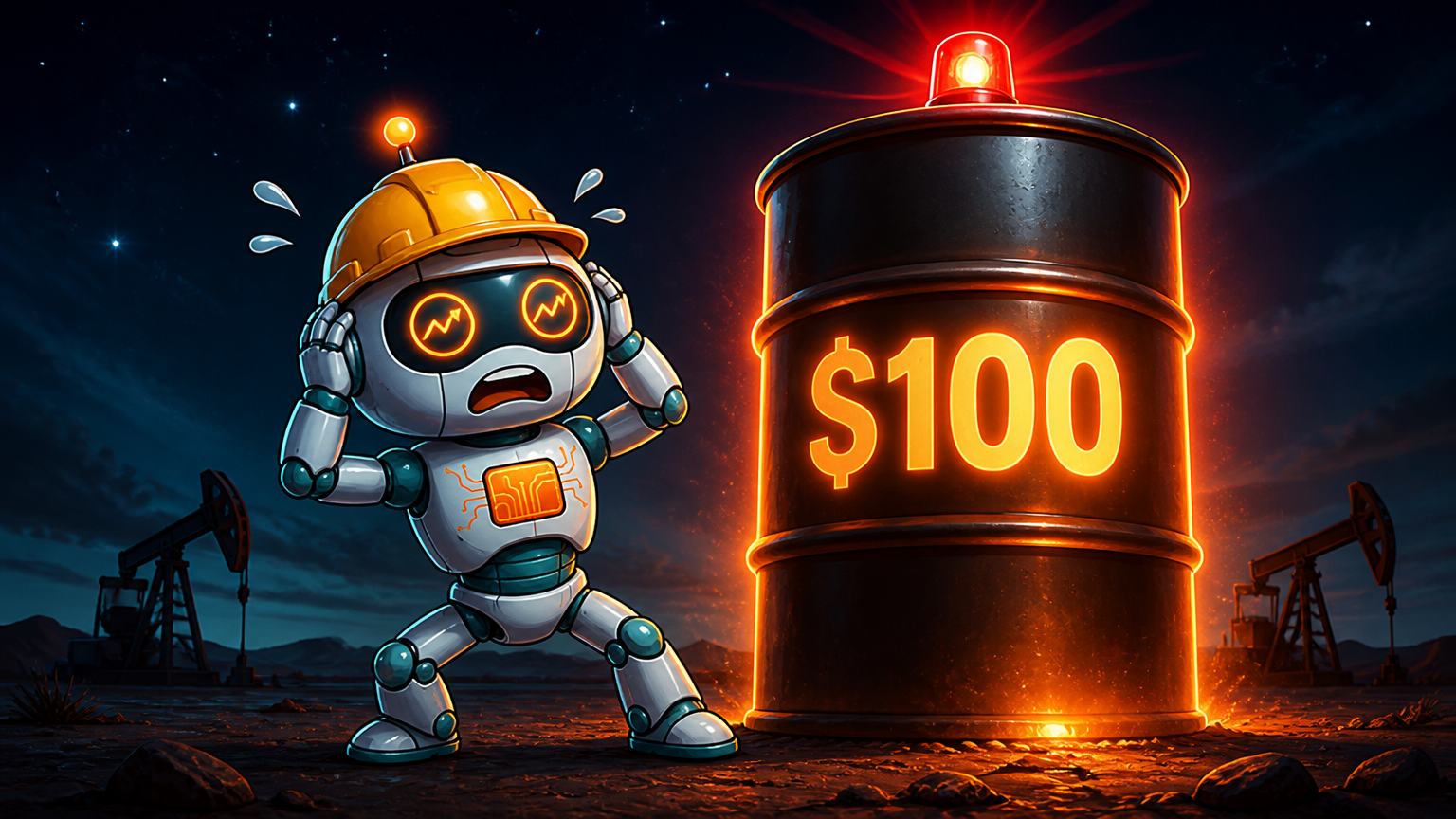
Yemeni rebels attacked Saudi Arabian oil facilities over the weekend. By Monday morning, Brent crude briefly crossed $100 a barrel for the first time since July.
Stocks fell. Treasury yields jumped to multi-year highs. The market mood shifted from "slow summer" to "oh no" in about six hours.
$100 / barrel — Where Brent crude briefly touched. The last time oil was here: July. The last time geopolitics drove it here: you do not want to remember.
Here is the short version of what happened. Houthi rebels, operating out of Yemen, launched drone strikes at Saudi Aramco facilities. Saudi Arabia is the world's largest oil exporter. You hit the supply, the price jumps.
Markets connected the dots fast. Higher oil means higher gas prices. Higher gas prices mean higher inflation. Higher inflation means the Federal Reserve stays stubborn about rates. Higher rates mean bonds sell off and stocks get nervous.
"One drone strike, four market reactions, zero warning."
— The chain reaction, summarized in ten words
 The piggy bank had one job.
The ripple from an oil spike does not stop at the gas station. Energy stocks tend to jump when oil jumps. Airlines, trucking companies, and consumer goods companies get squeezed because their costs go up. Bond investors sell because inflation fears return.
Treasury yields hitting multi-year highs on the same day confirms the fear. Investors are pricing in a world where the Fed cannot cut rates soon, because oil-driven inflation is back on the table.
👉 The news is Brent hit $100 after a geopolitical attack on Saudi facilities. The takeaway for you is oil-driven inflation fears push yields higher and make rate cuts less likely, which pressures growth stocks and bonds at the same time.
- Watch the energy sector (XLE): when oil spikes, energy stocks tend to be the first winner and the first to reverse when the supply shock fades.
- Watch Treasury yields at the 10-year: if they push past recent highs on sustained oil pressure, that is a signal the Fed narrative is shifting again.
- Watch consumer discretionary (XLY): higher gas prices hit spending on everything else, and that shows up in retail and restaurant names first.
- Watch whether Saudi Arabia announces production increases: that is the fastest valve to release pressure on the oil price.
Analyze energy with BotSpot AI
Playing the Oil Spike Without Chasing Crude
Thinking through it
When oil spikes on geopolitical news, the instinct is to chase crude futures directly. But crude is fast, noisy, and unpredictable once the news cycle moves on. A different angle: the energy sector ETF structure, which tends to move with oil but with slightly smoother price swings.

The thought experiment here is not about predicting the next drone strike. It is about understanding how the energy sector ETF (XLE) tends to lag crude oil on the way up, which creates a window. That window closes fast, so the structure matters as much as the idea.
Asset: XLE (Energy Select Sector SPDR ETF) (Equity ETF / Options)
When oil spikes sharply on supply-shock news, energy sector stocks often play catch-up to crude over the following days. Studying a covered call or call spread structure on XLE during an oil spike is a way to think about capping cost while participating in a potential move.
Mechanics
| Field | Value |
|---|---|
| INSTRUMENT | XLE calls or call spread |
| STRUCTURE | Long call (or bull call spread) with 2-4 week expiry |
| THESIS DRIVER | Energy stocks lag crude oil on supply shocks, then catch up |
| KEY RISK | Oil reverses fast if Saudi Arabia announces output increase or ceasefire |
| WATCH FOR | XLE relative to XOP (exploration/production) for signal strength |
Why it matters: The news is oil just crossed $100 on a geopolitical supply shock. The takeaway for you is that energy sector ETFs like XLE historically lag crude on the initial spike, which is an interesting structure to study before the next one happens.
For educational purposes only. Not investment advice. Always do your own research.
👉 This is a structure worth understanding before you need it, not while you are already in a panic about the pump price. Study the lag. Study the reversal. Then form your own view.
The Boring Energy Rotation That Just Showed Up Again
How it works
The oil shock rotation strategy is simple: when oil crosses a key threshold (say, $90 or $100), rotate a slice of a broad portfolio into energy sector exposure (like XLE) and reduce exposure to consumer discretionary (like XLY). When oil falls back below that threshold, you reverse the rotation.

The trade-off is straightforward. You are not trying to predict the next drone strike. You are setting a rule: when oil is above a line, energy gets more weight. The rule does the heavy lifting so you do not have to panic-trade the news.
Strategy: Oil Threshold Sector Rotation (XLE vs XLY) Category: MOMENTUM / SECTOR ROTATION This strategy shifts weight from consumer discretionary to energy when crude oil crosses a pre-set price level. The core idea is that high oil prices squeeze consumer spending while boosting energy company revenues, so the two sectors tend to move in opposite directions during supply shocks. The main trade-off is that the signal can whipsaw: oil can cross the threshold and reverse quickly, triggering rotation costs. Running it yourself on recent data will show you how wide to set the threshold and how long the lag typically runs. Browse on the BotSpot Marketplace Build it on BotSpot Educational only. Backtest the strategy yourself on BotSpot to draw your own conclusions.
👉 Do not take our word for it. Run the backtest yourself, change the threshold, and see what the data actually says before oil is at $110 and you are making decisions in a rush.
Spot Checks the Temperature
 Mood: Neutral (VIX 16.3)
VIX at 16.3 means the market is not in full panic but it is not relaxed either. Oil at $100 and multi-year yield highs have traders sitting up straighter than they were last week.
Mood: Neutral (VIX 16.3)
VIX at 16.3 means the market is not in full panic but it is not relaxed either. Oil at $100 and multi-year yield highs have traders sitting up straighter than they were last week.
Every SPY Holder Right Now
Five Things Before You Go
- Brent hit $100. The barrel crossed the line. Your commute budget did not survive the meeting.
- Anthropic is almost public. Expected $2 trillion valuation. SpaceX buyers already underwater. Know what you are buying.
- ASML locked in TSMC and Samsung. The world's only EUV chip machine maker just got two more very important friends. Monopoly intact.
- Lockheed is having a year. EU approved $3.7 billion for Patriot missiles. Sweden bought HIMARS. The backlog keeps growing.
- GE Aerospace dropped $12 billion on a casting company. When your jet engine backlog hits $210 billion, you buy the thing that makes the parts. Vertical integration, the exciting way.
- Bessent said 'I am the house now.' The Treasury Secretary channeled his inner Heisenberg. Markets are still figuring out what that means for the yen.
- Electrification ETFs all doing different things. One is up 6%, one is up 25%. Same theme, very different funds. Open the hood before you buy.
The BotSpot Team
Issue 20 · Sep 9, 2026